
He Who Watches from Behind the Row
That thing only you remember from your childhood

There are stories you remember being commonly known when you were a child, but that only you seem to remember as an adult. The story I remember is about a supernatural being that haunted the island of Bornholm. I used to be absolutely terrified of this creature, but I think the only reason I still remember the story to this day is that the thing had the silliest name in retrospect: the Marten.
He was called that not because he was some kind of were-marten or a giant marten monster. No, he was called the Marten because he wore a pointed hat made of marten fur.
It was said that if you cheated, either on your taxes or on your spouse, the Marten would appear at the edge of your property, where he would hide behind a stone dike and stare at you. You would begin to feel that sensation of someone watching you, and should you meet his gaze, you were doomed. You wouldn’t die from locking eyes with him, but the moment you looked away, you would realize that your house was completely engulfed in flames, and then you would perish in the fire.
From my recollection, this was a common urban legend in Denmark that originated from the island of Bornholm, and the phrase “The Marten will come for you” was a part of every day language.
Old men would be playing cards and jokingly taunt each other, saying, “You’d better not be bluffing, or the Marten will come.” Children would scare each other on the playground with stories of seeing the Marten staring at them from behind their backyard fences, and mothers would blackmail their children into telling the truth by threatening them that the Marten would come for them if they didn’t.
I have a clear memory of watching an episode of a crime procedural where a serial killer set his victims’ houses on fire, and the local community blames it on the Marten. I can even picture, in my mind’s eye, the actor who played the Marten on the show. He, of course, wasn’t a supernatural firestarter in the gritty Scandinavian noir series. He was simply a man who became a suspect because witnesses had spotted him at several of the crime scenes. He was innocent. It was just a small town, and he would show up whenever he saw a fire in the distance. He also happened to wear the same type of hat as the Marten of legend.
But here’s the thing: no one remembers the Marten, and there are no urban legends on Bornholm about him.
I’ve visited the island several times, and each time I’ve gone, I’ve asked locals about an urban legend involving a marten. No one knows what I’m talking about. No one remembers “The Marten will come for you” being a saying in the 1990s or 2000s, and the actor I remember playing the Marten on that gritty Scandinavian noir crime procedural was never on the show, and the show never had an episode like the one I remember.
I won’t say I’ve been haunted by the memory of a fake urban legend, but I’ve always wondered what series of events, half-remembered stories, and fragments of media created a false memory of an urban legend I remember remembering as a child.
Well, at least I wasn’t haunted by the memory of this fake urban legend until I found out it was real.
There are no martens on Bornholm, the animal, that is.
But do you know where there are martens?
In Sweden, which is where Bornholm is located geographically despite being part of Denmark.
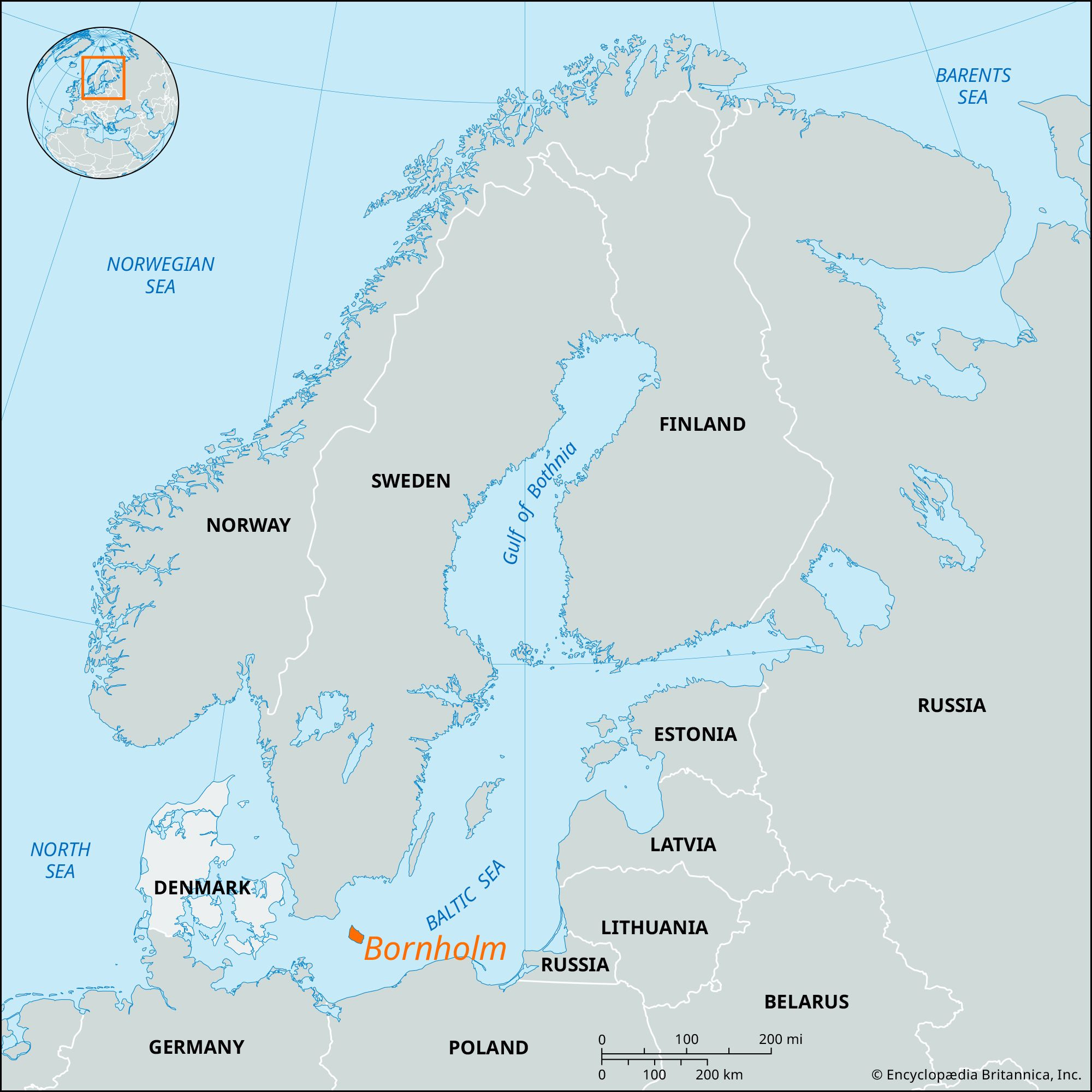
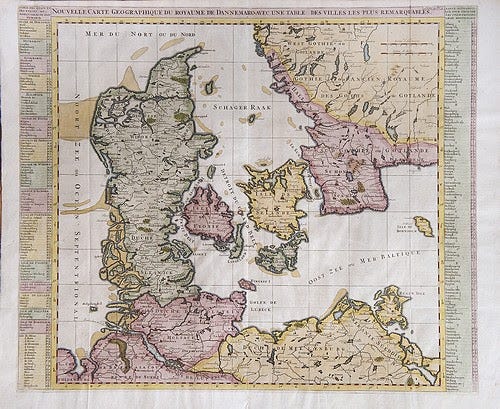
See, in the 1600s, all of southern Sweden was part of Denmark. Culturally and ethnically, it was a mixture of the two countries, though definitely more Swedish than Danish. The Swedes tried to buy the region several times and eventually sort of did. But we were never happy with the terms of the deal, and they never paid more than a down payment, so we never handed it over.
Sweden, in a move straight out of our own playbook, waited until Denmark was once again engaged in yet another war with France, England, and/or Germany, and they then invaded and took the land they wanted.
There was, of course, resistance to the occupation initially, especially in the southern province of Skåne. Even today, many people there don’t fully accept Sweden’s rule over them. They speak a dialect closer to Danish and fly a flag that combines the symbols of both countries, though it’s usually clear which one they think more fondly of.
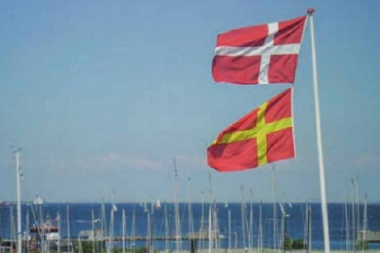
While their rebellious spirit was never extinguished, they eventually laid down their arms and submitted to Swedish rule.
But off the coast of Skåne, on the island of Bornholm, they did not.
The islanders refused to acknowledge that they were subjects of the Swedish crown and refused to pay taxes to what they saw as an illegitimate king. That was probably just an excuse, because they hadn’t exactly been enthusiastic taxpayers under the king they considered legitimate either, but that’s a story for another time.
The Swedish government appointed one of its most ruthless officials as governor of the island: Johan Printzenskjöld.
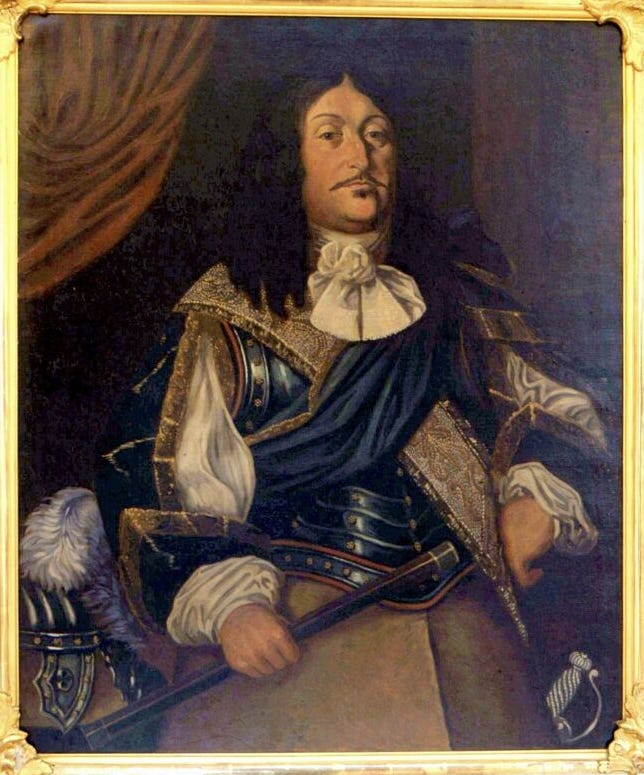
He quickly became hated by the islanders. His tax collection efforts were usually accompanied by a regiment of armed soldiers. Often there was a fight. Sometimes people died.
One morning, like any other, Johan Printzenskjöld got up, got dressed, put on his warm coat and his marten-fur hat, and marched with a regiment of soldiers to the home of one of the island’s most outspoken tax dodgers.
The first thing he learned after arriving on the island was that many of the former Danes were armed, that a great many of them were excellent marksmen, and that they always shot at officers, never privates.
So as the soldiers marched onto the woman’s property, the governor took cover behind a stone fence with a hole in it that he could look through. It gave him a good view of the house, and he crouched down, made himself comfortable, and waited to see what would happen next.
He knew she wouldn’t pay, so he had already decided to make an example of her. After the soldiers knocked on her door several times and received no answer, they began preparing for what would happen next.
The governor saw the woman through a window, and she saw him.
They locked eyes as the soldiers set the house on fire, and they maintained their gaze as the flames spread through the building.
The governor later wrote in a letter that he was certain the woman maintained eye contact even after she herself had caught fire.
While the incident would not be the spark that ignited the rebellion, it would give birth to the legend of the Marten: an invading presence, an animal from the mainland that didn’t belong, vermin to be eradicated.
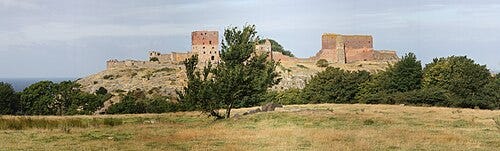
When war once again broke out between Denmark and Sweden, the locals took up arms against their occupiers. They laid siege to the fortress of Hammershus, where Johan Printzenskjöld was hiding, but he somehow managed to escape on horseback and rode to Hasle, where he was granted amnesty by the mayor, who was on friendlier terms with the Swedes than most of the islanders.
The rebels soon arrived and demanded that he show himself.
He did.
At first, he tried to negotiate the rebels’ surrender. When that failed, he attempted to negotiate his own safe passage back to Sweden. That failed as well.
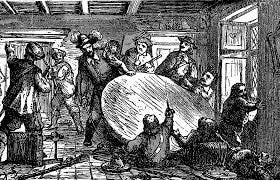
The islanders grew impatient, and a fistfight broke out between them and the governor and the few men who remained loyal to him.
He escaped once again.
But as he ran down the street, a rebel saw him approaching, drew a pistol, and shot him in the head at point-blank range.
The Marten was dead.
I’m not from Bornholm. I grew up 500 kilometers away, as far from Bornholm as you can get while still remaining in Denmark, on the opposite side of the country on a different island.
This is not a story we learn about in school, as we generally don’t spend much time discussing wars fought against countries that are now among our closest friends. There is no way I would have heard the story of the Marten in school or from any adult I knew.
This story is so obscure that many of the details I’ve told you here haven’t been publicly known until recently.
I’m sure there is a logical explanation for how I created a fake urban legend in my mind as a child, only to discover that it was somehow rooted in a real event I had no knowledge of until recently.
I just haven’t figured out what that explanation is yet.
What an interesting story! I've never heard of a legend such as this... Although I am one to believe in Occam's razor (the simplest answer is most often correct) and think you MUST have heard something about it somewhere as a child... but the world doesn't always work that way :)