
The Dwarf Dune
Little people once called my island home.

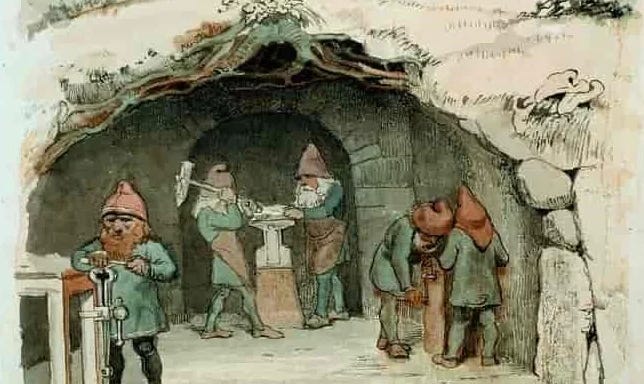
In Old Danish folklore there are dwarves, but since they are not really dwarves like what you’re probably picturing right now, I will call them by their other name:
The Mountainfolk.
They’re more akin to the fae from the legends across the sea in Ireland and Britain, but in traditional Danish fashion, they’re written about in a very manner of fact way and much of the writing about them are about the mundanity of their lives, not the tricks they play on the humans that live next to them.
You might hear the name Mountainfolk and think, but Denmark doesn’t have mountains? And while I will die on the flat hill that Denmark does indeed have mountains, the mountain in mountainfolk does not refer to the majestic landscape of the Danish countryside but instead the globe itself. In Danish folklore, the planet is referred to as the mountain, and little people live inside it, and the mountains and hills around the globe are the gates into that mountain.
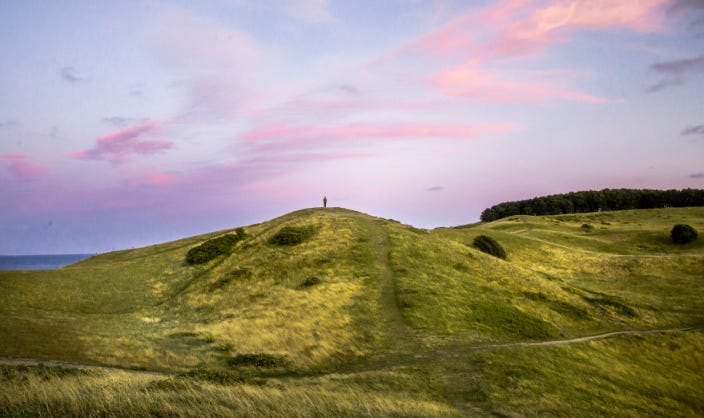
According to the legends, they live fairly ordinary lives, they grow crops, tend to livestock, go to work, attend church, but they are all capable of illusionary magic and the crafts they create are of better quality than even the finest crafts made by humans, and should a human be able to get a hold of one of these crafts or hold of one of the caps the mountainfolk wear, they will be given a part of their power, though most people did not dare to try and steal from the mountainfolk.
On the mainland, dotted across the landscape, many of the hills and barrows are dedicated to the mountainfolk, if a place has “høj” in its name, there is a good chance it is the source of at least one local legend about small people who live inside the earth. Troll hill, Man mountain, Dwarf hill, Foghill, Dancing hill, Smithing hill are among the most popular and common ones.
We don’t have any hills here on Læsø, but there are legends of a place the dwarves once called home. Excitingly it doesn’t appear on any of our modern maps, but I think if we examine the legend and explore the history surrounding the time it was told in, we’ll find enough clues to locate, The Dwarf Dune.
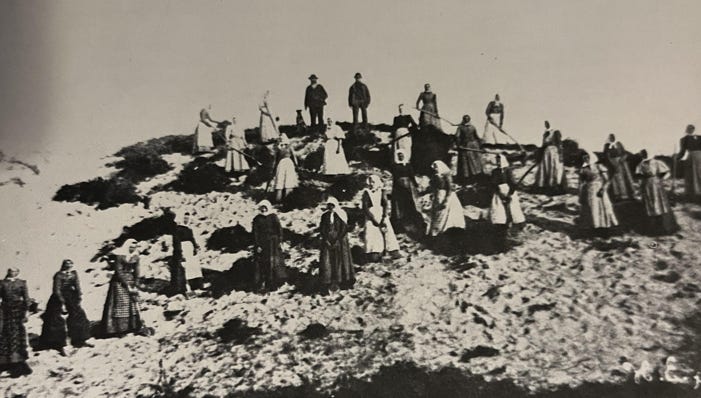
In the old days there were an awful lot of dwarves on the island, and a place of note was the dwarf dune which lies next to Vesterø church.
It wasn’t all people that could see dwarves, and you probably had to be a bit psychic to sense them, and it was best if you were alone when you went looking, because then they were more likely to come out and play then. A young girl was once passing by the dwarf dune around midnight, and she saw 4 golden-haired little boys all wearing white shirts. They danced around in a ring and then they vanished into thin air. An apple then was thrown from the dune and it hit her. She picked it up and noticed that it was an unusually large and very nice-looking apple, but she dared not eat it until she had carved a holy cross into it to sanctify it.
There were both adult dwarves and dwarf children, the latter could be quite pretty, while the former were very hairy, wrinkly and generally very ugly.
Dwarves would hang out their laundry in bushes around on the island, and one of the places where dwarf laundry could be seen more often than not, was in the shrubbery around the dwarf dune and in the bushes around the church nearby. In these bushes, shirts, sweaters, pants and skirts would be hanging, but if someone tried to touch any of these delicate articles they would vanish in front of their eyes. There was a woman however who managed to make off with a piece of clothing. She passed by a collection of drying dwarf laundry one day, and she just happened to have a sewing needle on her. She poked a shirt with it, and because it was made of iron, it severed its magical connection to its owner and couldn’t vanish, as sorcery must yield to steel. Many have seen this shirt and it apparently looks just like a doll’s shirt, a well crafted doll’s shirt, but otherwise unremarkable.
In some cases, the dwarves would lure children to their dune, but they would usually let them go home again if the children were baptized. One time they didn’t, however. They lured a girl to the dune, and she must not have been properly baptized, because they kept her. She was allowed to go and visit her family every once in a while, and play with her siblings, but when a finger would appear in front of her and wave, then she had to return to the dune at once. One day she neglected to follow the instructions of the waving finger and stayed with her siblings for another few hours, and the next day she was found crushed to death in a collapsed hole. That was the dwarves punishment for defying them.
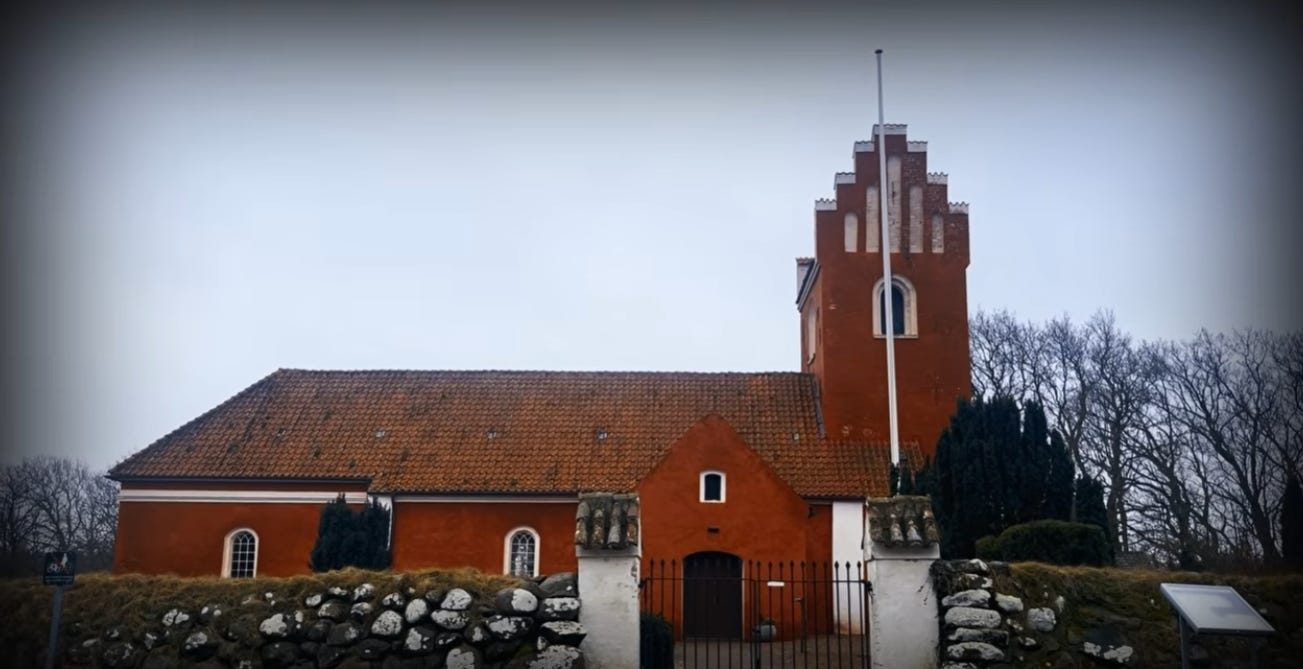
So according to the legend the Dwarf dune should be out next to Vesterø Church, but it’s not.
The dune must have moved over the centuries or it has been plowed by a farmer like so many other barrows have around the country. Case closed, no dune, no dwarves, thank you for watching… Or that would be what I would say if I didn’t read this account about the Dwarves in Achton Friis’s travel journal.
In one of his other stories he stays at a farm in Tørkeriet and during the day he walks into town and visits someone and insinuates that it’s a very short walk and no big bother, and the reason he stayed at Tørkeriet was because he wanted to sleep and build up his strength before making the long journey to Vesterø where he would board his ship.
That sounds insignificant until you realise where the person he visited lived, and how far away Vesterø is.
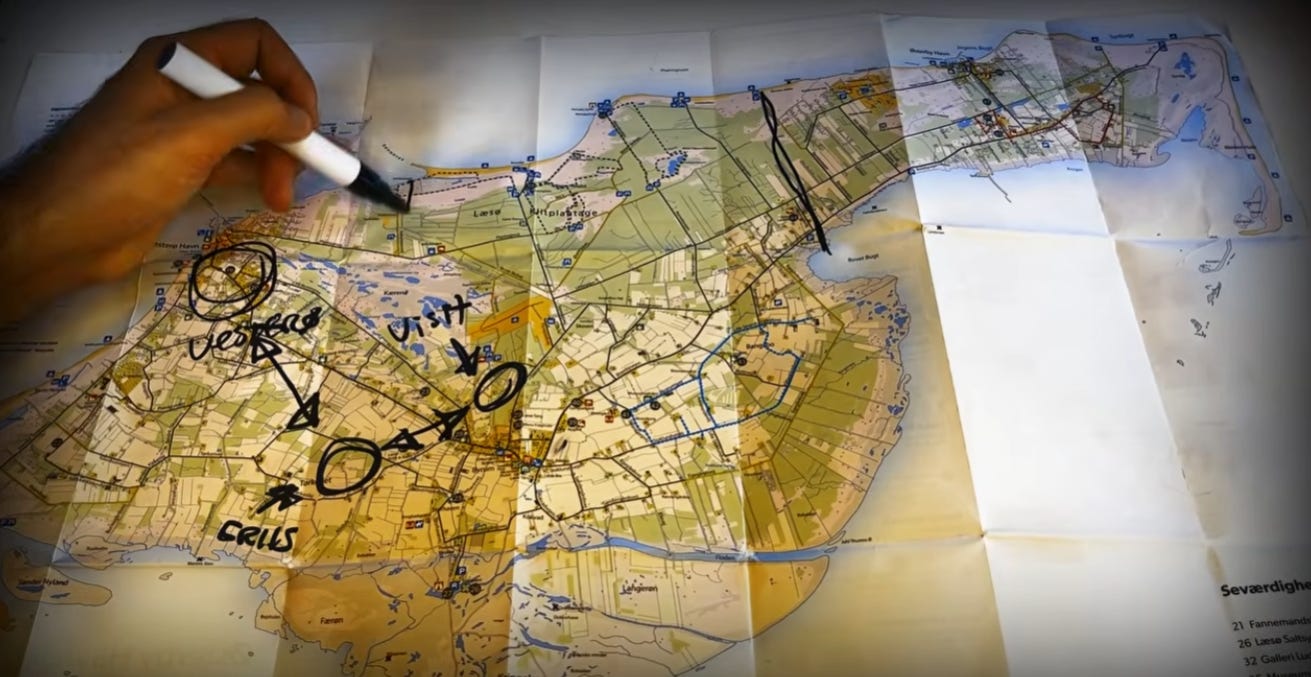
Look here on a map of Tørkeriet. I’ve marked about where Friis stayed, where the person he visited lived, and where Vesterø is. They’re the same distance apart, but they are in different parts of the island. And I went over a few instances of this in his writing and in the writing of other people. The island back then was divided into 3 regions for lack of a better term. Vesterø, Byrum and Østerby.
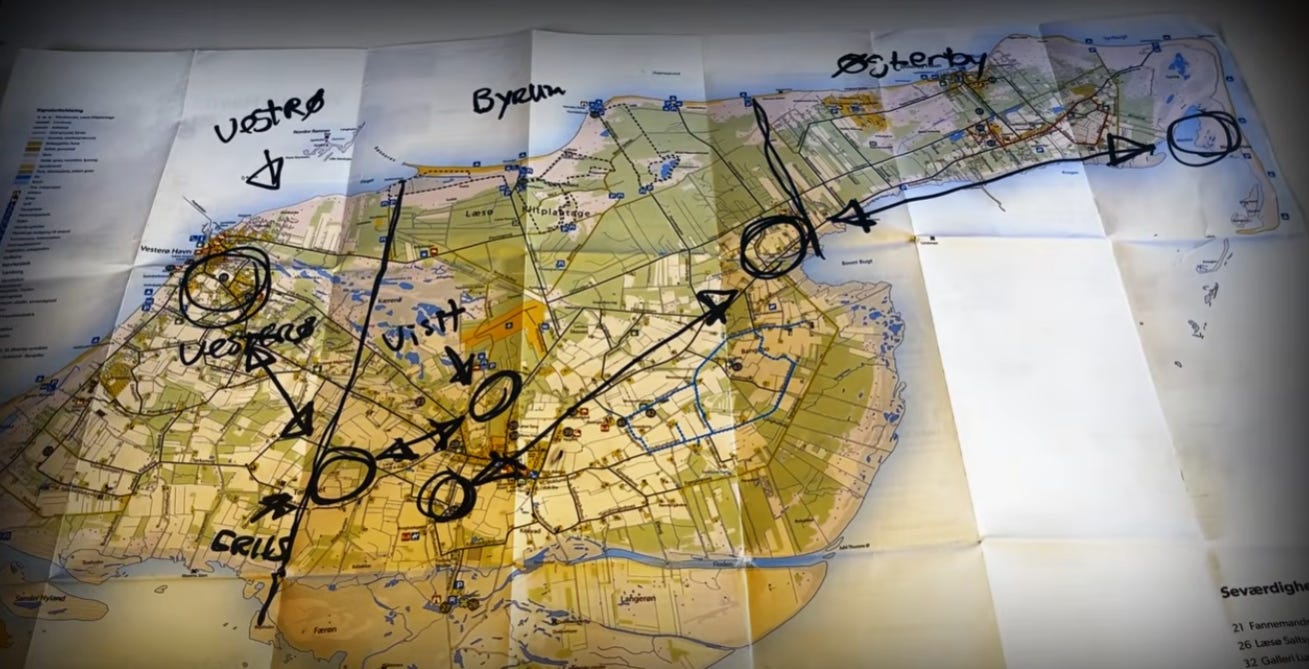
It seems that anything inside a region was near, but anything outside it was far. So for Friis walking 5 kilometers to visit a judge on a farm in Byrum was just a short stroll, but making the exact same distance down to Vesterø was an arduous journey that would take all day. We can see it again when he leisurely walks from a place on the northern coast about 9 kilometers from Byrum like it’s nothing, but catches a carriage ride to Østerby which is about the same distance, and we see it again in the book Language on Læsø when the family the story is about walks into town and goes to church which is about 5 kilometers away, but pack a lunch and stay the night when making their way out to a fishing hut that is closer to their house than the church is, the only difference being that the hut was part of the østerby region, and the church part of the byrum region just like the farm they lived on.
And I think that’s a human thing to do, to create these arbitrary lines that are tiring to cross, no matter how long it takes or how far you have to travel. I know it well myself. Driving to Sweden or Germany from where I live is a quest, but driving the exact same distance down to south Fyn is a commute, because it’s within the arbitrary line that we define as the country of Denmark, and therefor it’s not far away.
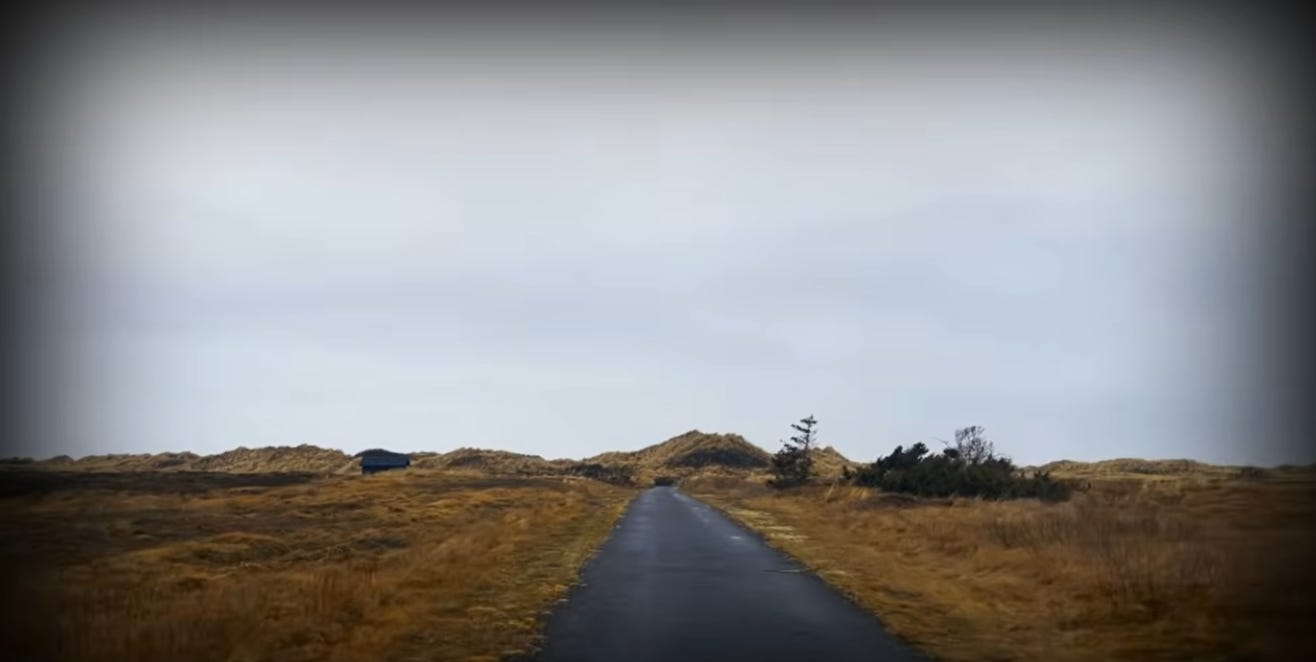
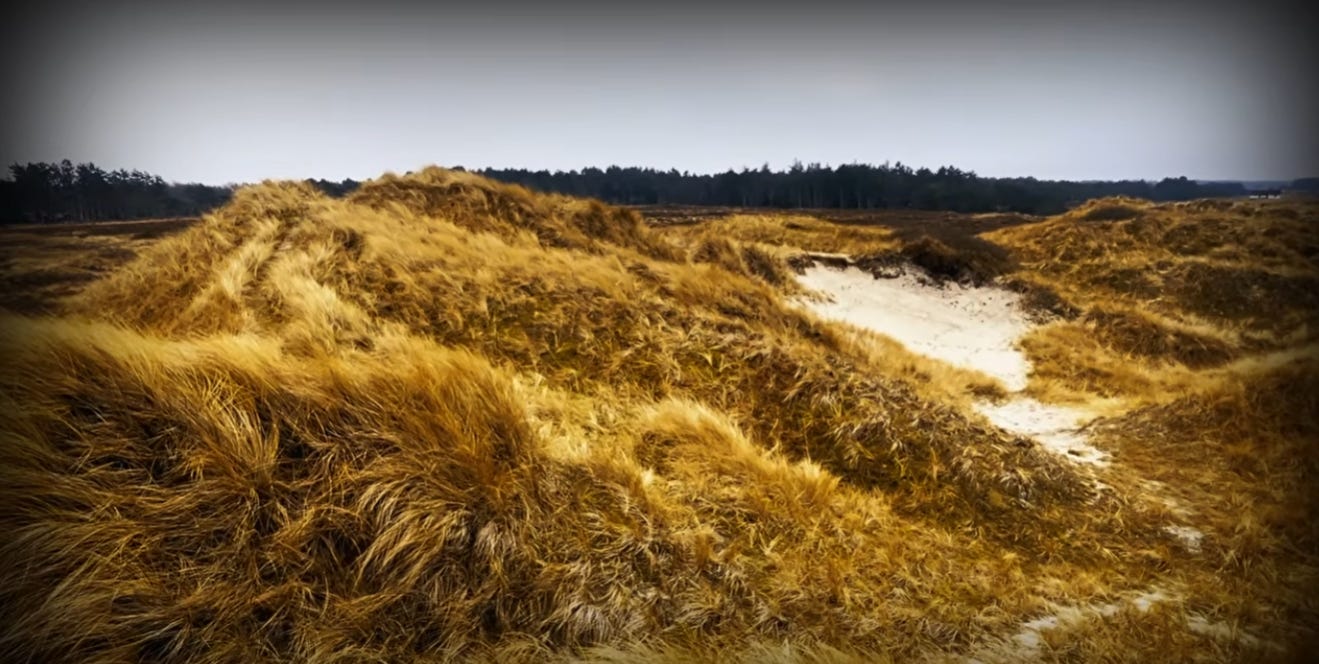
If you walk from Vesterø Harbour out to the church, you will on the halfway point find a dune. It’s not remotely close by our modern understanding of “next to”, but I think it was to the old islanders, and I think it’s the dwarf dune from local folklore.
If there ever was a dune that could host a dwarf population, I think it would be this one. Put a chimney up there and place a couple windows around and I think it would be a very nice place for a village of dwarves to live.
I hope you’ve enjoyed this stupid little adventure in my backyard, I know I’ve enjoyed going on it.
I love your writing. It's so full of joy and reverence and truly a bit of magic. This was a lovely read, it inspired me to write a story.