
The Tall Man Haunting
Something so terrible happened in a small town that it left a scar that never healed

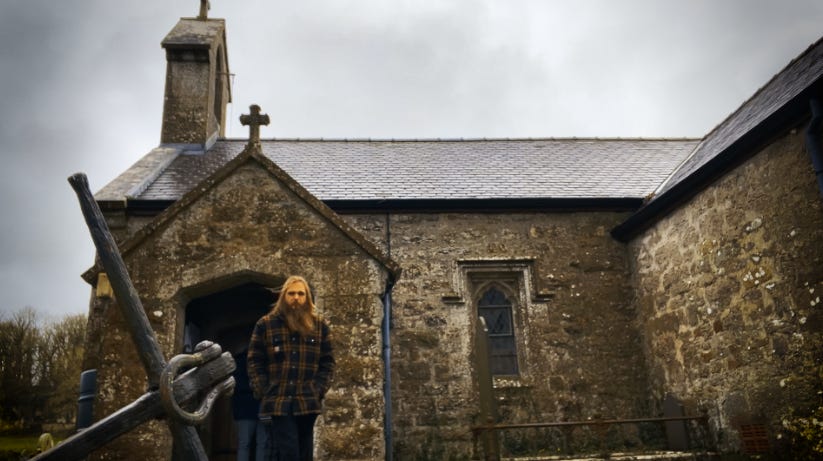
On the island of Ynys Môn, known as Anglesey in English, sits Llanallgo church. Like many other churches in Wales, it’s named after a saint with little connection to the building or the people that congregate in it on Sundays. It was built hundreds of years before the pope declared its namesake a saint so it may once have had another name, and if its construction year is to be believed, it was built right in the middle of a thriving heathen iron age settlement decades before Christianity would make it to the region. Meaning it was not always a church, at least not a Christian one.
If a ship out in the bay had not made good time and arrived ahead of schedule, and if the winds in the mountains hadn’t unexpectedly picked up and changed direction, we would have never heard of Llanallgo. The tranquil life in the little church would have gone on like it had for a thousand years prior, an endless cycle of births, marriages and deaths to fill the pews of its small church house. But a ship out in the bay did make good time and arrived ahead of schedule, and the winds in the mountains did unexpectedly pick up and change direction, and because they did. I can tell you the fascinating story of The Tall Man Haunting.
October 1859, Bound for Liverpool, the magnificent clipper ship, Royal Charter glides past the village of Moelfre. Aboard it are four hundred people coming back from Australia and a cargo full of gold. The passengers were almost all miners from Britain who had joined the gold rush to Australia and they were returning home in triumph, each with their own personal fortune of gold. Some wore their money in body belts, others in pockets or purses, and gold coins and ingots lying in the safe room inside the ship, came to a value of 330,440 pounds, a vast fortune in 1859.
All the passengers were happy and excited, coming to the end of their two-month journey, and expecting to dock in Liverpool the next morning, but as the wind started to thrum in the rigging, and the seas became more turbulent, more than one of them stared up nervously at the gathering clouds. Darkness fell early. The night was thick and black, and at 10.00 pm the wind was reaching hurricane strength. Maneuvering the Charter became increasingly difficult. The waves were now mountainous, their tops sheered cleanly off by the wind, and the noise was so deafening that the crew on deck couldn’t shout loud enough to hear one another. Despite their best efforts, the crew could not stop the clipper from drifting towards the granite teeth of the Moelfire cliffs. Thirty-foot waves towered over the doomed ship and the crew worked tirelessly to anchor themselves against the storm, but over the next 5 hours, the cables anchoring the ship to safety snapped one by one. At 3 am, the final one snapped, and the Charter was driven onto the granite reefs, crashing violently to her end. The giant waves alternatively sucked her away then hurled her against the rocks with thunderous force.

Most of the women and children were below decks, sheltering in the warm and cosy saloons, but the passengers and crew on deck were thrown overboard. Some were drowned by the weight of the gold they were carrying, others by their heavy and cumbersome Victorian clothes, but the majority were killed by being smashed repeatedly against the rocks and the wreckage.
One man who miraculously survived, later said that he could see the mutilated bodies of his companions in the waves as they were dragged against the ship and over the deck, their remains pelting him and the ever decreasing number of survivors. The bodies rose from the waters distorted beyond belief, missing limbs and heads, some so badly mangled they didn’t even resemble people anymore.
As this was going on, the once beautiful clipper snapped like a dry stick, the two halves of the hull turning to face the oncoming sea, the waves sweeping along inside the exposed body of the ship, washing out and drowning the terrified women and the children trapped inside- none of them would survive that night. There were nearly five hundred people aboard the Royal Charter and only about forty people survived. The villagers of Moelfre sprang into action. They tied ropes around their waists, went into the tide and saved what few survivors made it off the ship alive. They carried them over slippery rocks and up the steep paths to the cottages. They put them in their own beds, tended to the injured, fed them, and did everything in their power to help.
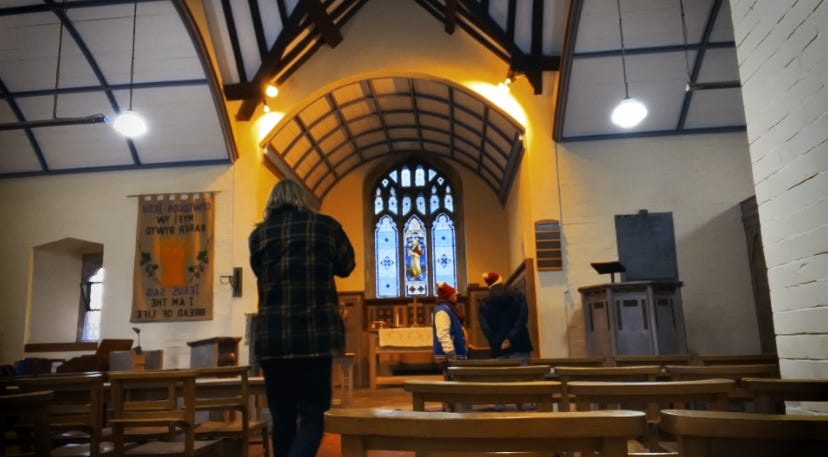
The dead were carried to Llanallgo church. For days the tide continued to throw up eviscerated bodies, limbs and severed heads, all of which were taken up to the church and placed in the care of Reverend Stephen Roose Hughes.
They were all gently laid in rows on the floor of the church near the pulpit and must have made for a horrific scene. When the news broke, relatives of the missing trekked from all over the country, and for weeks, Moelfre was crammed with grieving people. The church became the focal point of those searching for loved ones, and those who couldn’t travel, wrote urgently to the Vicar for news, giving details of each person or child, eye color, hair length, clothes, tattoos, etc. and the Reverend Roose Hughes moved quietly amongst the pitiful remains trying to perform the nearly impossible task of identifying crushed and partial bodies, before he carefully numbered them, prior to numbering the graves in which they were solemnly buried.
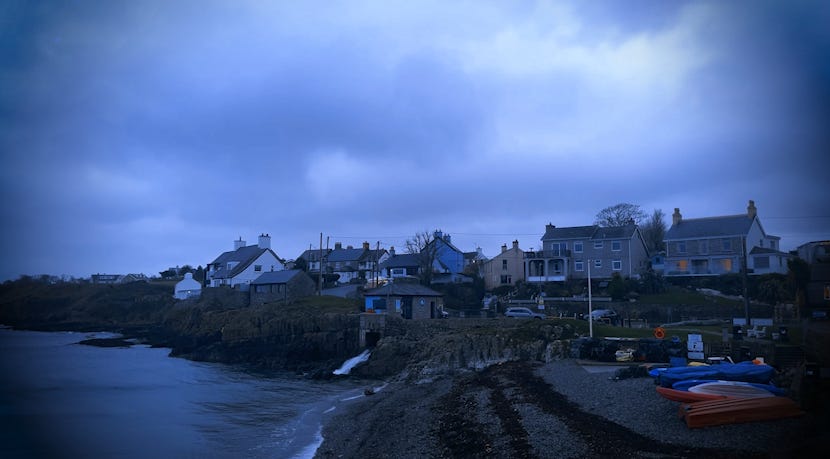
When Charles Dickens visited Moelfre at the end of December that year, he was immensely impressed by the courtesy, courage and selfless dedication of the Vicar. He was told that a hundred and forty bodies were buried at Llanallgo, another thirty-four in the churchyard of his brother, also a Vicar, and many more in the churchyards alongside the coast, as the tides washed up the dead. Hundreds of people visited the little church and the vicarage of Llanallgo, and Reverend Hughes took on the task of comforting them, which he did with great gentleness and fortitude. He received over one thousand letters, and answered each and every one in detail, even sending money from his meagre stipend to those who had lost their breadwinners. With every letter and each word of comfort, Reverend Hughes gave something of himself both physically and spiritually, until he was completely worn out and, just over two years later, this good man died quietly by his fireside chair at the Rectory, at the age of forty-seven.
The tragedy put the town on the map and people began making the journey here from all over the country. Initially to pay their respects and to get a look at the cliffs that claimed so many lives, it was the Victorian era after all, and nothing was more interesting to the Victorians than the site of a massacre. But as the years went on, the story of the Royal Charter slowly faded into the background, and people began coming here to enjoy the peace and quiet, the pathways, the beaches, the fresh air, it became a holiday destination.
It was commonly accepted among the locals that the ghosts of their deceased ancestors would occasionally re-enact the rescue operation that had made their town so famous, every once in a while.
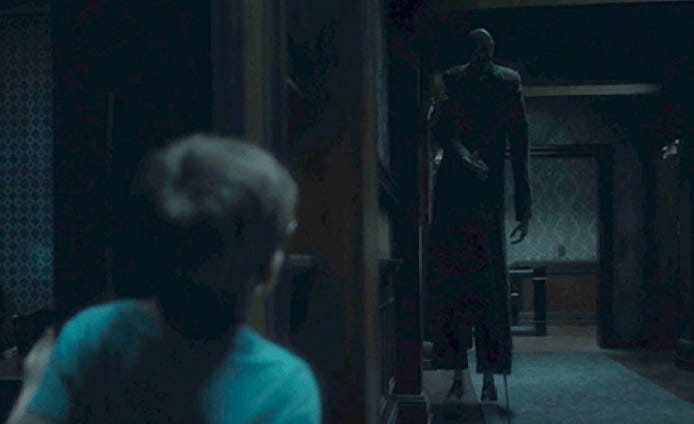
But there was also something else out there in the hills. People driving into town would spot a silent figure in their headlights, a tall man moving slowly through the graveyard, who would vanish if people stopped to see who it was. Sometimes he was seen walking from the church to the graveyard and sometimes walking between the graves themselves near the outer wall, but no one ever got a close enough look to see what he looked like.
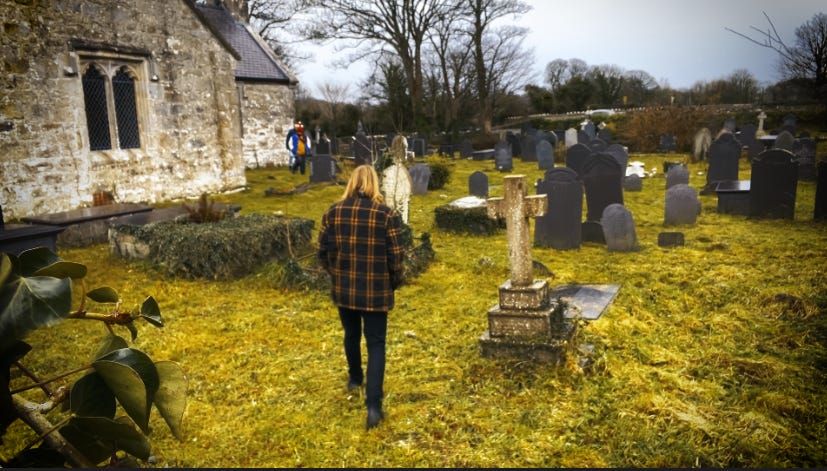
Intrigued by the sightings of the spectre of a tall man tending to the graveyard in Llanallgo, author Peter Underwood invited his friend Mr. Roberts over for a cup of tea in front of the fire, and Mr. Roberts told him what he knew of the tall man.
The Rectory in Llanallgo used to employ a servant girl. She would stay in service until she became of age, and then she would leave and a younger one would come and take her place. There were three sisters who lived in the area, and they each in their turn, went to work at the Rectory one after the other. I knew their Aunt Margaret and I heard this story from her: The eldest girl Mair had been working there happily for a time, but one evening when she was carrying a hot water bottle upstairs to the Vicar’s bed, she came to an abrupt stop. She could feel something pressing against her chest, but when she looked down there was nothing to see, yet she was certain that she could feel the weight of a man’s head pressed against her chest. As she stood there frozen in shock, she noticed that she could hear slow tortured breathing all around her. Nothing was visible, the sound didn’t have a source, but she could hear it, and she could feel it, the man’s head against her chest. She snapped out of her paralysis and bolted up the stairs and threw the water bottle unto the Vicar’s bed and ran back to the stairs. She took pause, she listened, she looked down, but she couldn’t see anything, couldn’t hear anything, couldn’t feel anything, except the hammering of her own heart. Everything was still and normal, so she took a deep breath and then she rapidly descended the stairs, this time pressing herself up against the railing as much as she could, to avoid crossing the path she took when going up.
She had the same terrifying experience many more times through out the week, but she kept her mouth shut. On her day off work she went to visit her family, and as she was helping hang out the laundry, she confided in her mother what had happened. As Mair finished recounting her experiences with the spectre, and how she had learned to dodge it by keeping close to the wall on the stairs and going up and down as fast as she could, her mother said she intended to go with Mair back to the Rectory and explain to the Vicar that she couldn’t work there anymore, and why. But Mair knowing how precious her wages were to her family’s finances, shook her head and said she would like to keep working there. The two of them didn’t speak of it any further, as they both knew that Mair’s sisters would have to serve their time at the Rectory when they came of age, and knowing what they would have to deal with, wouldn’t do them any good. Mair went back and she continued working at the Rectory until she became of age. She encountered the spectre many times, and she was frightened many times, but apart from the nervous dread that overcame her each time, the spectre never harmed her in any way.
Her sisters also encountered the spectre, and when they came running home to tell their mother about it, Mair was there to reassure them that the spectre would never physically harm them.
What’s strange is that the spectre never seemed to harass the Vicar or his wife, or any of the Vicars or wives who would occupy the Rectory.
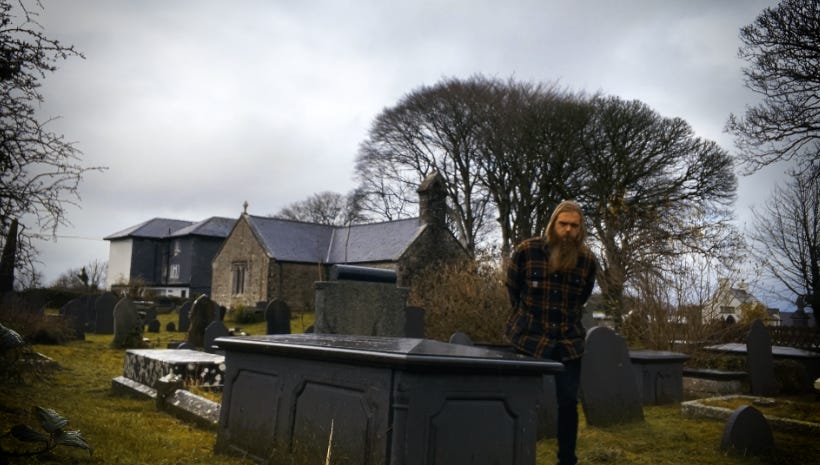
Sometime before Mair was in service, a woman named Nia Owens served at the house. During that time it was common for the Reverend to make house visits in the evening, and it was the house rule that as soon as the reverend came back from his evening visits, the maid must prepare his supper at once. One day Nia was out in the garden calling for the cat to come get his supper, and in the bright moonlit night she saw the reverend coming in through the back gate and walk through the back door. She immediately went inside and began setting the table in the dining room for supper. The reverend’s wife walked in the room and asked why on earth she was setting the table when the reverend wasn’t due back for another hour.
Nia replied that she had just seen him walk through the back door. The wife went into the hall and shouted asking if he was there, but no one replied. She shouted up the stairs, but no one replied.
Nia was sure she had seen a man walk through the back door, and she and the reverend’s wife came to the only logical conclusion that it must have been a burglar if not the reverend. When the reverend came home at his usual time, Nia repeated her story and did so with such conviction that the reverend searched every room for the would-be burglar, but besides the 3 of them, the Rectory was empty.
The last Vicar to stay at the Rectory was Canon Wooding who lived there with his sister. Due to other commitments he had to spend one month out of the year in Bangor. On a dark night his sister waved him goodbye at the front door, and then she retreated inside to warm herself up at the fireplace. She read until bedtime, and then she made her nightly round, locking doors and making sure the windows were tightly shut and turning off all the lights downstairs. She then began making her way upstairs to retire for the night, and like Mair many years ago, she felt something. Something pressing against her chest, and the cacophony of labored breaths. The shock of what was happening made her freeze on the spot, and when she looked down and saw that there was no head leaning against her chest, she turned and fled down the stairs, across the hall and into the front room, slamming and locking the door behind her. She listened for her would be assailant to come running at her, but there was nothing, just the hammering of her own heartbeat. She picked up the phone and called her brother, and with trembling voice she said: “oh come and get me- I can’t stay here- I can’t stay all night in this house!”
Canon asked what had happened, and his sister recounted the events that had just happened. He had trouble understanding as she became increasingly less coherent as the tale went on, but one thing he could make out for certain, were her repeated pleas for him to return and get her out of there.
An hour later when the Canon made it back to the house, his sister swore that she would never spend another night in that house, and she never did. He resigned, and at the hearing where he had to explain his resignation and decide who the next Vicar of Llanallgo should be, he stood up and declared: Llanallgo must never be a Rectory again.
He then told them about his sister’s experience, and how it had left her speechless for 3 weeks after the incident because of the shock, and he told them of the previous maids similar encounters and that he believed every word of them.
The committee was stunned. They knew the Canon’s sister to be a woman of sound mind, and the congregations in Llanallgo and the next parish over had been declining in numbers, so after much discussion, they made the decision to combine the two and put Llanallgo Vicarage up for sale.

The vicarage was bought by a couple from Manchester, the Clarke’s, and in the early 2000’s Peter Underwood went to visit them. Mr. Clarke had died some years prior, but Mrs. Clarke was still alive and well aware of the stories surrounding her home, and she is quoted as having said:
“I live here with my married daughter and grandchildren, and none of us have ever felt anything odd, but the house is so full of children, all noisy and busy with computers and TV, I’m sure no self-respecting ghost would be seen dead here.”
The common theory is that the tall man that haunted the Llanallgo Rectory was the spectre of Reverend Hughes, who in death sought the comfort that he himself had given to so many in life, and that when a new family moved in, one that was happy, he too found happiness and moved on. But I don’t think that’s the case.
Let’s go back to Mr. Roberts, because he had more stories.
Many years before the Royal Charter made Llannallgo church famous, a Reverend Parry was the Vicar there. The church needed restoration and enlarging, and during the renovation, the altar which had occupied the same site for centuries was moved, and below it, the builders found an ancient decayed coffin, and in it was a skeleton that judging by its length must have been the remains of a very tall man. If someone was buried under the altar, it must have been their wish, and the bones should have been placed back where they found and covered up again and left alone. But Mr. Parry took them away and had them buried elsewhere, and from that day on he was haunted for the rest of his life. Shortly after the incident he wouldn’t go out alone in the dark, and he became convinced that someone was following him, and he was always looking over his shoulder. As the years passed, he seemed to age faster than he should, and the years of constant worrying began to take their toll on him, and he died a very young man.
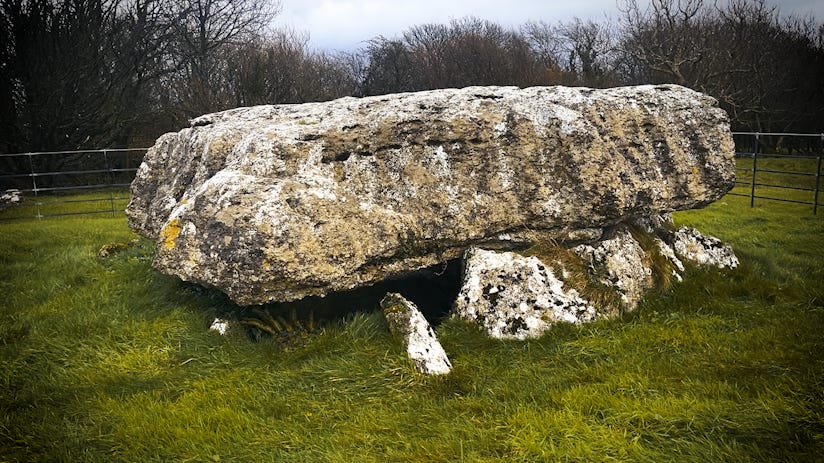
In Scandinavia there we have sites called Giant Graves. As far as anyone can remember they’ve always been there. There are holes in the ground that contain the remains of very large skeletons. Not so large you would call it a giant, but larger than a human, at least for the time. The only thing we know about the giant graves is that you do not disturb the bones, because if you do, you will be haunted by the tall man. If you become haunted by the tall man, the only way to break the curse is to put the bones back where you found them or abandon your home. And I think that’s what happened. Reverend Parry moved the bones of the tall man, and the tall man haunted the families of every Vicar to call the place home since that day. His attacks on the women who tended to the house, could have been misunderstood attempts to ask for their help to find his bones so they could put back, and when he wasn’t haunting them, he was out in the graveyard looking for them himself, and when the Rectory was abandoned, his curse was lifted.
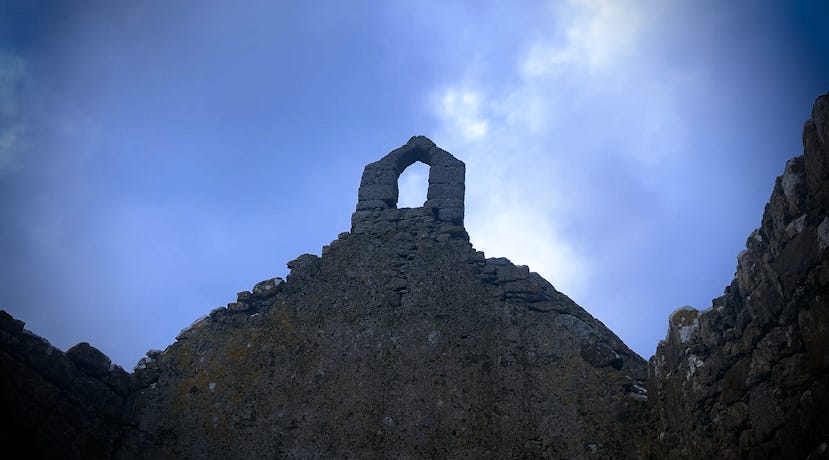
As I alluded to in the very beginning, when this church was built it probably wasn’t originally a Christian construction, it was something else, something older.
When they were enlarging Llaneugrad Church over in the next parish, a man who was digging the foundation for the extension came across a lot of human bones. He called the Vicar over and asked what he should do with them, and the Vicar replied: Leave them exactly where they are, don’t disturb them in any way, whatever you do, if you want to stay free of being haunted, those bones must be left in peace.
Because while the people of Ynys Mon might not be aware that they live in the ruins of an older civilization that predate the Christianization of the island by thousands of years, they still instinctively know that you do not disturb the bones of the tall man.
The thread connecting a pre-Christian burial under an altar, a Victorian shipwreck, Scandinavian giant graves and three servant sisters on a staircase is the kind of research that only someone who genuinely loves this material can pull off. Quietly unsettling in exactly the right way.
Great to have your voice on Substack, Mikkel. I have subscribed and look forward to reading more. I would love you to do the same, if my writing resonates.