
Vampire Country Day 3

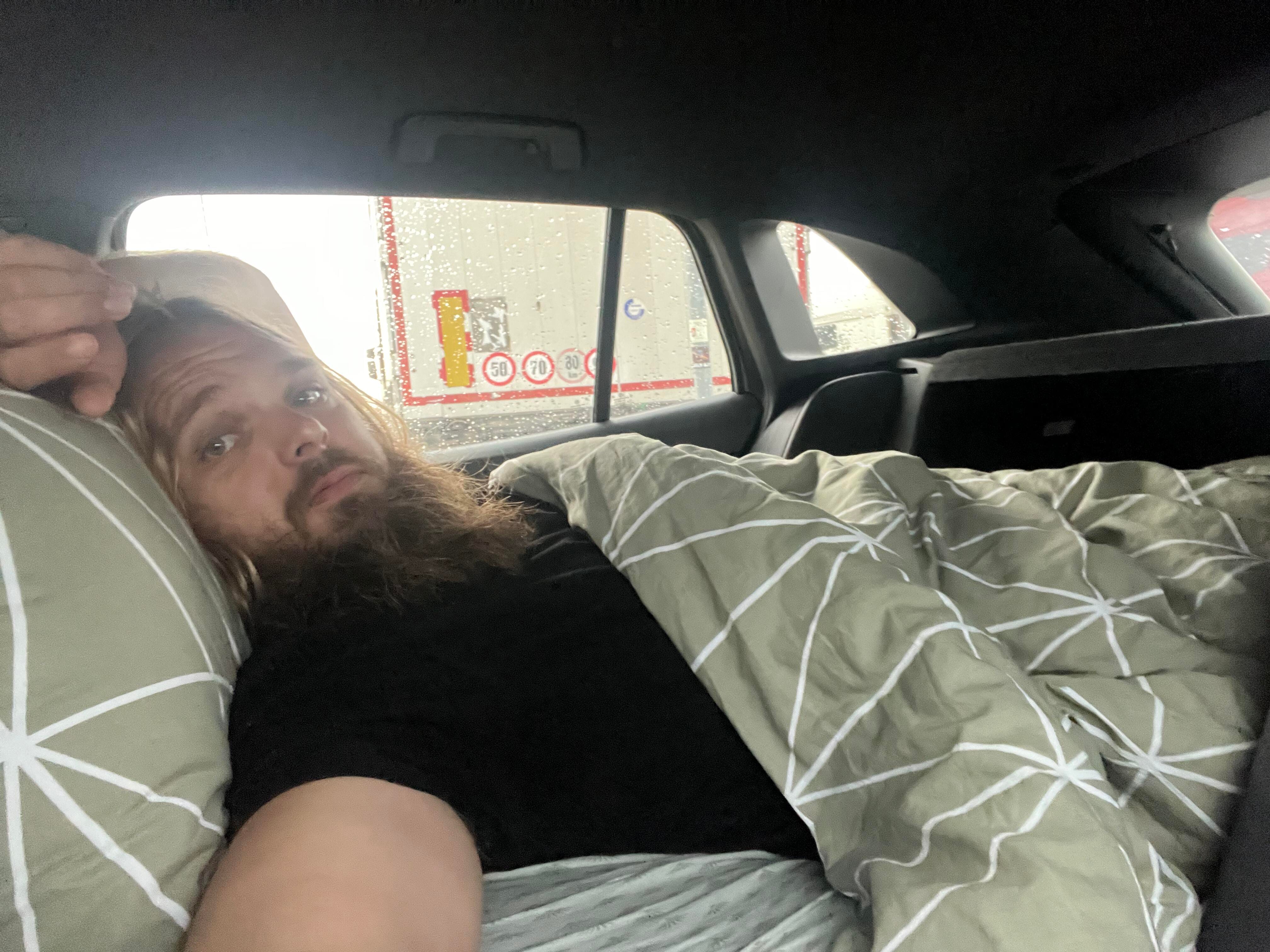
JOURNEY BEGIN: GROSS TRUCK STOP, CZECHIA
I woke up in my car bed setup, feeling very well rested. The truck stop was unusually quiet. Usually, I wake up in the middle of the night because some loud person parks next to me and starts making noise, but the Czech teens who were stranded there were fairly well behaved. They kept the noise and laughter at a tolerable level, and I heard them go to sleep not too long after I did.
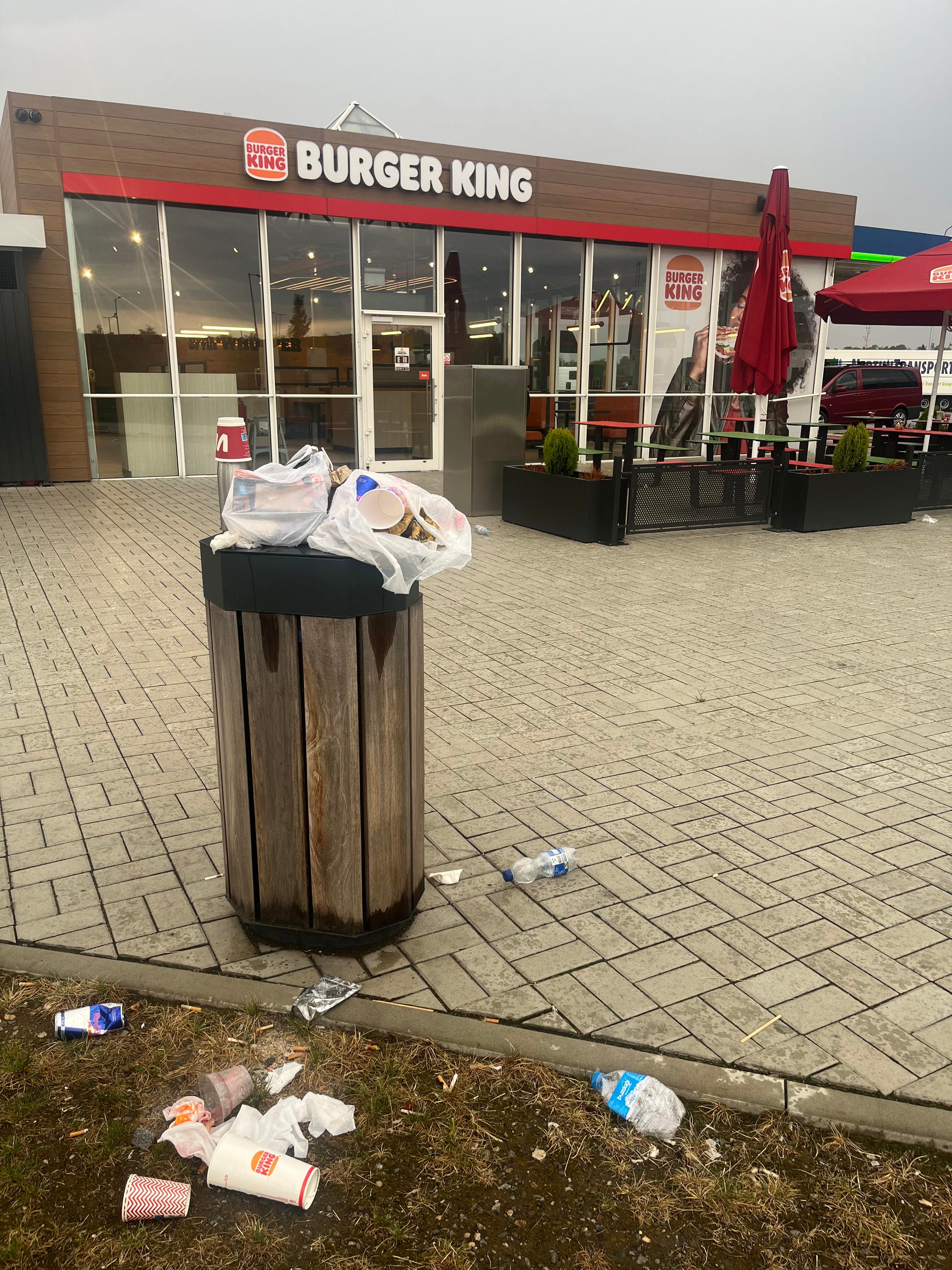
The truck stop itself was extremely disgusting, but I made an observation.
At the first truck stop where I stopped to charge, I had made certain internal comments about how I was definitely in Eastern Europe proper now because the people were loud and they were throwing trash everywhere. But this second truck stop recontextualized that observation and changed my perspective. The people at the first truck stop weren’t Czech, they were German, and German car travelers have no respect for nature. The Czechs here were clearly doing their best not to litter. Whoever was in charge of emptying the bins was just doing a bad job. Most of the trash I saw was in or around the bins, not dropped by the side of the road or hidden in bushes. People had been trying; the system just wasn’t letting them be proper people.
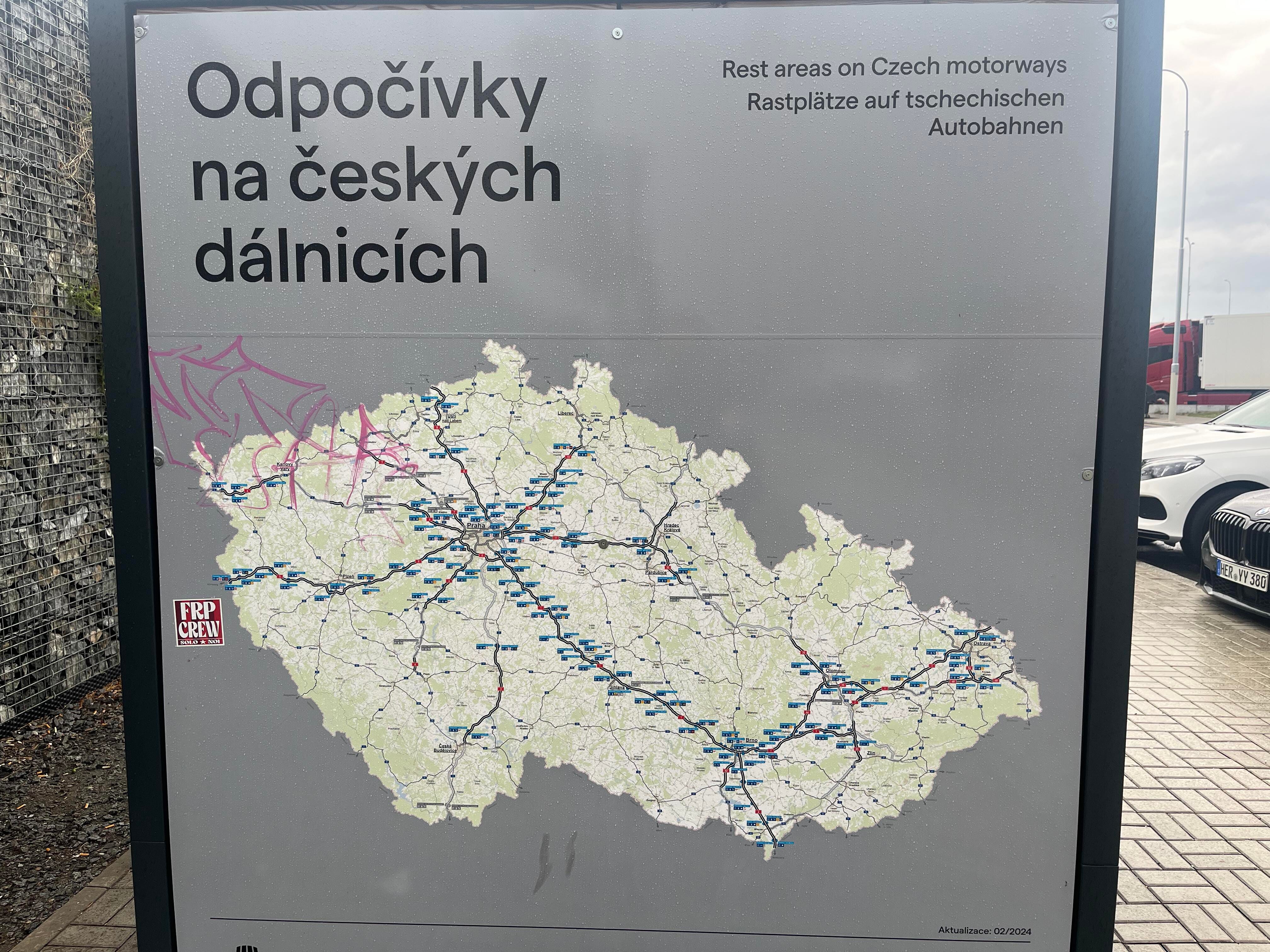
My original plan was to take a detour somewhere in Czechia, like I had done the day before in Germany, but I had no friend here that I’d made plans with, and there was a weather warning, and I’ve come to respect those. So I booked a place to stay for the night in eastern Hungary so I could get a proper shower and a proper night’s sleep. If I had known how comfortable the car bed was, I probably wouldn’t have booked a place to sleep and would have just showered at a truck stop.
I brushed my teeth and had a coffee at a MOL service station, a chain that would become my favorite in the region over the next few hours. They’re great. Unlike German service stations, they’re clean and don’t smell like piss, and the people working there don’t give you the impression that they hate the concept of being alive. They just give you that bearable, “I just work here, dude,” energy, which is a big step up. You can get a coffee that tastes like the machine was cleaned recently, and there’s usually a seating area with a view of the road and outlets where you can charge your devices. MOL is my new friend, and I’ll be sticking to them whenever I’m in Central Europe or the Balkans.
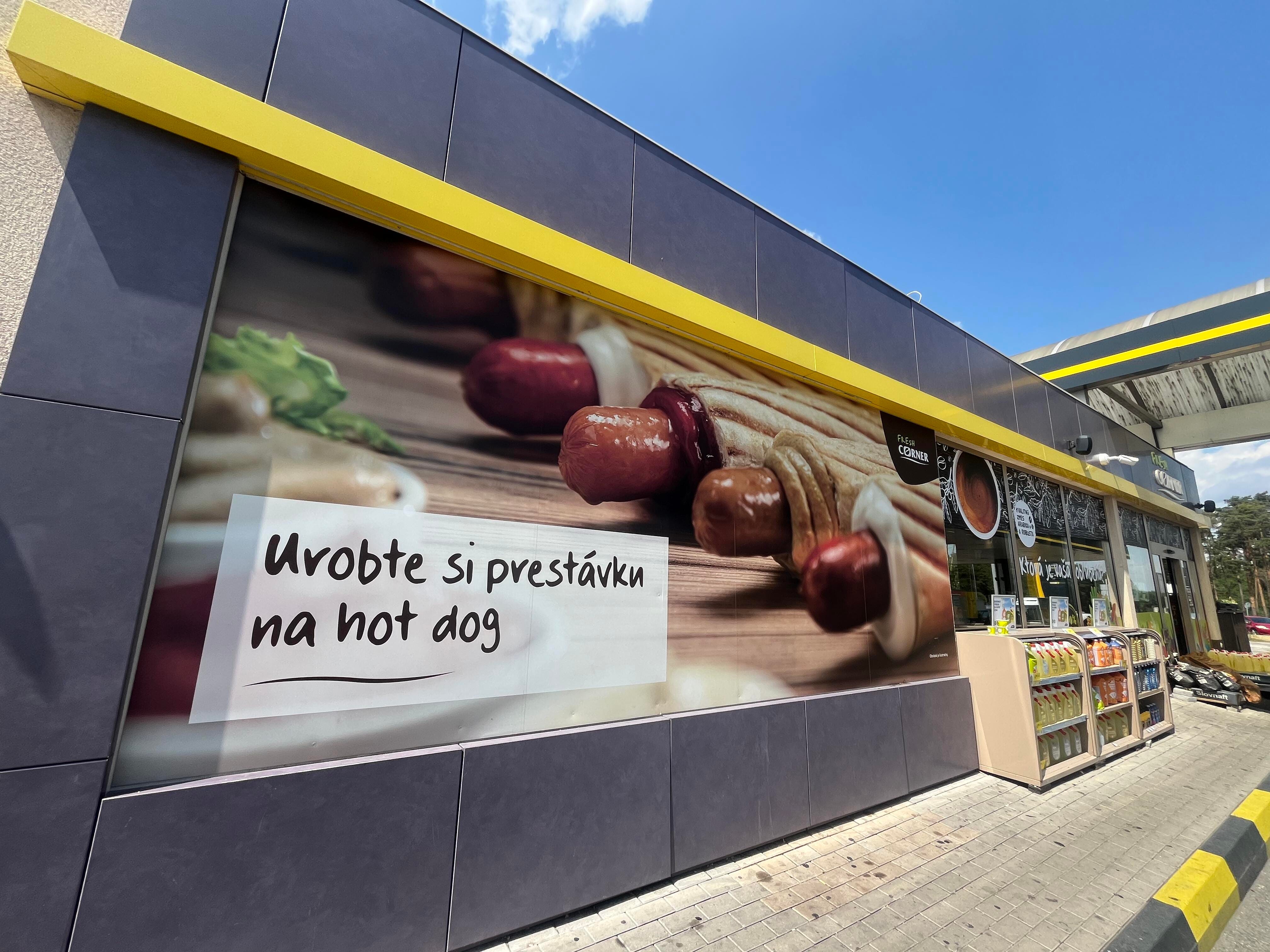
As I was leaving the station with a fully charged laptop, something strange caught my eye: an ad for a hot dog. You can get hot dogs at most service stations, but this kind of hot dog is not one I’ve ever seen outside Denmark. It’s called a Fransk Hotdog, and in the West it’s one of our country’s famous unique dishes. But here it was. I was looking at an ad for a Fransk Hotdog somewhere in Czechia, and figuring out what it was doing here when it supposedly shouldn’t exist became one of my new favorite unsolved mysteries.
There are many conflicting origin stories for the Fransk Hotdog, and many people claim to be its inventor, but the basic story goes like this: a man on holiday in France sees someone cut open a baguette, hollow it out, and fill it with either meat or duck pâté. Fascinated by the idea, he returns from his vacation and begins to invent a Danish spin on it, which, of course, means putting a sausage inside. He dubs it the Fransk Hotdog to honor the French, and it becomes a hit among people who enjoy eating hot dogs but don’t want to make a mess. Today, it can be bought at most places that serve food on the go, and McDonald’s originally had trouble making a dent in the Danish fast-food market because they refused to serve hot dogs of any kind.
In other versions of the story, the hot dog already exists in France, and the man who brings it to Denmark also eats it in Norway, where it’s known as a Monte Frank, which eventually becomes Fransk Hotdog in Danish.
Regardless of which version you go with, there’s one problem: none of them are true. The guy from the 1800s who supposedly saw Parisian street children scoop the insides out of a baguette and fill it with duck pâté never existed. No one in France or Germany, where the dish supposedly originated, according to some stories, has ever heard of a sausage stuffed into a baguette, and some are even offended that the Danes disgrace their bread like that. And no hot dog cart in Oslo has ever served anything called a Monte Frank.
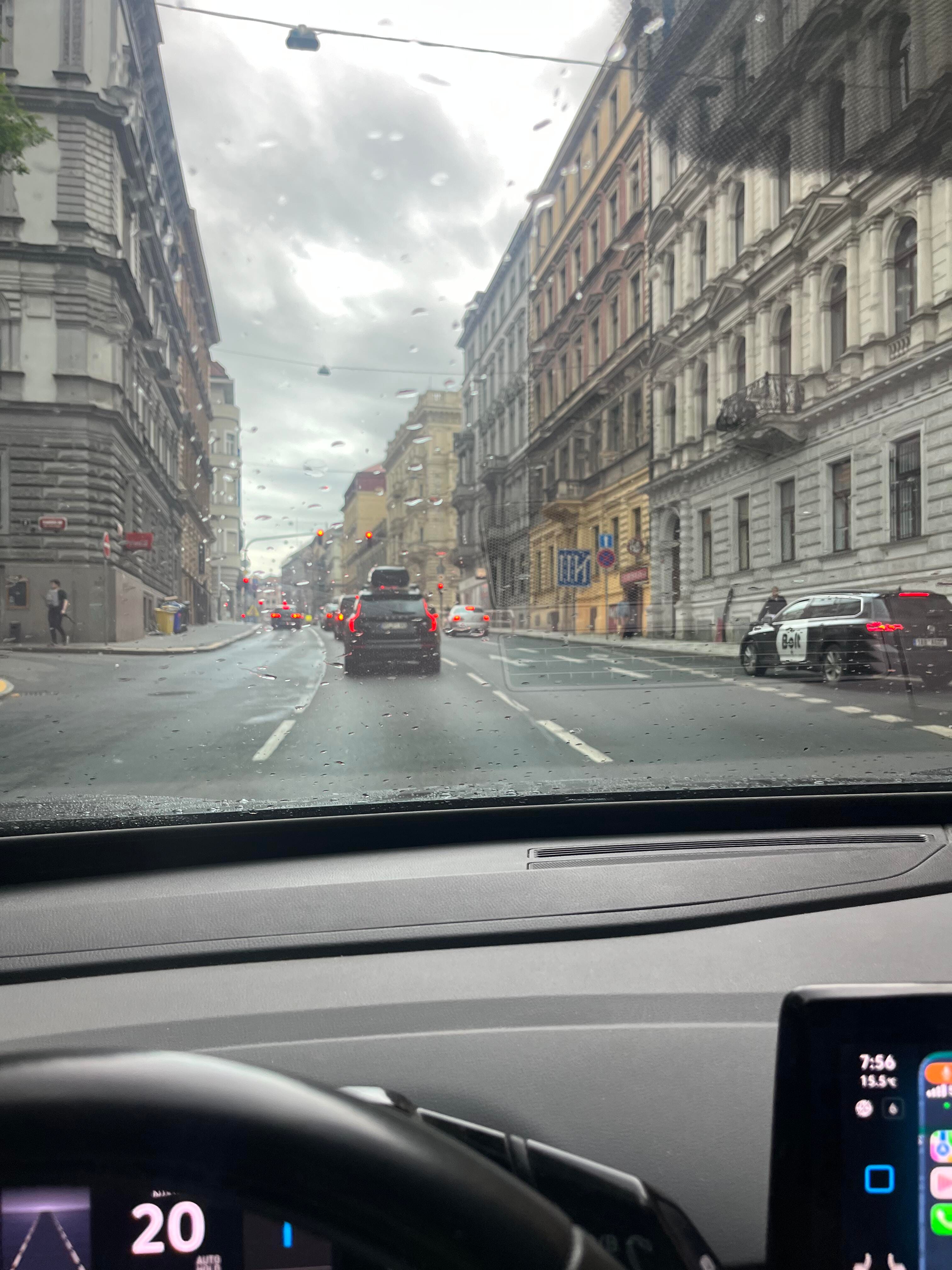
As I was thinking about all of this while driving, I made my way from one end of Czechia to the other, and as I passed a sign for a town called Brno, I snapped out of my trance.
Funny word. No idea how to pronounce it. Czech is an odd language.
I passed Brno and entered Slovakia, and then I saw something up on a hill: a giant statue of a bird. It couldn’t just be some random bird statue, so I asked a Hungarian friend about it, knowing I was about to enter, if I hadn’t already, the historically Hungarian part of Slovakia.
Peti was helpful and told me the bird had to be the Turul, a legendary eagle-like creature that guided the Hungarian people safely through a mountain pass to what is now Budapest, where they eventually settled.
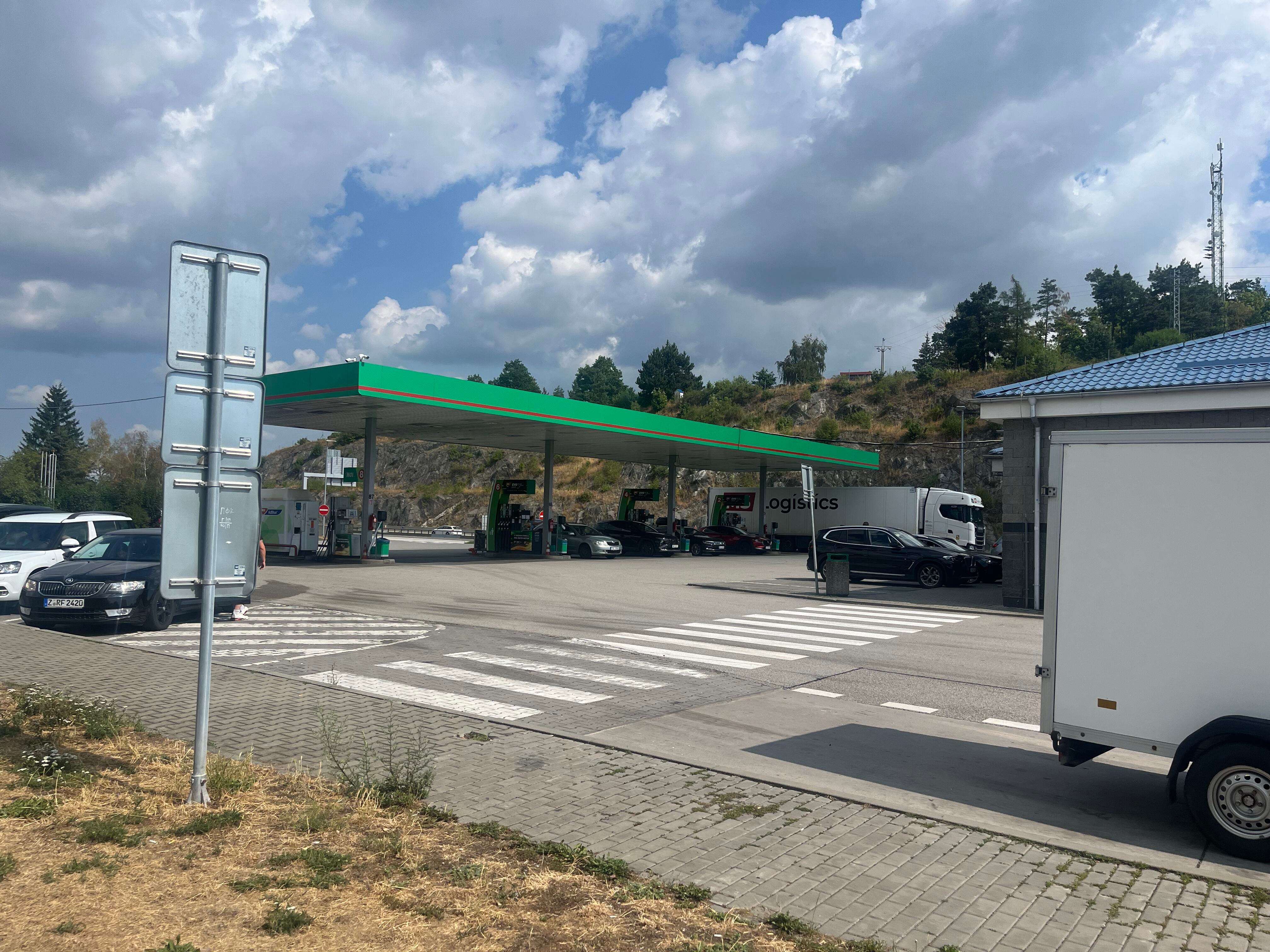
That was it. The hot dog. The service station. Hungary.
MOL is Hungarian, and in the 1800s most, if not all, of Hungary’s musicians were Jews. According to an apocryphal story, these Jewish musicians would only take Jewish children under their wing and train them to fill positions in Budapest’s orchestras as they became available. This eventually angered the city’s aristocracy, who drove the Jews out, forcing them to flee.
The story is probably not entirely untrue. People have always favored their own families. These people just happened to be Europe’s most hated minority while also occupying highly coveted and highly visible positions.
Many of these Jews fled to Denmark, where they became known as the music Jews, and many prominent musicians today descend from them. They brought more with them than music, they brought food. Many spices and new types of bread became part of the Danish diet, and today, if you visit a Danish grandmother at Christmas, you’ll usually find Jew cakes in the cookie tin.
I wonder if they were also the ones who brought the Fransk Hotdog.
It seems like a stretch at first glance, until you examine the dressing that goes into a Fransk Hotdog. It’s not just any dressing; it’s Fransk Hotdog dressing, unique to the dish. It contains mustard, curry, béarnaise essence, and other spices. Many of these ingredients became common in Danish kitchens after the music Jews arrived, and if you order a hot dog from MOL, two of the sauces you can put on it are mustard and curry.
I don’t know if I’m onto something, but thinking about it kept me occupied for hours, and before I knew it I had driven through Budapest and made my way into the Hungarian Plain. From there to my destination of Debrecen, the landscape became an endless procession of hay bales and an ever-fading view of the mountains to the northwest.
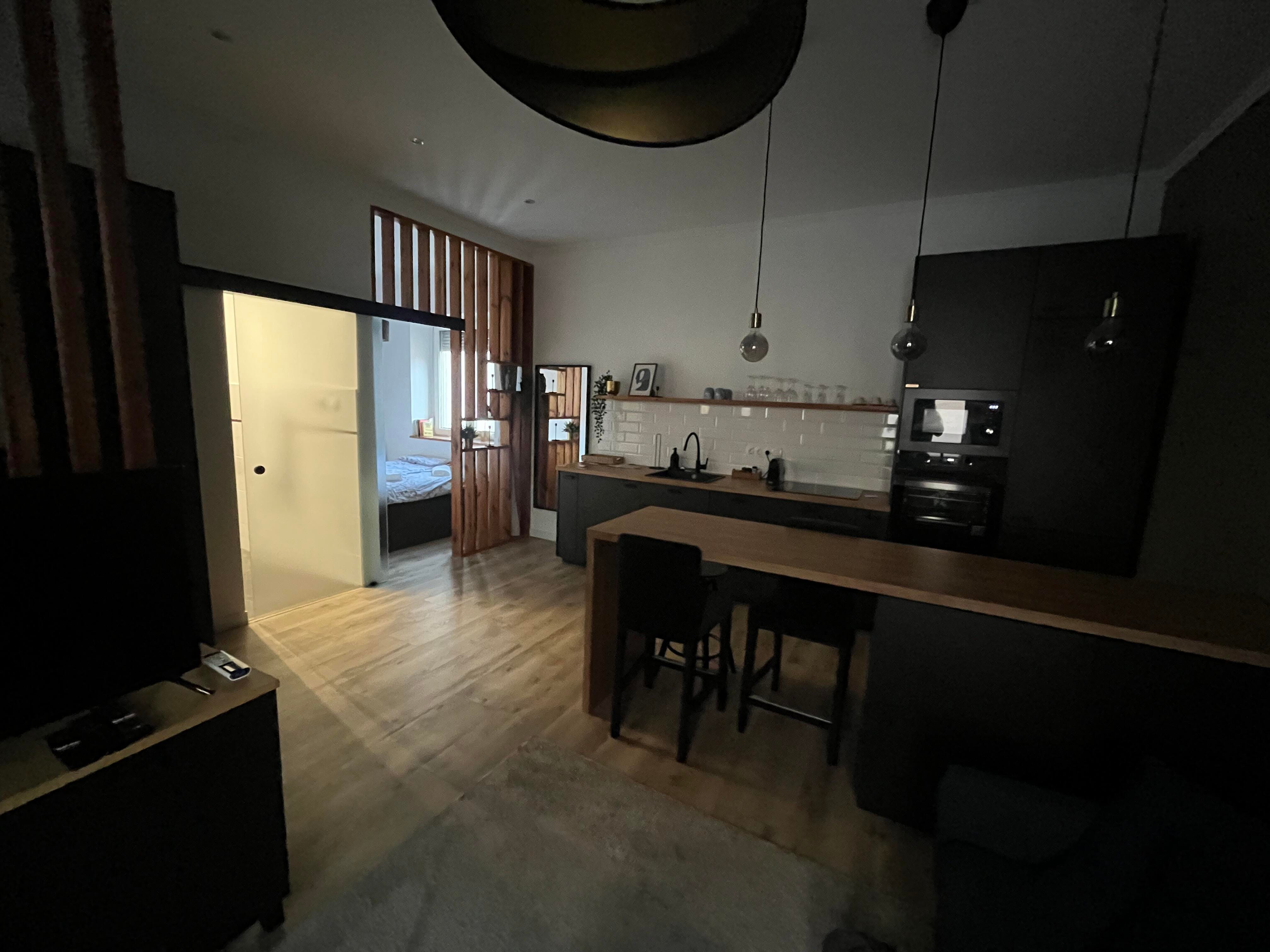
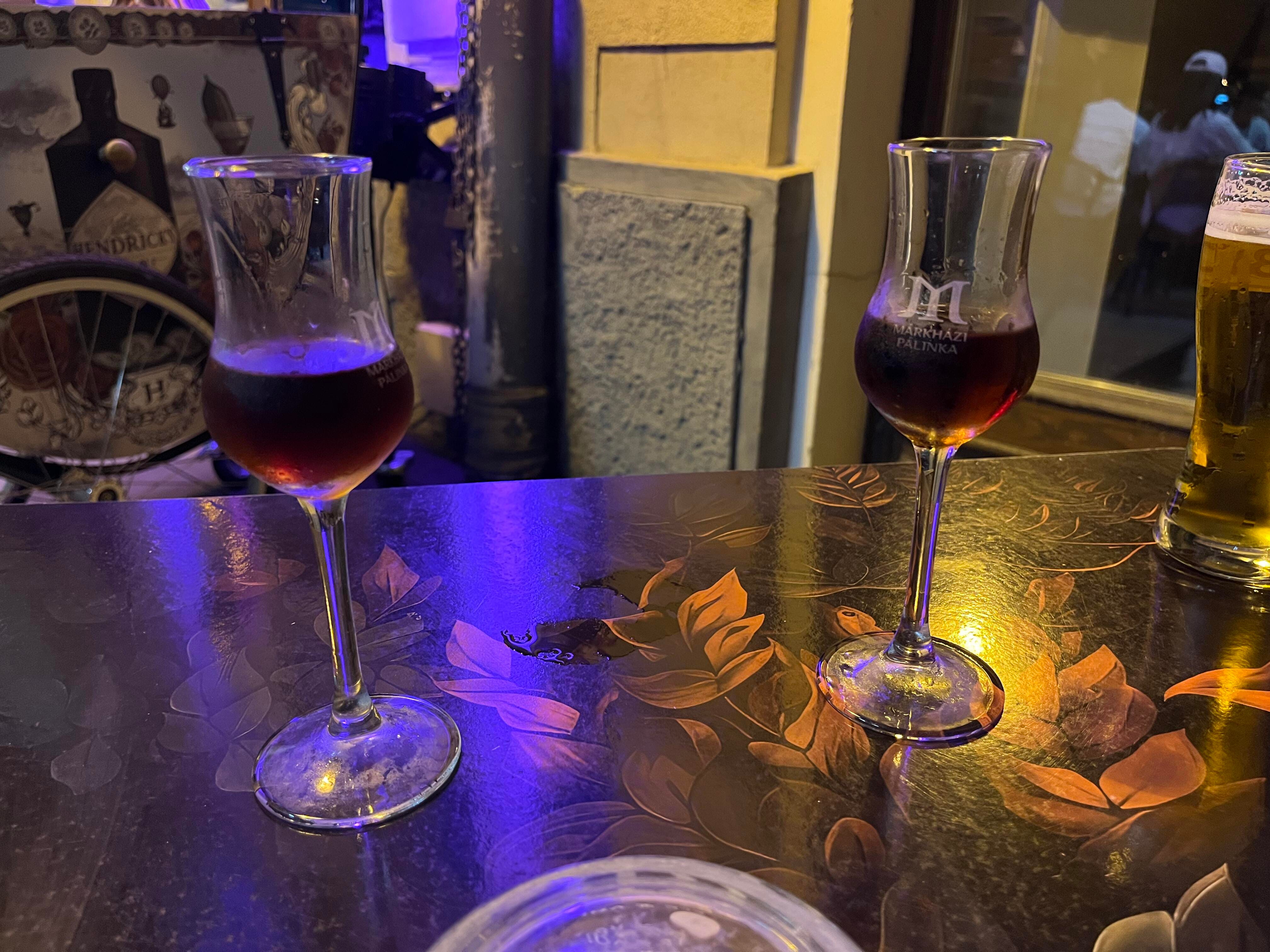
I arrived in the city and checked into my accommodation, which was a nice little apartment in a back alley next to a town square. I texted my friend to ask if he wanted to grab a few drinks, as I wanted to try some local brews while I was there. He showed up an hour later, and we drank Hungarian beer while I tried pálinka, which I hadn’t had in decades. It’s a fruit brandy that burns in all the right ways on the way down, and it’s made in practically every village across Hungary and beyond.
After two shots of pálinka and three beers, Peti and I realized we were both over thirty and had a long day ahead of us. So we said our goodbyes, and I went to bed and slept like a rock.
JOURNEY END: DEBRECEN, HUNGARY
How cool! I'm actually part Hungarian, but I've never visited, so this was an interesting read. It's on the list to go one day!