
Vampire Country Day 4

JOURNEY BEGIN: DEBRECEN, HUNGARY
I woke up at 9, having slept like a rock in my little alley apartment. I made plans to pick up Peti and his wife at 10, so I packed my things and charged the car at a service station. A MOL service station, of course—one where they serve hot dogs. I’m going to have to try one on the way home so I can compare it to a Danish Fransk Hotdog.
I had a coffee there, and it would be the first of many coffees that weren’t really coffees at all, but just multiple espressos in a cup. I’m not opposed to espresso, but sometimes I want a regular cup full of regular bean juice to sip slowly while it gradually wakes me up, and espresso just doesn’t work for that.
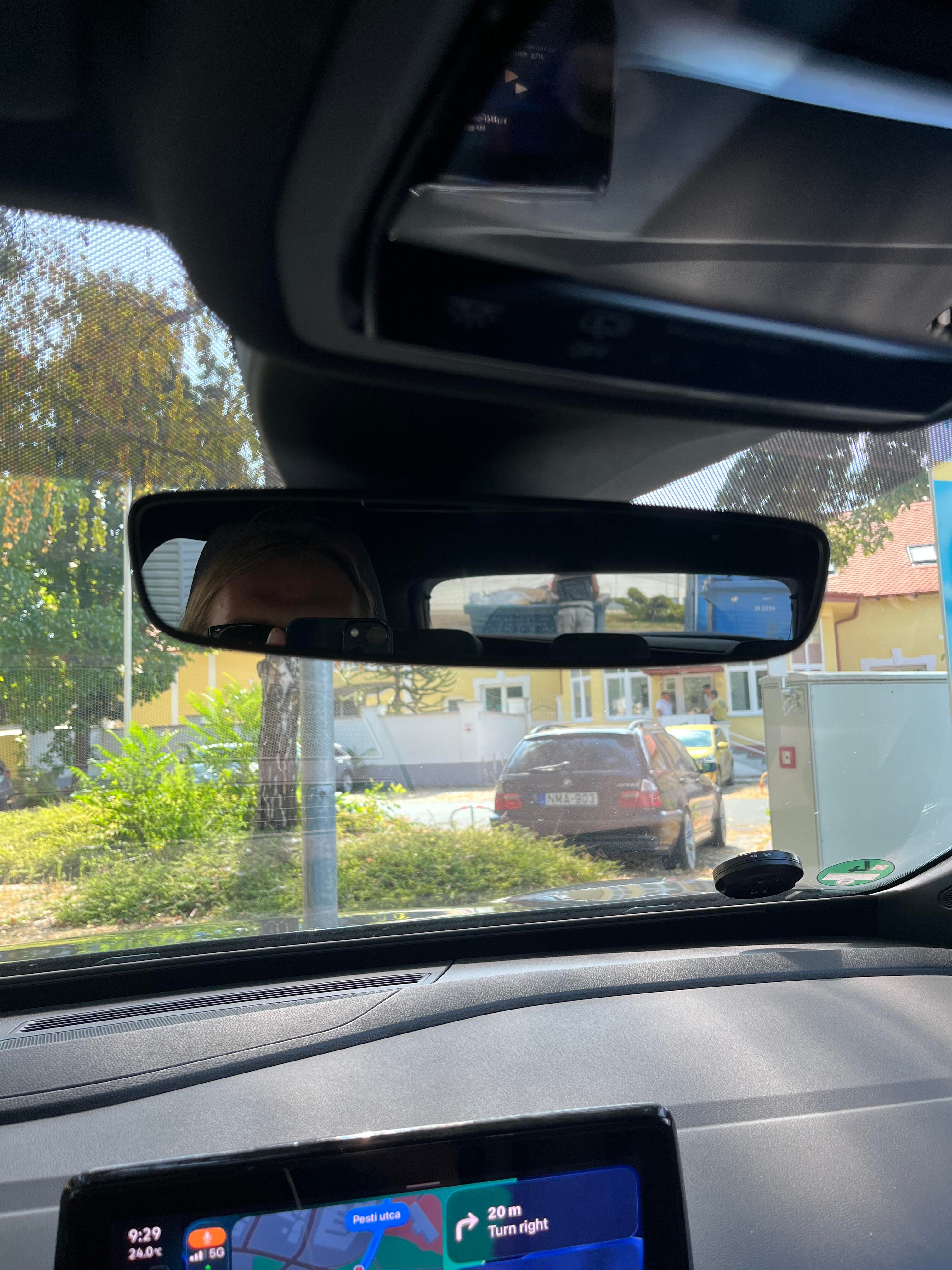
I looked in my rearview mirror and saw an elderly Hungarian man walk by a dumpster. He pretended something in the dumpster hadn’t caught his eye and walked past it. Then he stopped and acted as though he’d forgotten something. He turned around, looked to see if anyone was watching, and then walked back to the dumpster and attempted to pull something out of it. Whatever it was didn’t come loose, and he looked around again to see if anyone had noticed the sound. He did this a few more times before looking around one last time and walking away. There has always been a debate over whether Hungary is part of the Balkans, but I’ve seen enough situations like this to confirm that they absolutely are.
The charger clicked done, so I unplugged it and began driving toward Peti’s house. I should probably introduce him and his wife, and explain what we’re doing.
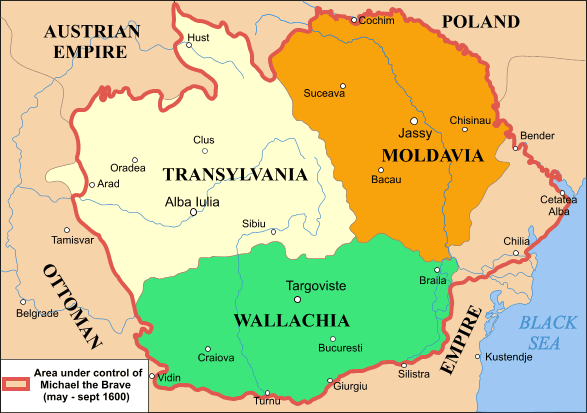
We’re heading to Transylvania. Today it’s part of Romania, but it isn’t exactly Romanian. It maintains its own cultural identity, and the most populated parts of the region are primarily Hungarian-speaking. The region might technically be majority Romanian-speaking, but most of the culturally important areas are Szekely, the Hungarian minority that have lived here for thousands of years.
The Romanians are very sensitive about the region because they derive a great deal of national pride because they descend from the Dacians and were once subjects of the Roman Empire, hence the name Romania. The problem with that is that many Romanians today don’t descend from the Dacians, but most Szekely do, and they’ve identified as Hungarian for the past 900 years, not Romanian. Transylvania was part of Hungary until the Second World War, after which it was given to Romania because Hungary chose the wrong side of the war.
So the most economically prosperous and historically rich region of Romania is also the least ethnically and culturally Romanian. If Romania heavily promotes the region, it becomes more apparent just how distinct—and how un-Romanian—it is. If they do nothing, then eventually the people there may decide to secede and take a large chunk of the nation’s economy and identity with them. The compromise Romania has come up with is to make the region bilingual. Put all the signs in both Romanian and Hungarian, promote the pockets of Romanian settlement in the region, and advertise a shared European identity over a national one. It works to a certain degree. But the travel advertising budget for the region is still practically nonexistent, and the newest travel guides I could find in my native language were already twelve years old.
So, no one comes here, and hardly anyone speaks English, which means I’m going to need help. That’s where Peti and his wife, Zsofia, come in. They both speak Hungarian, and Zsofia is knowledgeable about the border region between Hungary and Transylvania, so their help will be invaluable. They’ll also get a cheap vacation out of helping me, because I always pay for accommodations and travel costs when people assist me.
I’ve known Peti for years, but we’ve never met in person before. We play video games together, and even though we don’t spend more than a couple of hours together each week, we’ve gotten to know each other well over the years.
I picked them up, and we drove toward the Romanian border. Romania still wasn’t in the Schengen zone, which, for the Americans reading this, means it wasn’t part of the EU’s passport-free travel area despite being a member of the EU. So it has border control and you’re supposed to show your passport, except you don’t.
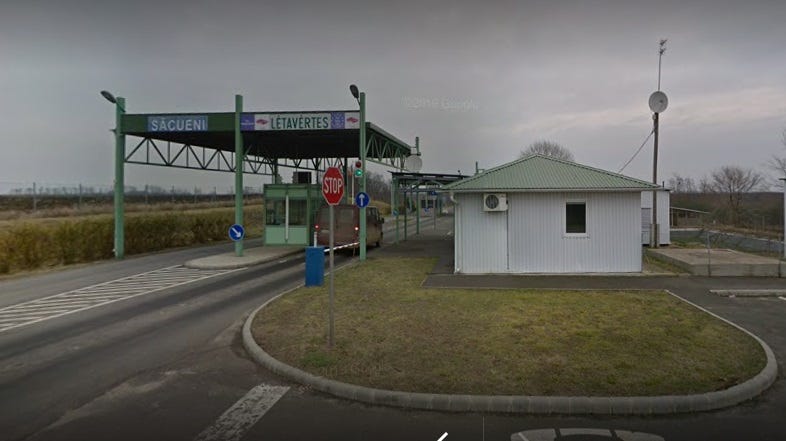
As we approached the border, it looked like a proper border. There were signs warning that we could be searched, and I could see booths in the distance. But as we got closer, I realized they were all empty, and while the border technically exists, you just drive straight through it, which I found very disappointing.
I’m old enough to remember when a large part of Europe wasn’t in Schengen, and crossing into another country felt like entering an entirely different world. The borders were guarded by men in strange uniforms I didn’t recognize, and my parents would hand over documents to stern-looking officials and converse with them in languages I didn’t understand. They’d be asked questions, answer them, and then there would always be an awkward silence before another follow-up question. The final silence was always longer than the previous ones, and then I’d hear the click that meant the documents had been stamped, and that meant I was about to see a place I’d never seen before. I can’t hear the sound of a stamp without thinking of a border crossing—not that I hear many stamps these days.
In many countries today, driving across the border doesn’t feel like entering another country at all. With open borders, people from both sides live and work across the frontier, and the cultures have blended together. Up north, for example, when you enter Germany from Denmark, you don’t really enter Germany. You drive from a region that’s majority Danish into another region that’s still largely Danish for the next twenty kilometers, and it’s not until you begin seeing signs for Hamburg that things start to feel properly German.
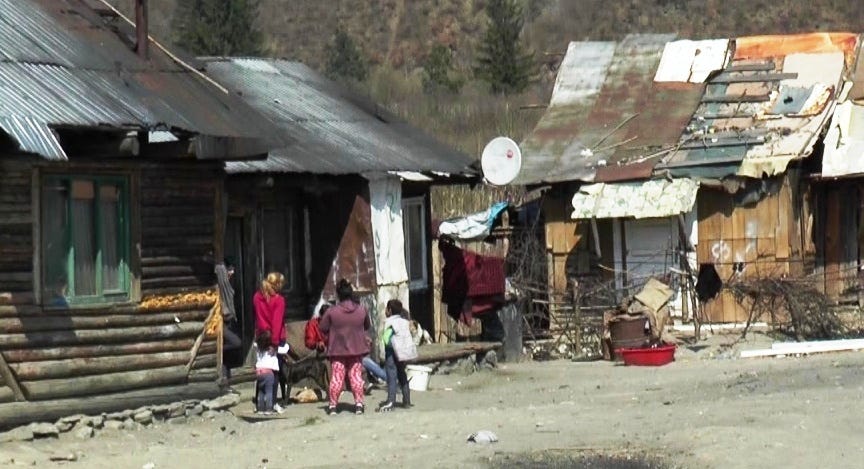
The Hungarian-Romanian border is different. You go from Eastern Europe to what feels like a Third World slum the moment you cross it. The area around the Romanian border is primarily occupied by the Kalderash people, whom most locals simply call Gypsies or Zigeuner, terms many Western Europeans find offensive, so they instead use Romani, which is often considered inaccurate or even offensive by people in this region because it refers to a specific group living in Britain and the Americas.
No one knows who the Kalderash are, but I’ll use that name for this article. When I’m traveling, though, I use Romani with Western Europeans and Gypsy with Eastern Europeans.
The Romanian government is in the process of undoing five hundred years of unfair treatment of the Kalderash, and they’re making positive changes in the region, but these things take time. The areas where the Kalderash live are, to put it politely, absolutely fucked. I’ve been to war-torn parts of the Balkans that were less depressing than the Kalderash village we drove through on our way to Transylvania.
But then something appears in the landscape that doesn’t fit the scenery at all: their palaces.
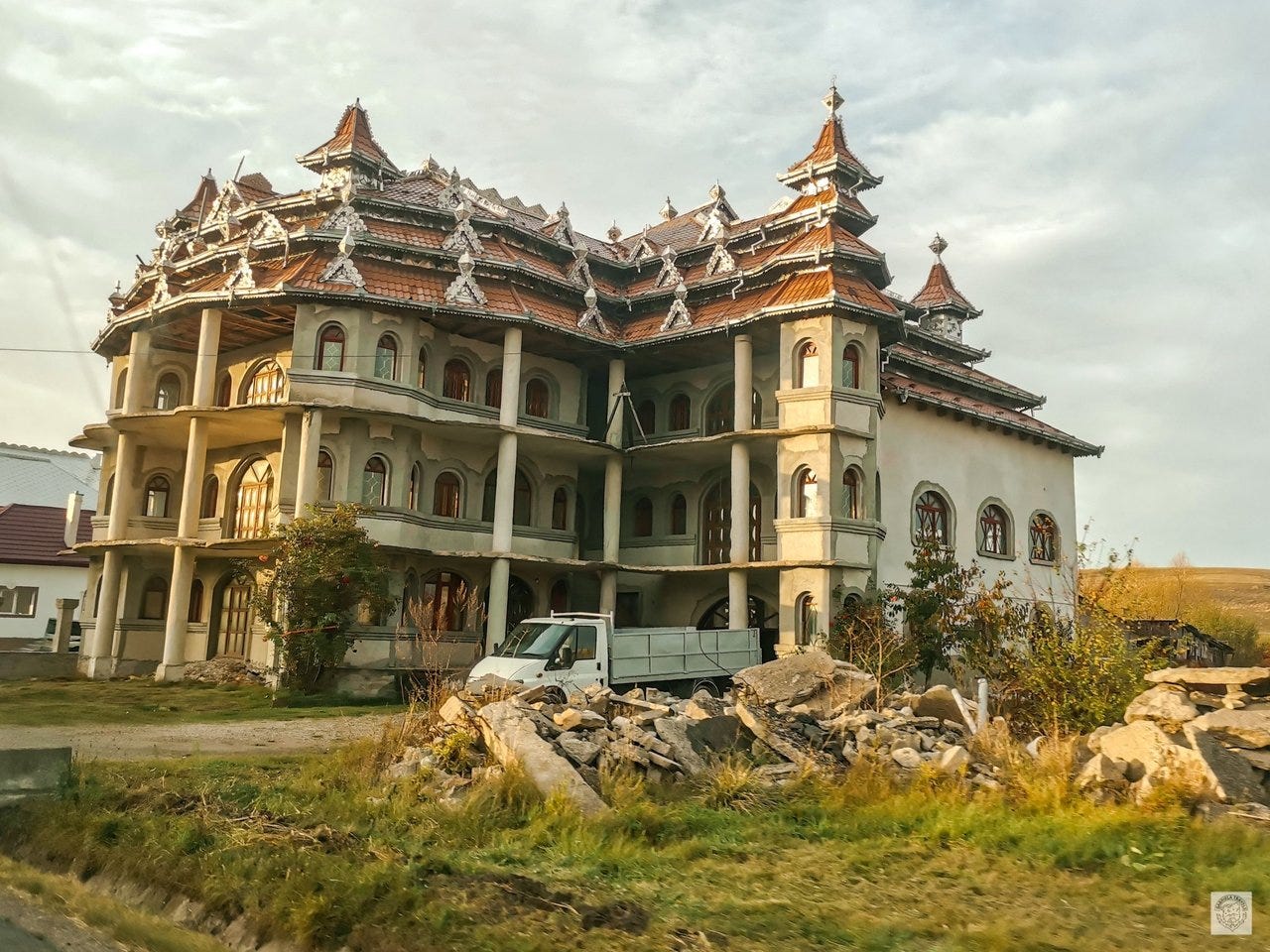
The Kalderash mostly work in construction, often abroad. They send money back home so the heads of their households can build and maintain houses that are nicer than their neighbors’. Around here they’re called Gypsy palaces, and back in Hungary they’re beginning to become tourist attractions. I’d seen the carefully curated photographs of these palaces before, so it was interesting to see what they really looked like up close. They’re hidden behind gates, battered cars are parked in the driveways, the streets outside look like a bomb has gone off, and everything around them—unless it’s another palace—is practically in ruins.
That’s what fascinates me about the Kalderash. They don’t care what outsiders think, which is why the streets look the way they do. They only care what other Kalderash think, and they want them to feel bad that they don’t have as nice a palace as they do. There’s nothing more European than only giving a shit about what your next-door neighbor thinks of you, and wanting him to envy you.
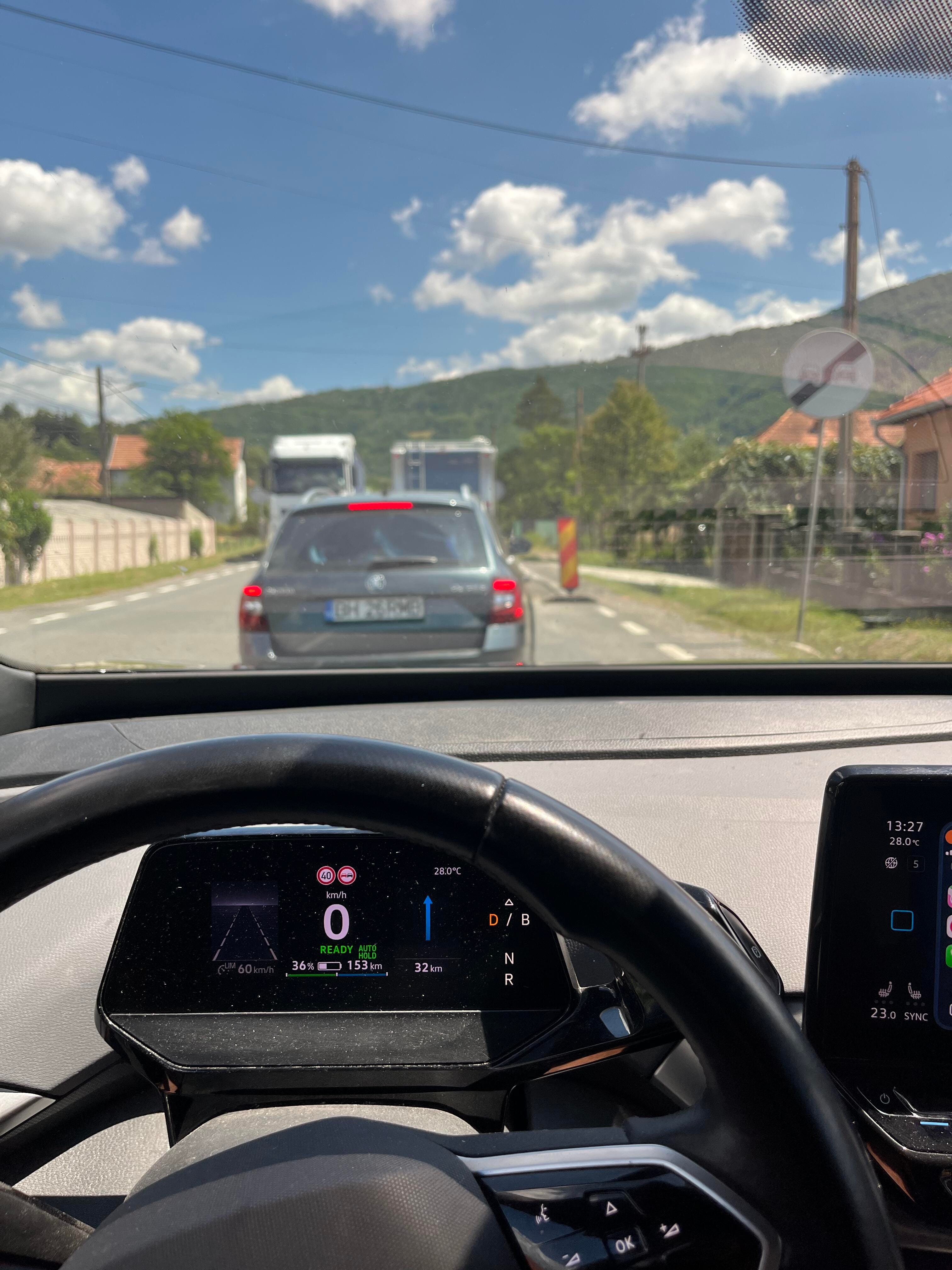
We left Kalderash country behind, and the landscape began to slope upward. Before long we were in the mountains. The Romanian government is expanding the motorway from the border to Cluj, so we had to drive through winding mountain roads, climbing ridges and descending into valleys. What stood out to me was the absence of water. I’m used to seeing a mountain lake in every valley in places like the Alps, but here, unless there’s a dam, there isn’t much standing water at all. It feels strange in a way I can’t quite describe. Maybe it’s because running water is supposedly one of the most effective ways to stop a vampire, and in this region, where they’re said to be common, there are very few streams for them to be stopped by.
The city of Cluj appeared in the distance as we drove up the side of a mountain, then disappeared as we drove back down again. Then it appeared, and disappeared again, but each time it came back into view, it was closer. We arrived in the afternoon, and I’d booked a nice place on a hill within walking distance of the city center, but far enough away that you couldn’t hear the sounds of the city.

Cluj is the de facto capital of Transylvania. It sits in the middle of the Cluj River valley, and the Someș River passes through it. The city’s geography forms the basis of the flag of Transylvania. The blue represents the mountains on either side of the valley, and the yellow represents the river. The star and crescent moon symbolize the conflict between the Hungarians and the Ottomans, and how the Transylvanians found themselves caught in the middle.
The city is ancient. It was the largest city in the region when it was conquered by the Romans in the second century. After that it belonged to the Goths, then the Huns, and then various Hungarian states for roughly a thousand years before being traded back and forth between Hungary and Romania during the World Wars.
We ate at a restaurant and then headed back to our accommodation to relax. We had a long day planned tomorrow, when we’d head back into the countryside to visit some real Transylvanian farmers.
You're the best travel guide! I learn so much reading these and feel like I'm right there with you on your journey! You're very realistic as well, not focusing on all the tourist attractions but rather on how real people are really living. It's refreshing.