
Vampire Country Day 6

MORE STORIES FROM CLUJ
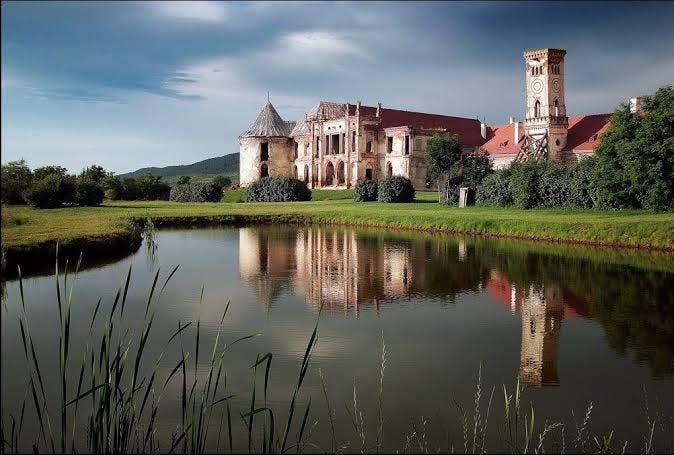
I wake up and remember that yesterday, on the way back from the straw museum, we were supposed to have gone to Banffy Castle. But, in a very Eastern European turn of events, it was closed, and instead of updating their website to reflect that, they had parked a Transylvanian grandpa outside in a golf cart to inform visitors of the situation.
Why was it closed? They had used it for a festival, and cleaning up afterwards was taking longer than expected. He said they thought they would be done by the end of the week if we wanted to come back then. We didn’t.
Banffy is known as the Versailles of Transylvania. It was in the possession of a noble family for almost a thousand years, and then it was taken from them during the communist era. In the 2000s, like many other prominent Transylvanians, they managed to petition the Romanian government to hand the property back to them.
It had more or less been abandoned for hundreds of years and had been in disrepair since long before Communism, so that can’t be blamed for all of the family’s troubles with the place.
I was disappointed, but during the car ride home Peti read the history of the place to me, and my disappointment faded. The place seems to have a reputation for being haunted more because of how dilapidated it looks than because of the stories associated with it. They’re all very standard stuff. Visitors have seen the ghosts of soldiers marching through the halls. A noble girl used to sneak out to the stables to kiss a boy who was not of noble birth, and when a stablehand caught them, she stabbed him to death. His ghost now haunts the grounds. Finally, a servant had an affair with one of the noblewomen who lived in the castle, and when her husband found out, he killed the servant in a fit of rage. Like the stablehand and the soldiers, he too is said to haunt the grounds.
I finish the thought and look at the time. It’s late. I’ve been sleeping in again. I roll out of bed, get dressed, and get in the car. We head to the ethnographic museum downtown.
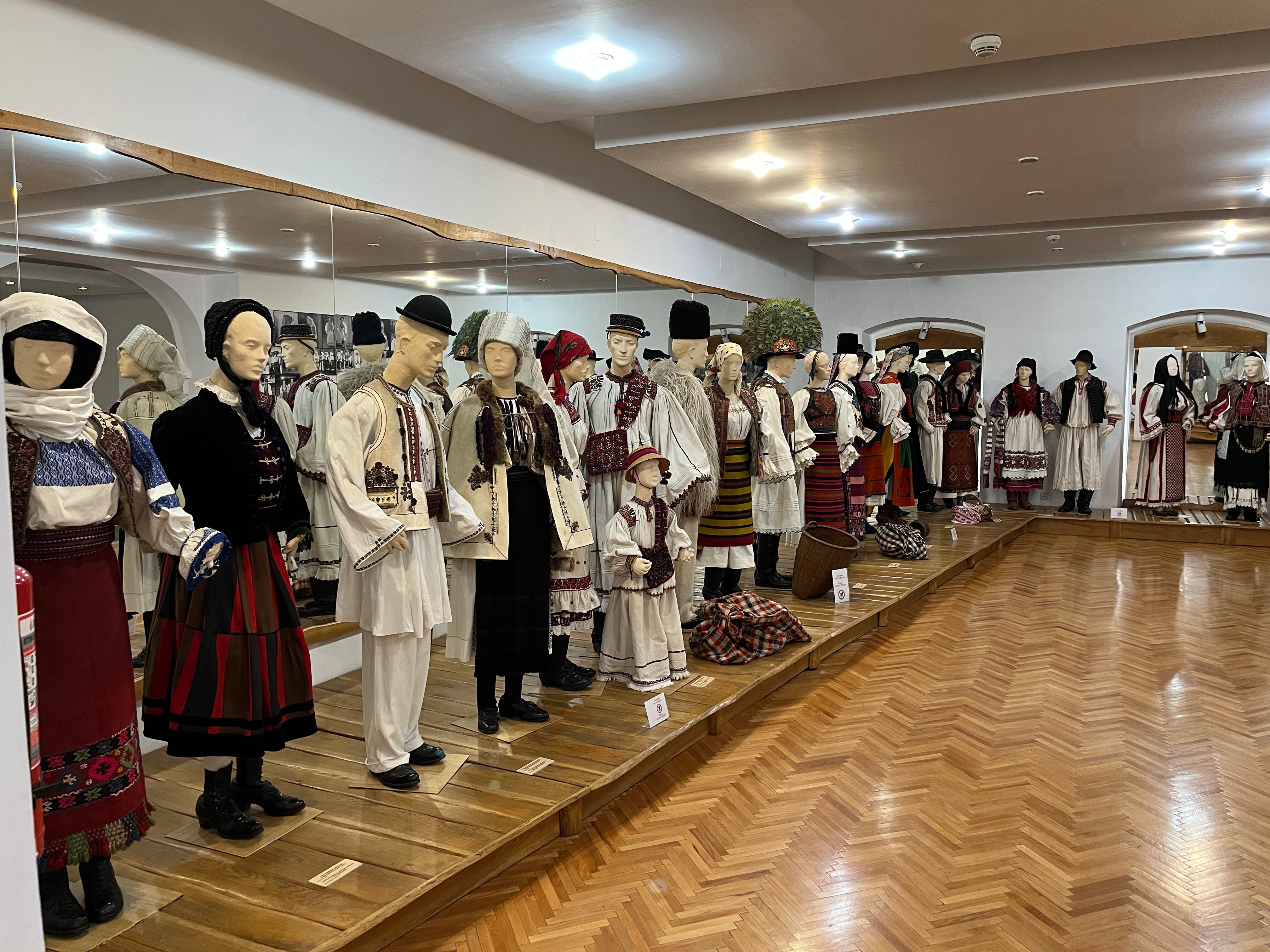
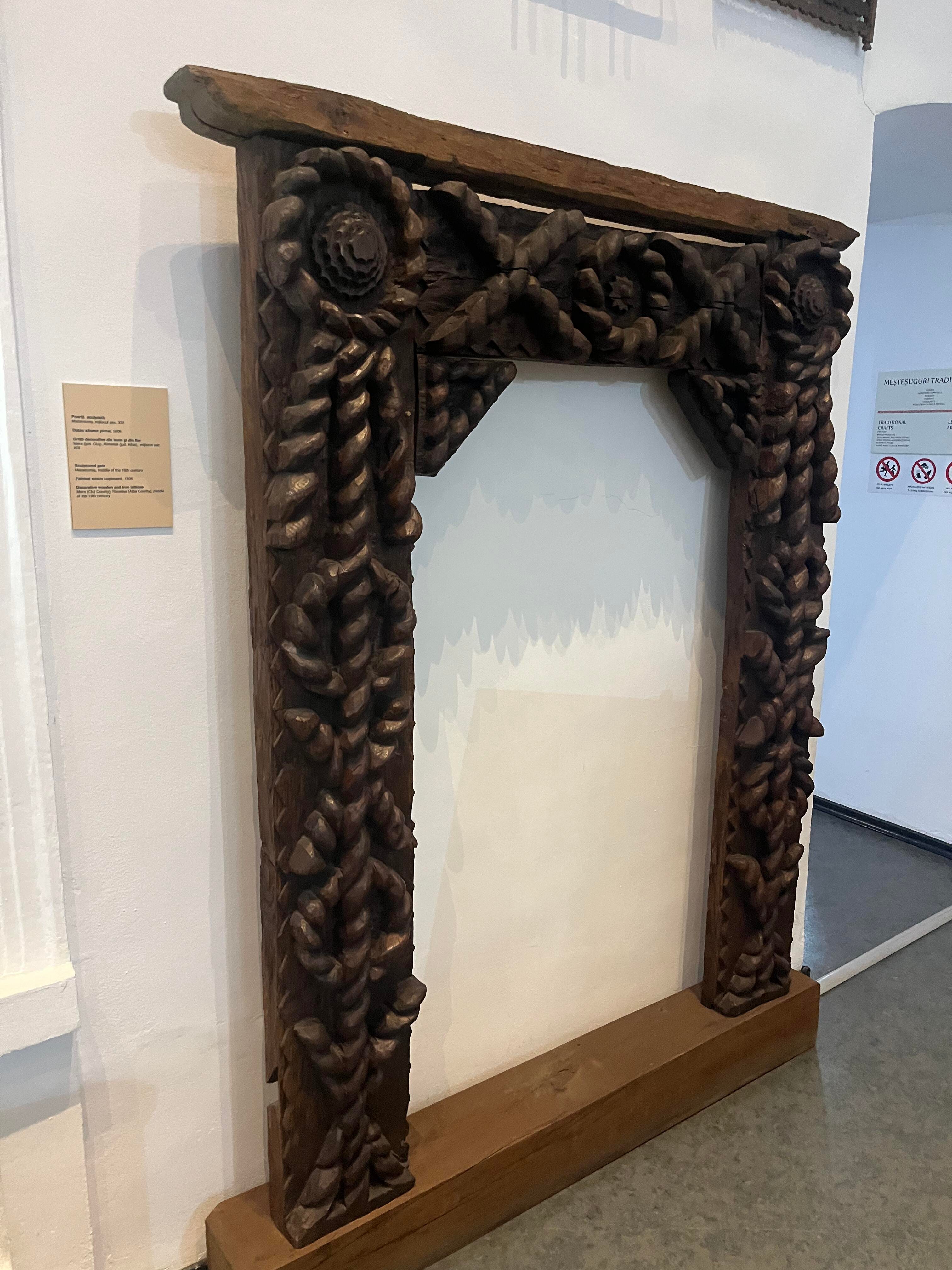
It’s a good exhibit. History tends to focus on the rulers of a place and the big-picture events, and it usually forgets the farmers, but not this place. It’s more interesting to experience than it is to write about, to be honest with you. When you’re there, learning about the different tools they made, seeing the weapons they used for hunting, and discovering how each village had a different cross-stitch pattern in its traditional dress, it’s the most interesting thing in the world. But when you’re trying to tell other people about it, you find yourself saying, “Oh yeah, they wear traditional dresses, and the dresses are different in each village, and they use tools for hunting.”
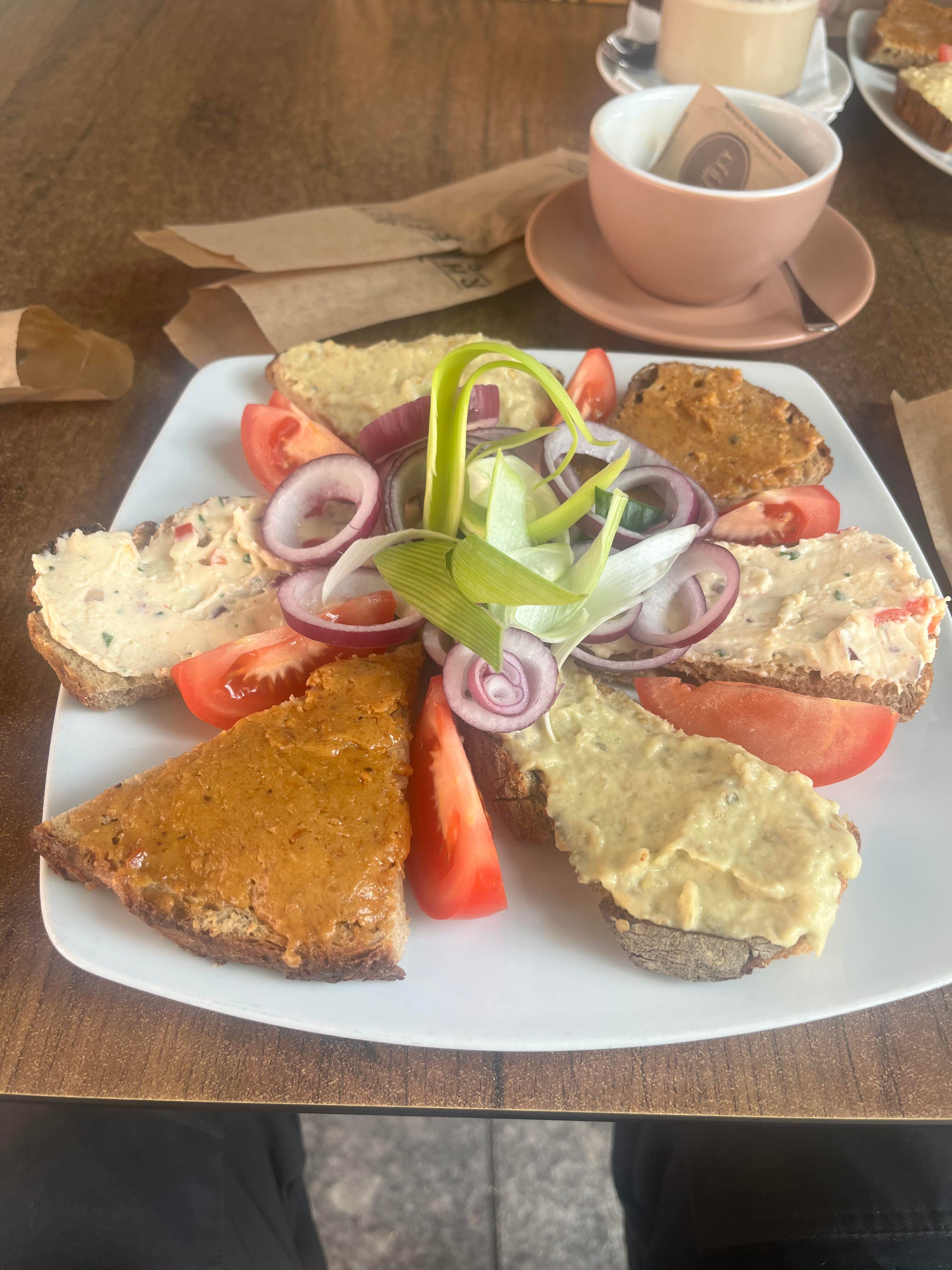
After visiting the museum, we went to a café owned by members of the Banffy family of Banffy Castle fame, where we ate traditional Hungarian spreads on bruschetta. I knew from an earlier conversation about pig butchering that this is the part of the pig they eat around lunchtime. It’s grilled fat chunks ground into a paste, and it’s a unique flavour. I’m glad I tried it. I could happily go the rest of my life without eating it again. I wouldn’t say no if I were offered it in the future, but I wouldn’t order it myself.
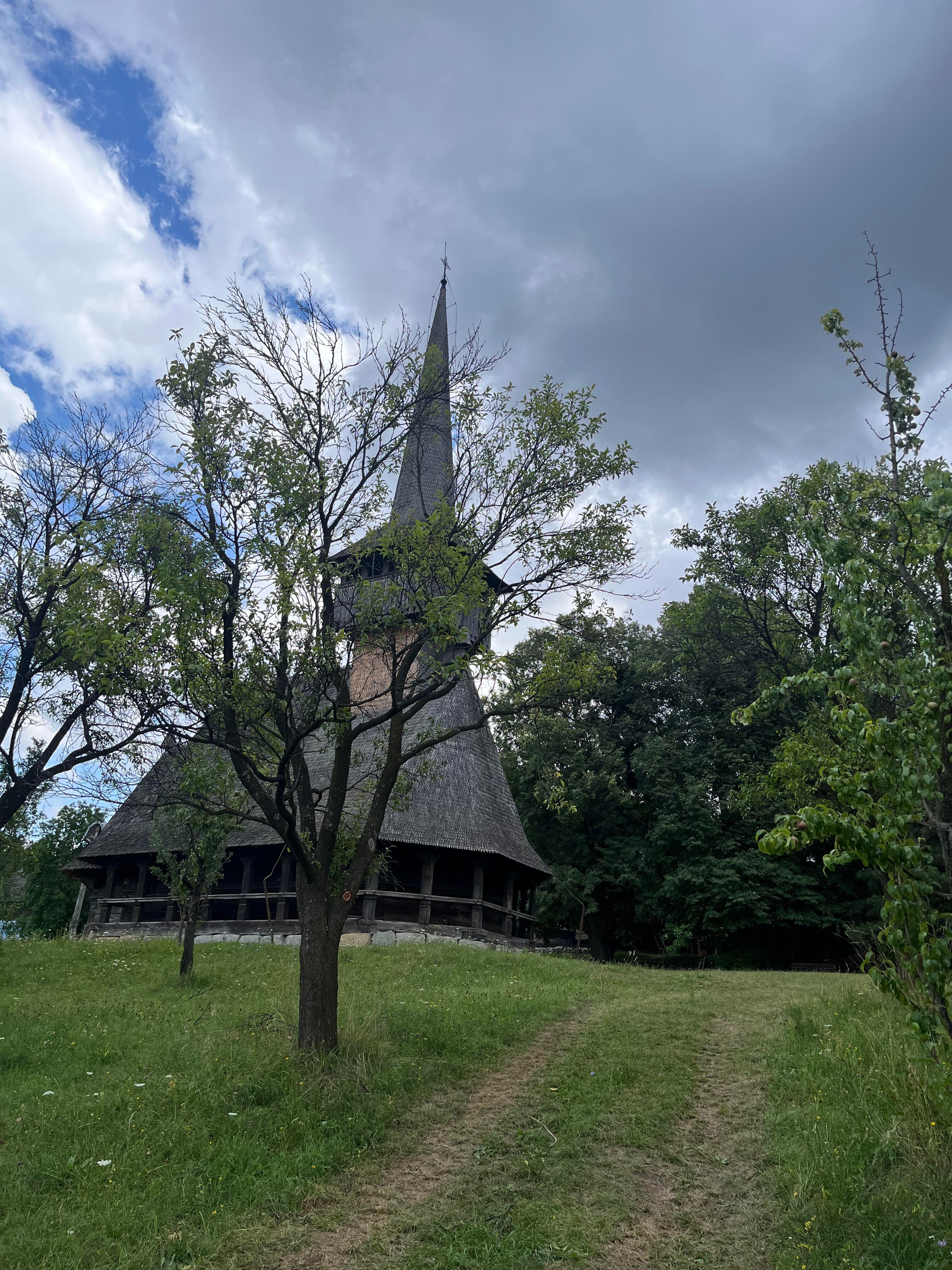
The ethnographic museum we had visited was only one part of the experience, and we drove out to the outskirts of town to see the other part. It’s a reconstructed traditional Székely village, and it has not one, not two, but three churches, along with countless reconstructed farmsteads.
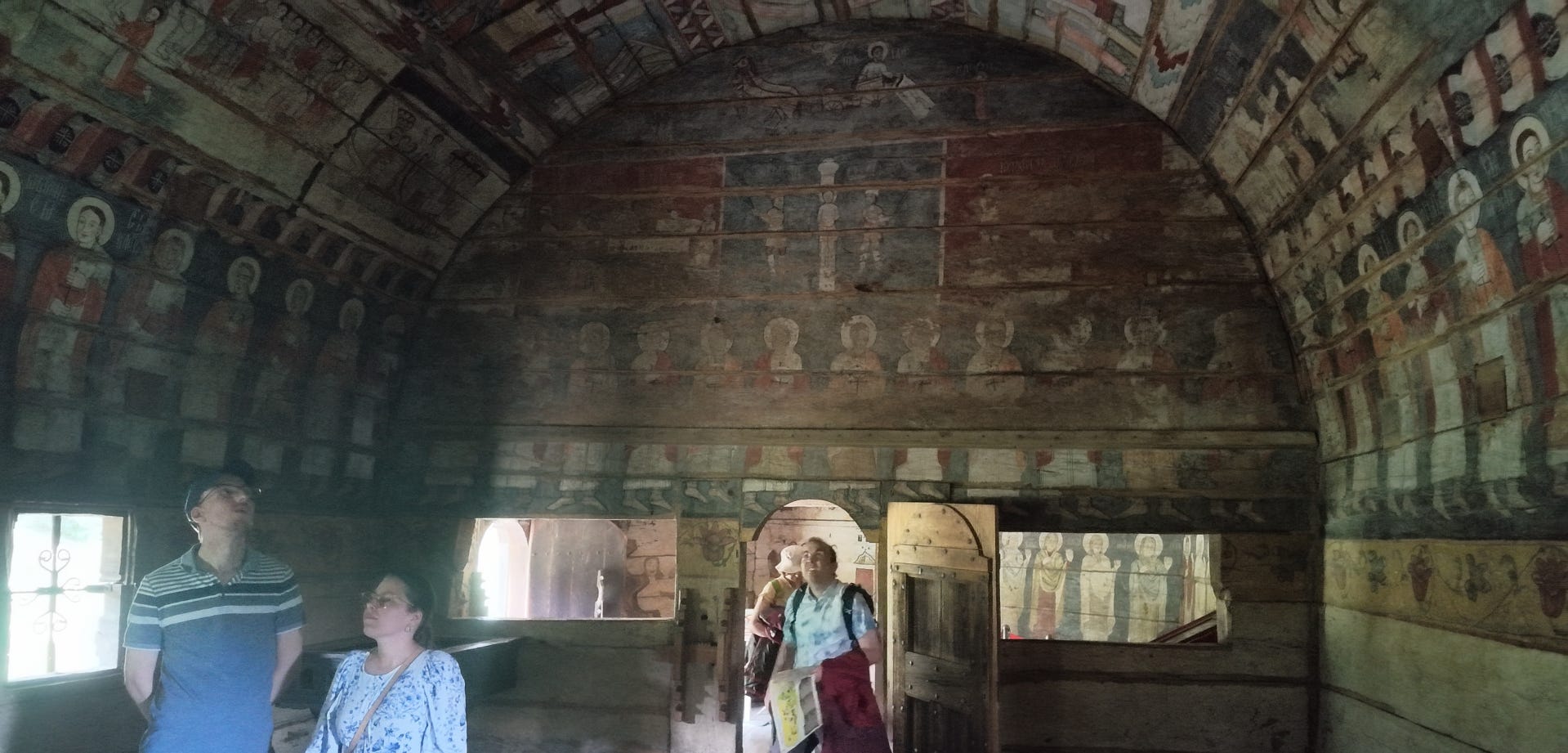
Aside from some fantastic artwork we saw inside one of the wooden churches, it was like the museum, an experience best experienced for yourself, not one that makes for particularly exciting storytelling.
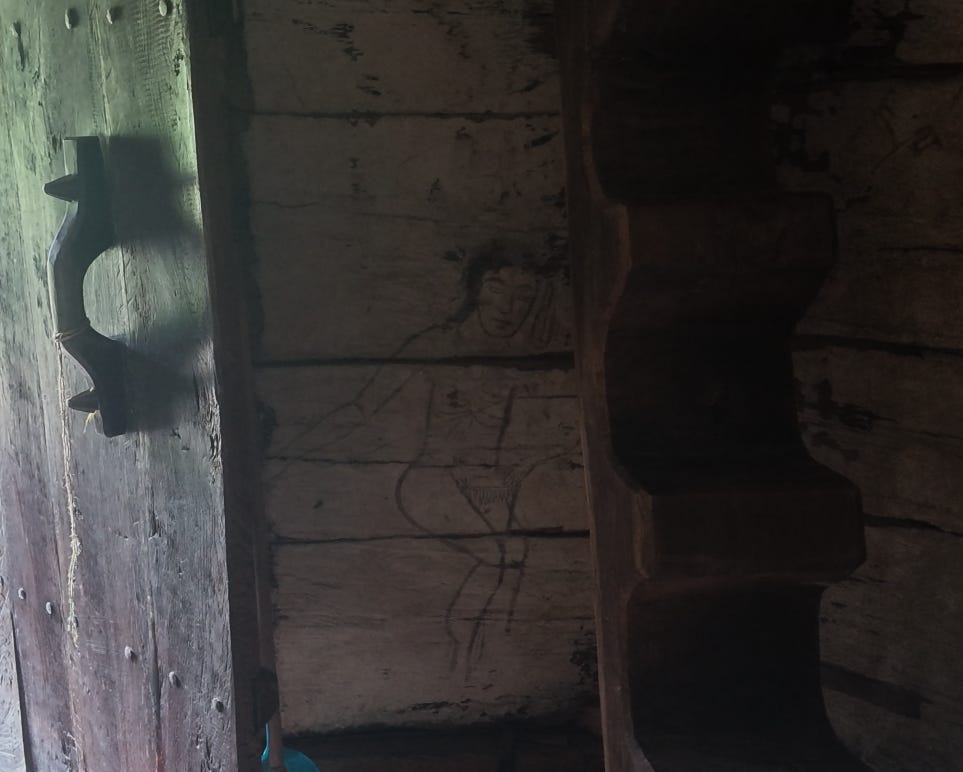
Well, maybe except for one mural inside the church. I recognised him instantly, but the others had no idea who he was, and for good reason. To the untrained eye, the mural that caught my gaze didn’t look out of the ordinary. Just a depiction of a man stuffing his hand into a vase. But I know what that vase used to be.
Each character in a church mural originally represented a virtue. Today we only know what a handful of them mean, and while we have some idea of what this guy represented back in the day, the act he’s performing has very different connotations today.
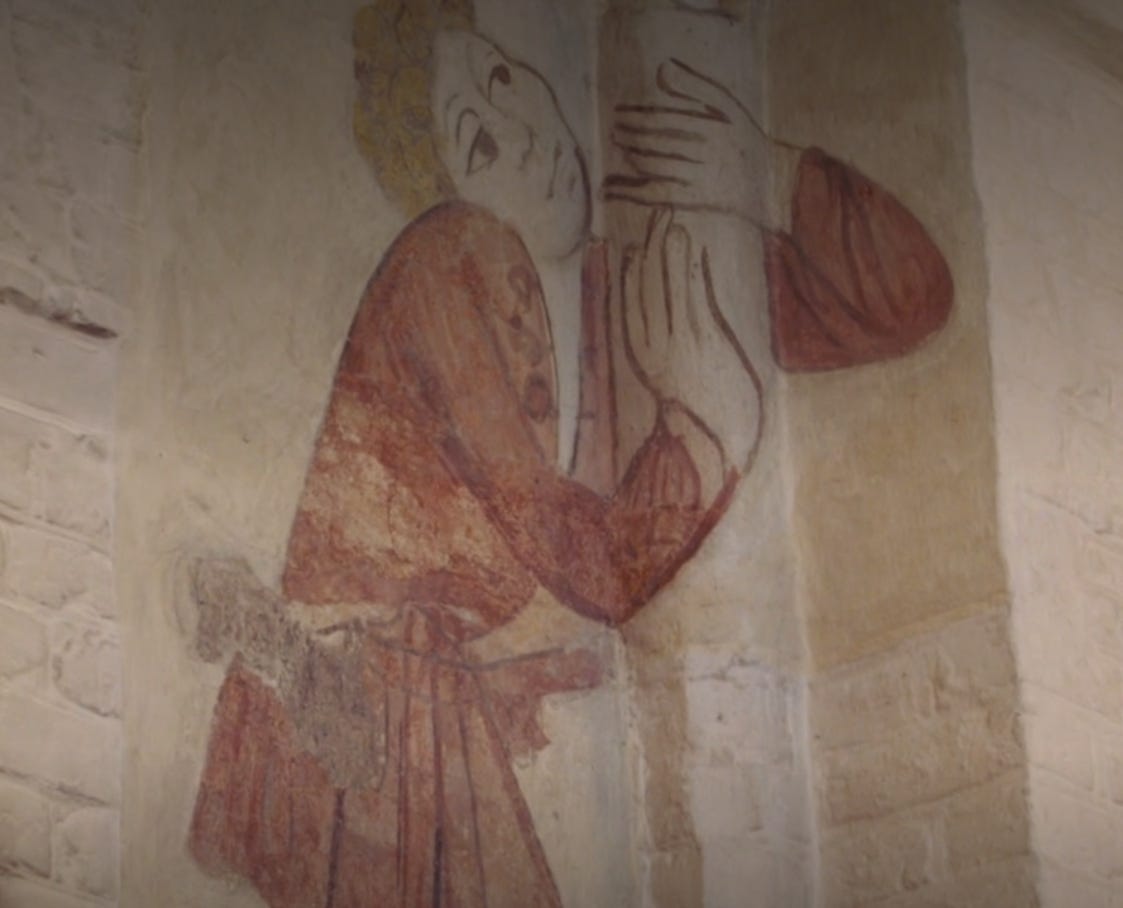
He’s known as The Onanist, and he wasn’t originally shoving his hand into a vase. He was stroking his big fat dick. Back in the Middle Ages he was in every church, usually tucked away in a corner, preferably partially obscured by a pillar so he wasn’t completely within sight of the congregation. But as attitudes towards depictions of penises changed, so did the meaning behind his stroking, and throughout the Renaissance, when many church murals were restored, most restorers either changed how The Onanist was depicted, as they did here, or painted over him entirely. Today, Denmark has only two surviving Onanists, and they might be the only ones left in the world still depicting their original phallic glory.
As we finished our tour of the traditional Transylvanian village, I couldn’t help but notice the tree-covered hill looming in the distance, the reason for my visit to Cluj: Hoia Baciu Forest, the most haunted forest in all of Europe.
Even though I’m an unbeliever, I happily postponed our trip to the forest by a day when we found out about the straw museum, partly because, well, it’s the most haunted forest in Europe, right? Regardless of the authenticity of the claims, the sheer volume of them has to mean there’s something to it.
We began driving towards the mountain pass leading up to the forest, and while en route we learned why there seems to be a second, smaller city right next to Cluj. It’s a Roma settlement. By “settlement,” I mean the government has built some fairly nice apartment buildings, but... Roma have a reputation for being wasteful and not taking very good care of their homes, and driving around the region I could understand where the stereotype comes from. You never have to point out which house in a village belongs to a Roma family. The grass will be overgrown, the roof will have holes in it, the pavement outside the house will be missing, there’ll be a big pile of rubbish in the yard, and every fence will have old laundry hanging from it.
I do have empathy, and I understand why they live like this. For a long time they never knew how long it would be before they had to move because they were never safe wherever they settled. They were often chased out of a town whenever there was a problem they could be blamed for, so it makes sense that they adapted a lifestyle where possessions are disposable and places are temporary.
But why that attitude persists today, after a hundred years of settled living in a country with a functioning trash collecting system, remains a mystery. I’d like to know, but Roma are understandably still suspicious of outsiders.
The first road we took to get up to Hoia Baciu was a no-go. The further up we got, the more potholes we encountered, until eventually the road disappeared altogether. We turned around, drove back down the mountain, and found another route. We parked near the top but still had an almost vertical 800-metre trek up to the forest itself. It was worth it for the view alone. I found the kind of view I’d been looking for yesterday, a perfect panorama of the city of Cluj.
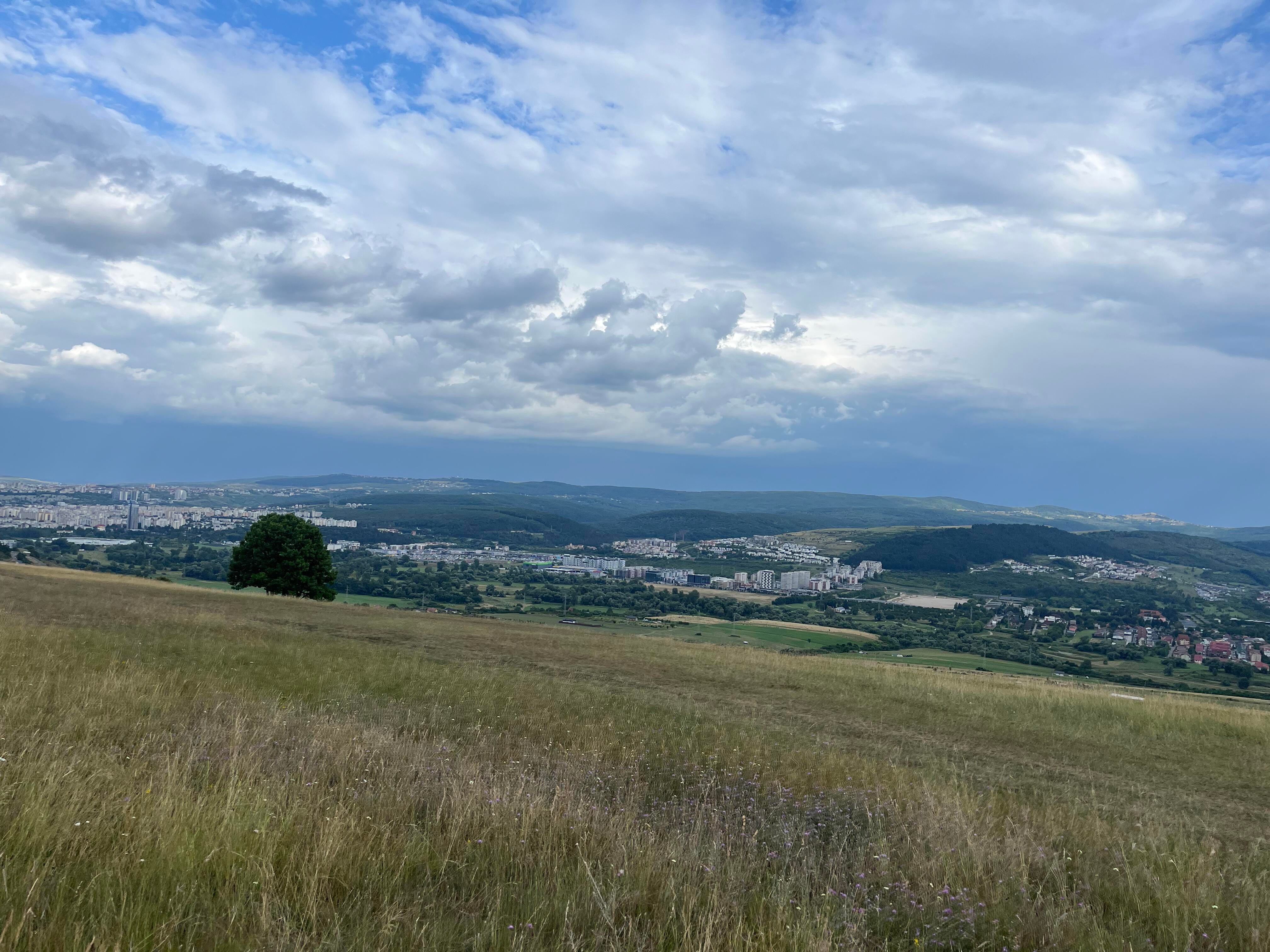
I admired the view while my friends caught up to me, and then we went inside.
Our destination was The Devil’s Heart, a mysterious spot in the forest where no trees grow, an almost perfectly symmetrical circle that science can’t quite explain.
Hoia Baciu is named after a shepherd who disappeared in the forest with his flock of more than 200 sheep. No trace of them was ever found, and theirs became the first of many unexplained disappearances.
According to legend, locals refuse to set foot in the forest, which I can almost believe, judging by the fact that one of the roads up here washed away at least a decade ago and still hasn’t been rebuilt.
Allegedly, lights can be seen at night and strange noises can be heard. They’re supposedly the spirits of farmers murdered in the forest by a local lord.
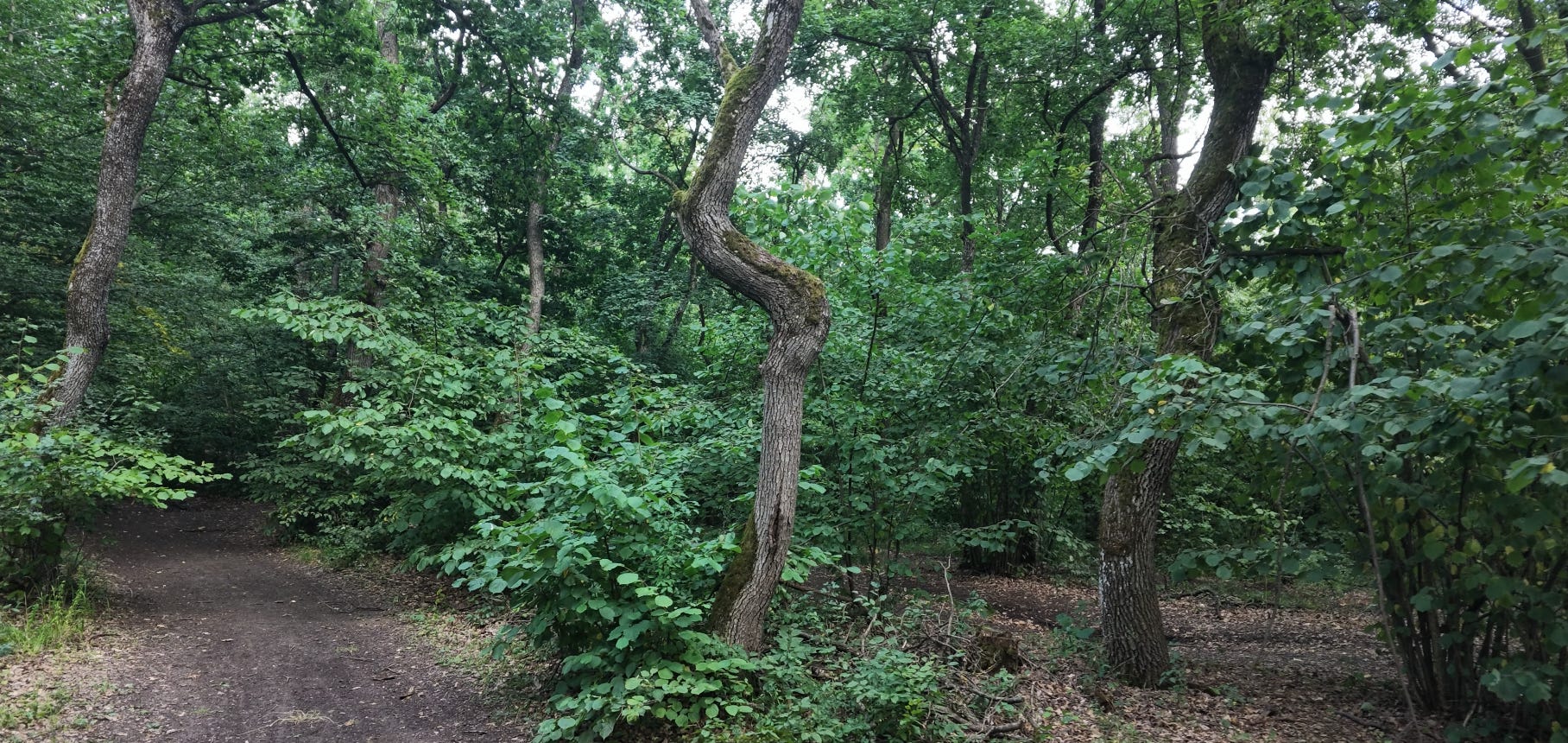
I neither saw nor heard anything out of the ordinary. The strangest thing about the forest was how quiet it was, and I didn’t see a single turd anywhere, human or animal.
You’re also supposed to get a migraine that grows more intense the longer you’re inside the forest. It supposedly comes from the memories of past lives you’ll remember while you’re there, and it stops once you leave the forest and forget them again.
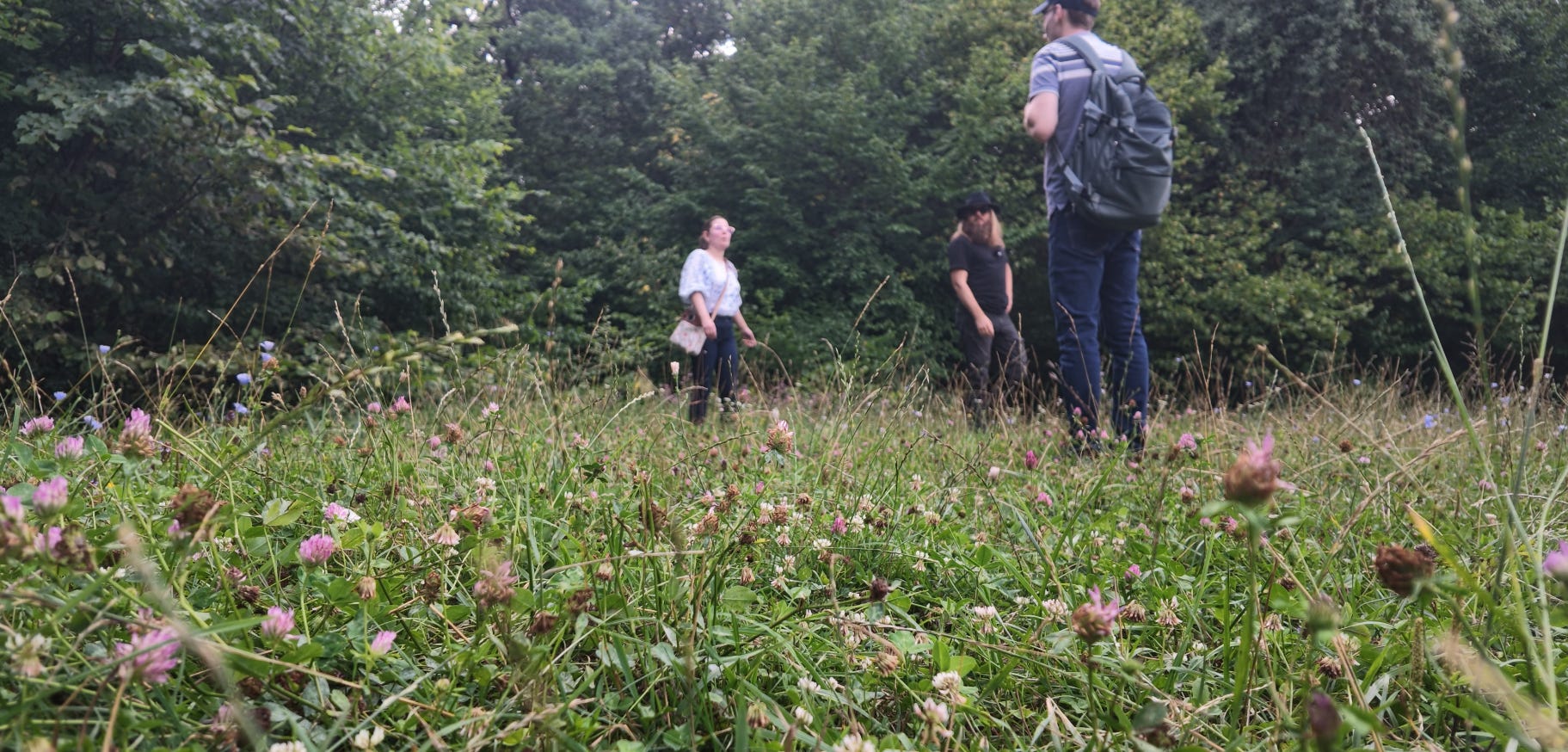
The scariest thing in the forest was apparently me. As we approached The Devil’s Heart, we saw some teenagers hanging around the clearing, and they looked quite spooked as I walked towards them. They seemed to relax when Peti and Szofia appeared behind me, but still on alert. They did that thing where it’s obvious people were doing something before they noticed you, and then suddenly stopped when they realised they’d been seen.
We walked around the clearing for a while while the teenagers lingered, not comfortable enough to continue whatever they had been doing, but not frightened enough to leave. We didn’t sense anything unusual about the forest itself, so I suggested we walk further in to see the crooked trees the forest is supposed to be famous for. We did see a few, but they weren’t nearly as twisted as they always appear in photographs, so, to be honest, the whole thing was a little disappointing. I don’t believe in the supernatural, but I can usually understand why a place earns a reputation for being haunted. There’s usually something unusual that unsettles people. Here, there was nothing.
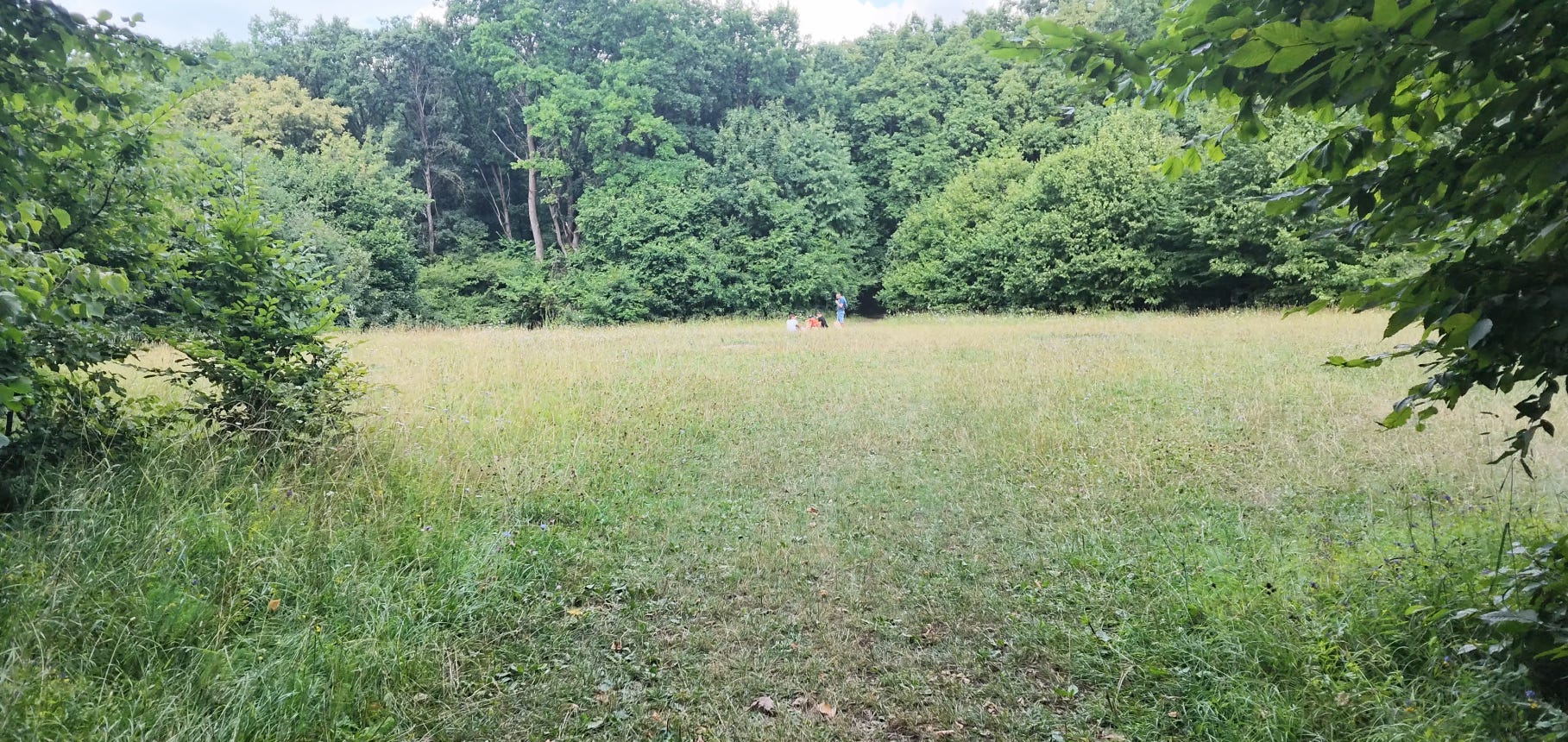
We were talking about this as we walked back to the car. Then we rounded a corner and entered the clearing again, and the teenagers were gone. Not just gone, it was as though they’d never been there in the first place. No rubbish. No cigarette butts. Nothing. The only thing left was perhaps the faint impression in the grass where one of them had been sitting, but I couldn’t be sure.
For a moment I was genuinely on edge because we hadn’t gone far, and we’d only been away for a minute or two. I felt like they’d been within earshot while we were looking at the crooked trees, yet I couldn’t remember hearing them leave. Standing in the clearing, I couldn’t hear them walking away in the distance either.
We walked through the forest and exited where we’d entered. Afterwards, I examined the photos and videos.
If we remembered our past lives at any point while we were in there, we certainly hadn’t talked about it on camera, and none of us had a migraine.
The people we encountered in the clearing appeared in both our photos and videos, so if they were ghosts, they were the kind that can be captured on camera.
The only thing that can possibly explain this forest’s reputation is its lack of sounds and wildlife, because that’s the only thing that truly feels out of the ordinary. Maybe that affects people somehow. Or at least that was my guess until I came across a website about a group dedicated to creating hoaxes about the forest, with the express purpose of making it famous as the most haunted forest in Europe and using that reputation to attract tourism to the city, something it desperately needs.
This is the first time, while investigating haunted locations, that I’ve come across an actual hoax, at least one that was so easily debunked.
We made our way back down the mountain and headed into town.
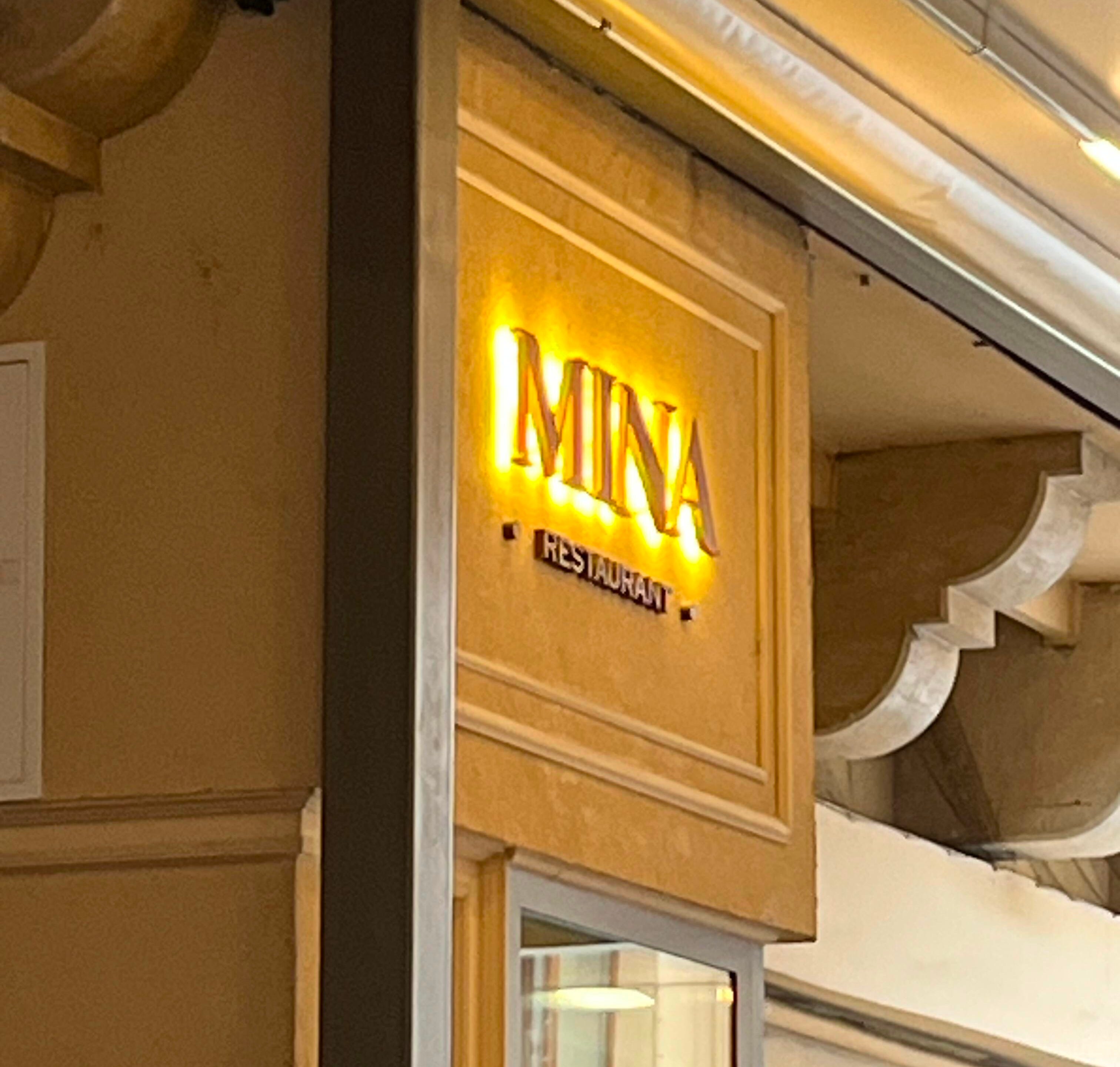
In the novel Dracula, as Jonathan Harker makes his way through Europe to meet Count Dracula about a real estate transaction, he stops in the city of Klausenburg, where he spends the night at the Hotel Royale and eats chicken with red peppers for dinner. He remarks that the dish is delicious but makes him thirsty.
Klausenburg is the German name for the city I’m in, Cluj-Napoca. The Hotel Royale is today’s Hotel Transilvania, and the chicken with red peppers is chicken paprikash, a well-known dish that every Hungarian and Romanian knows how to make.
So we figured that, since we were here looking for vampires, we had to eat at the hotel where the protagonist of the most famous vampire novel in history had dinner. We hadn’t booked a table. We had no idea whether they were open or whether they even served chicken paprikash, so we simply showed up.
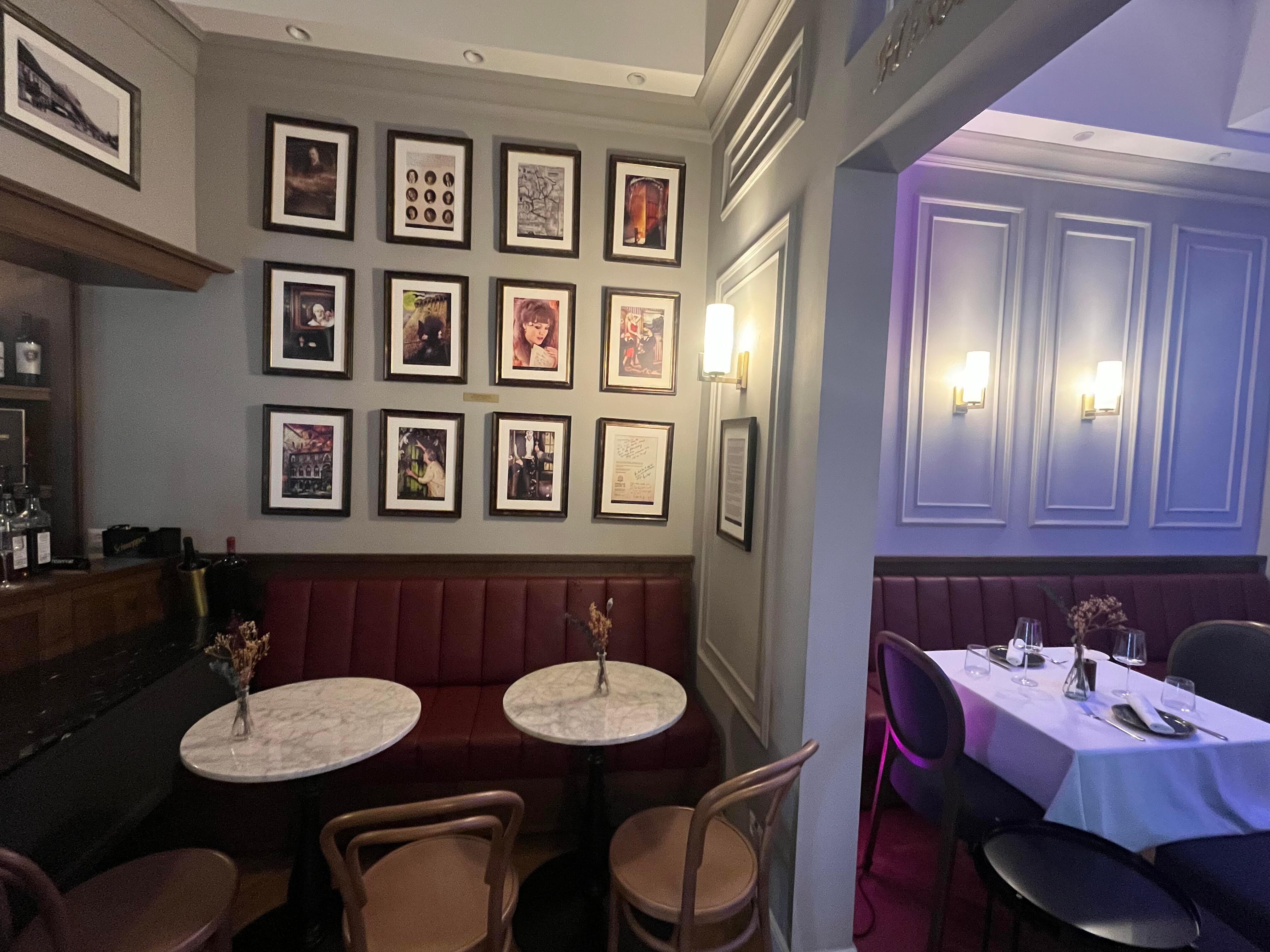
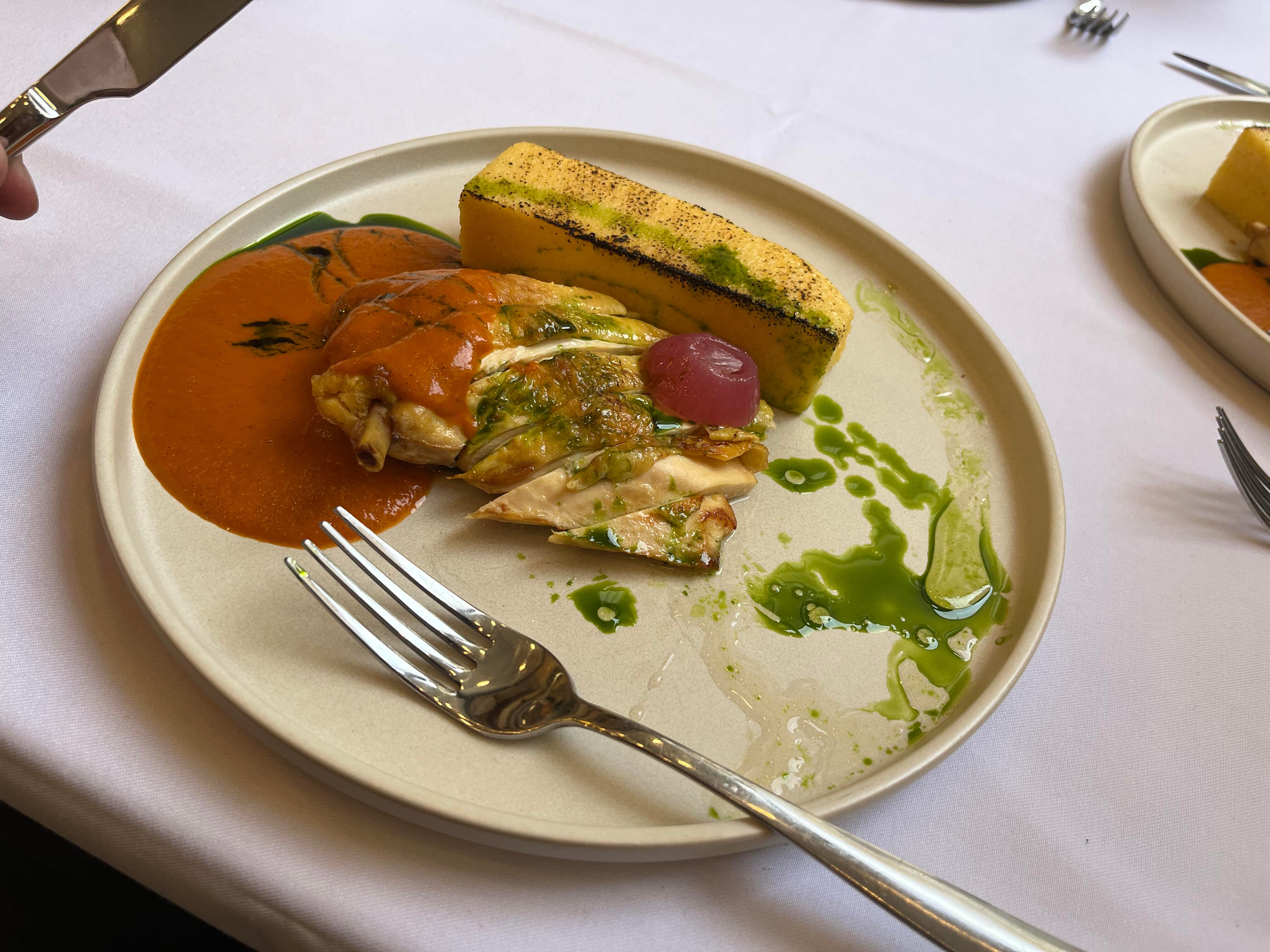
They were open, and we got a table. Chicken paprikash was on the menu, so we all ordered it. The waiter’s eyes lit up when we did, and he said, “Come with me.”
He led us into a room filled with photographs of the hotel and the city over the past 150 years, and he told us the story of Transylvania, the hotel, and many behind-the-scenes details about the novel. The restaurant inside the hotel is now called Mina’s Heritage, a name with a double meaning. It’s named after Jonathan’s love interest, Mina, but also after one of the hotel’s former owners, Hermina, whose name may itself have been a reference to the novel.
Dacre Stoker, one of Bram Stoker’s descendants, had even visited the hotel not long ago. It was for some anniversary, I can’t remember whether it was celebrating the novel or the hotel, but either way it’s fantastic that the family still considers the hotel an important part of their legacy.
The chicken paprikash was delicious. Peti said it was the best he’d ever had, which has to be high praise.
After dinner we headed back to the apartment, watched some more Erdély TV, and then went to bed.
so cool