
Fire on the Fjord
I'm trapped in a town haunted by an immortal arsonist

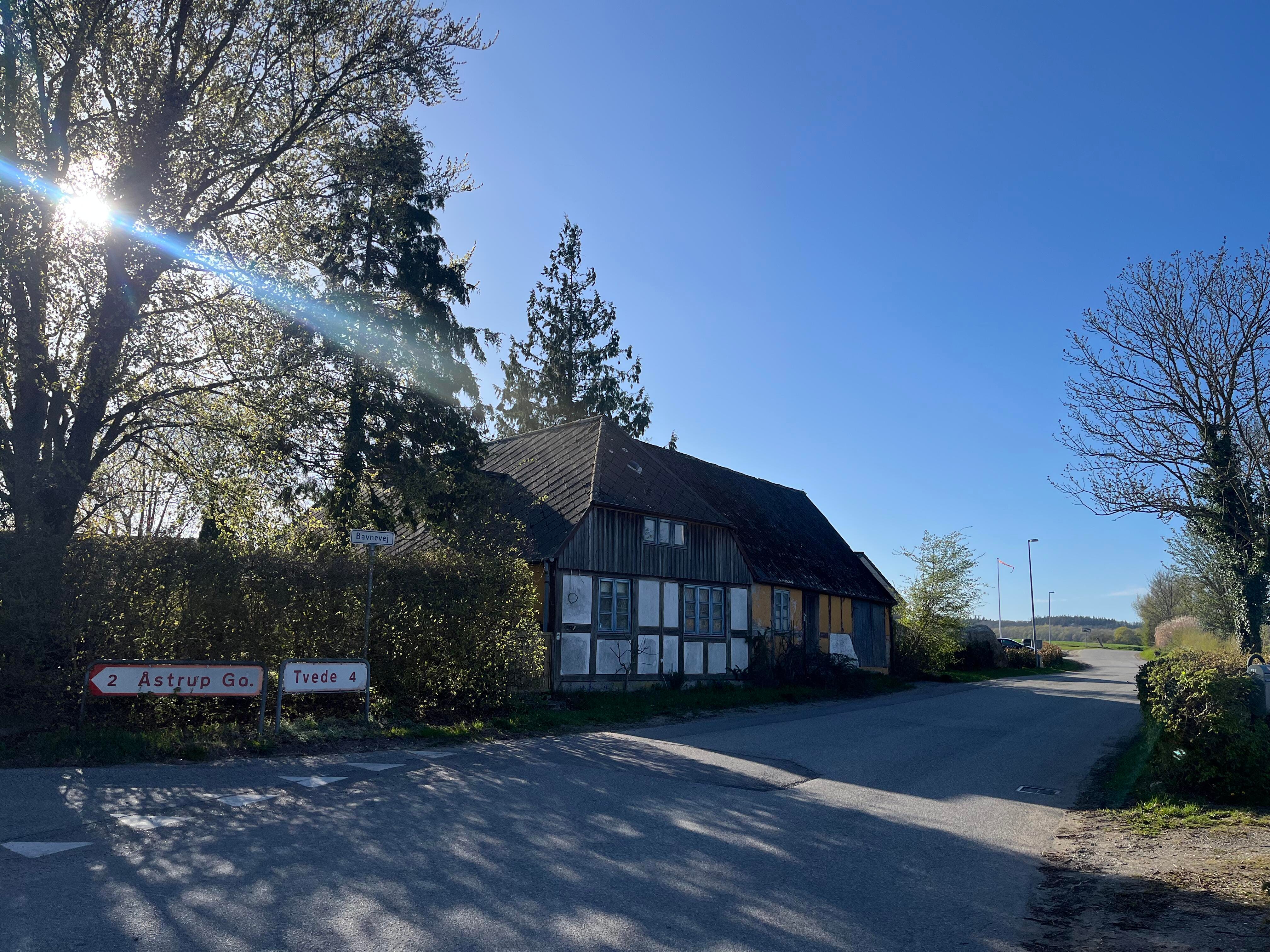
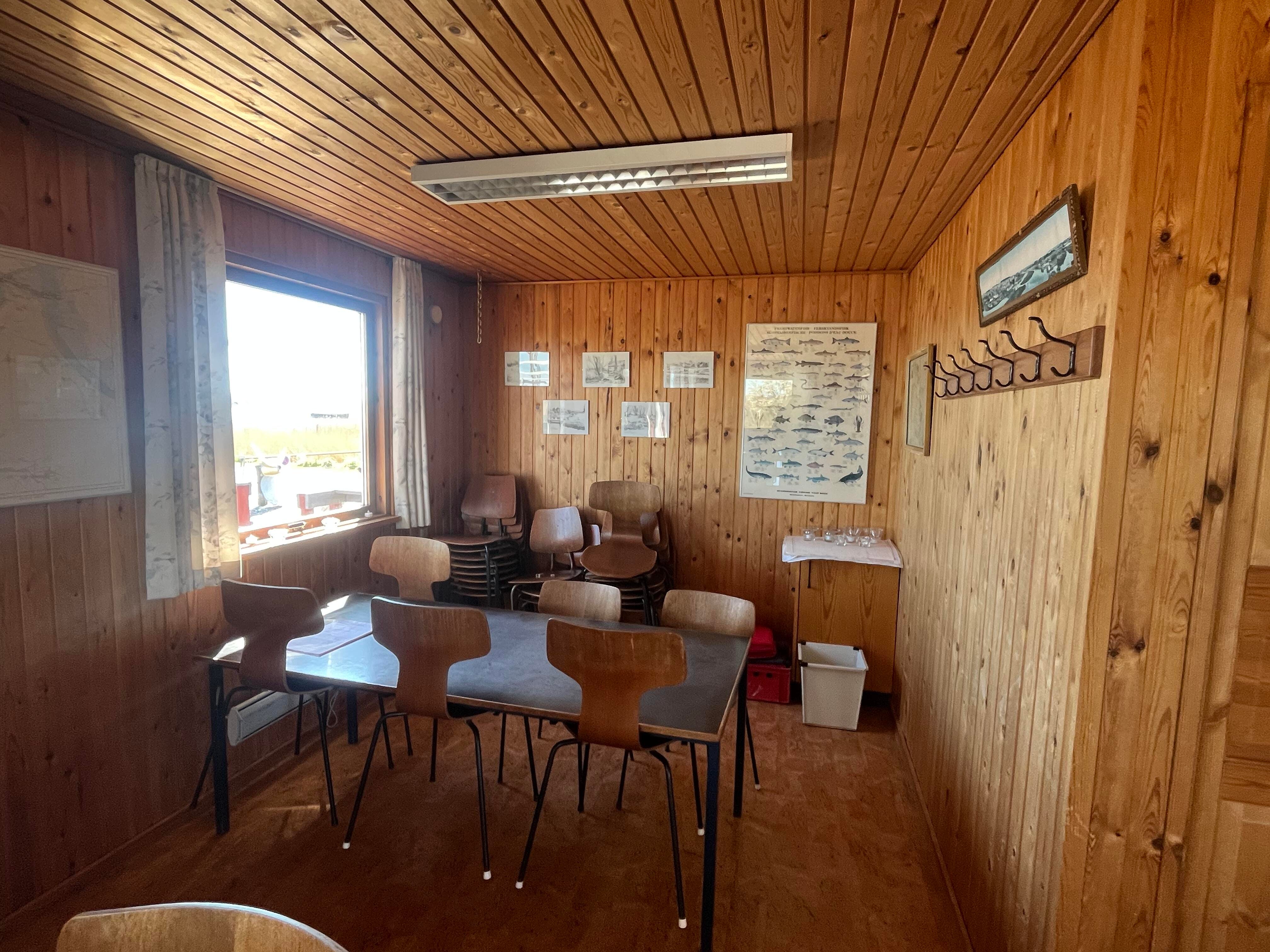
I’m in this nondescript town in the middle of nowhere. I’m supposed to be on a boat, enroute back home to the island I live on, but there’s a storm brewing on the horizon, so I can’t leave. There are no establishments here. No shops, no restaurants, not even a hairdresser. There is nothing in this town. I’m confined to a boat club’s small gathering house for the entire weekend. Bored out of my skull, I start researching the local area’s history and find some things.
I read about the blue ghost seen out in the bog, the story of Alba 24 years old, and the fire that burned down the town 150 years ago. The locals back then thought it was arson, but they never caught the arsonist. Then I read about the skeleton from the Neolithic Age that was found about three kilometers north of town. She was discovered inside a dolmen, and I decide to hike out to see where she was found, because that sure as hell beats sitting on an uncomfortable couch watching Netflix on my laptop.
(A dolmen is a Neolithic grave site and landscape marker.)
Off I go.
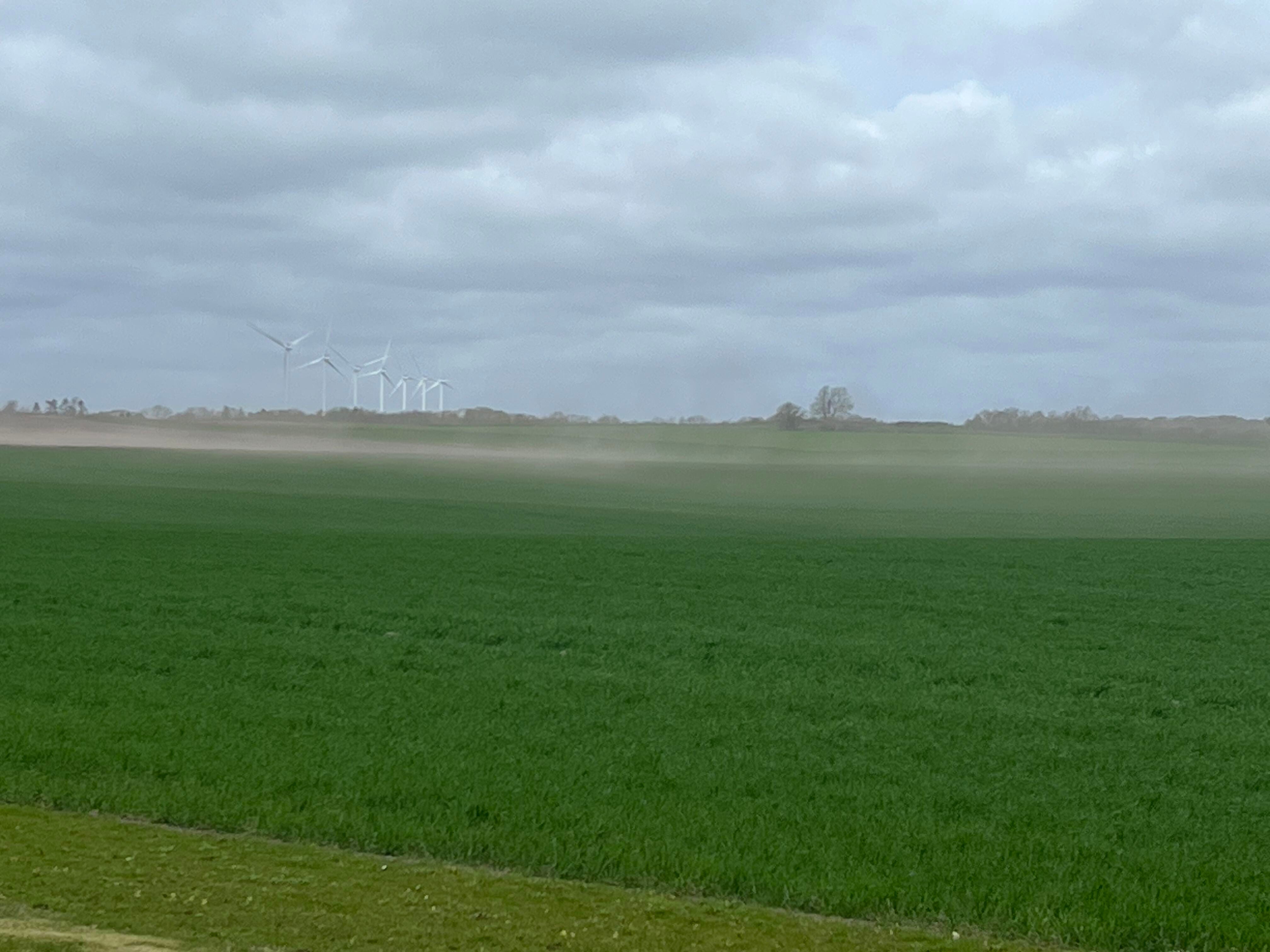
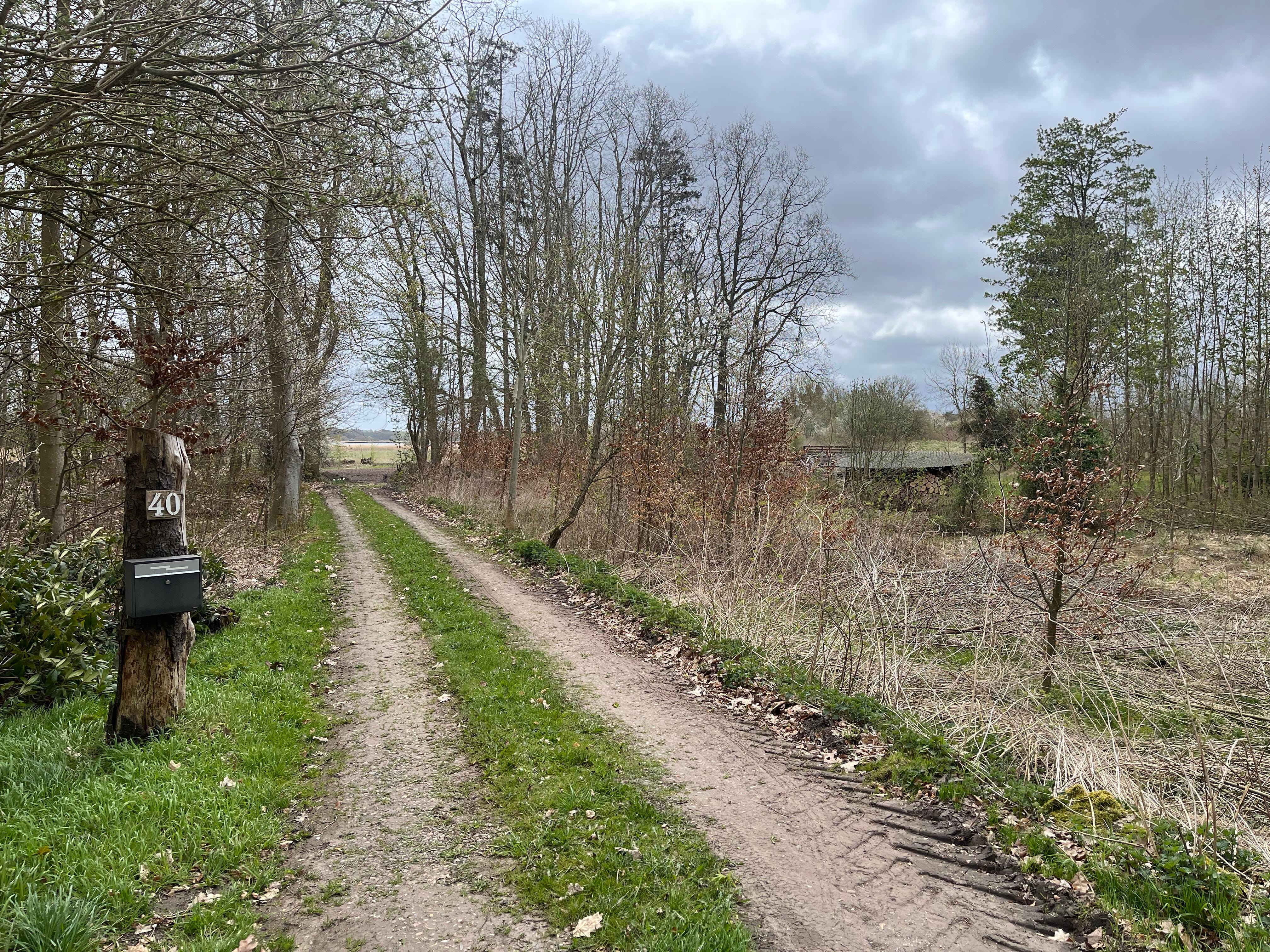
I trek through the rolling hills of the Mid-Jutland countryside in the middle of a sandstorm, and I take a turn onto a road leading toward a village that is really just three houses. Beyond it, the road turns from asphalt to gravel to dirt path, and then I see something.
It’s not the dolmen from the Neolithic era that I was on my way to visit.
It’s a burned-down house.
I pause for a moment. I feel like there’s something I’m supposed to remember, but I don’t.
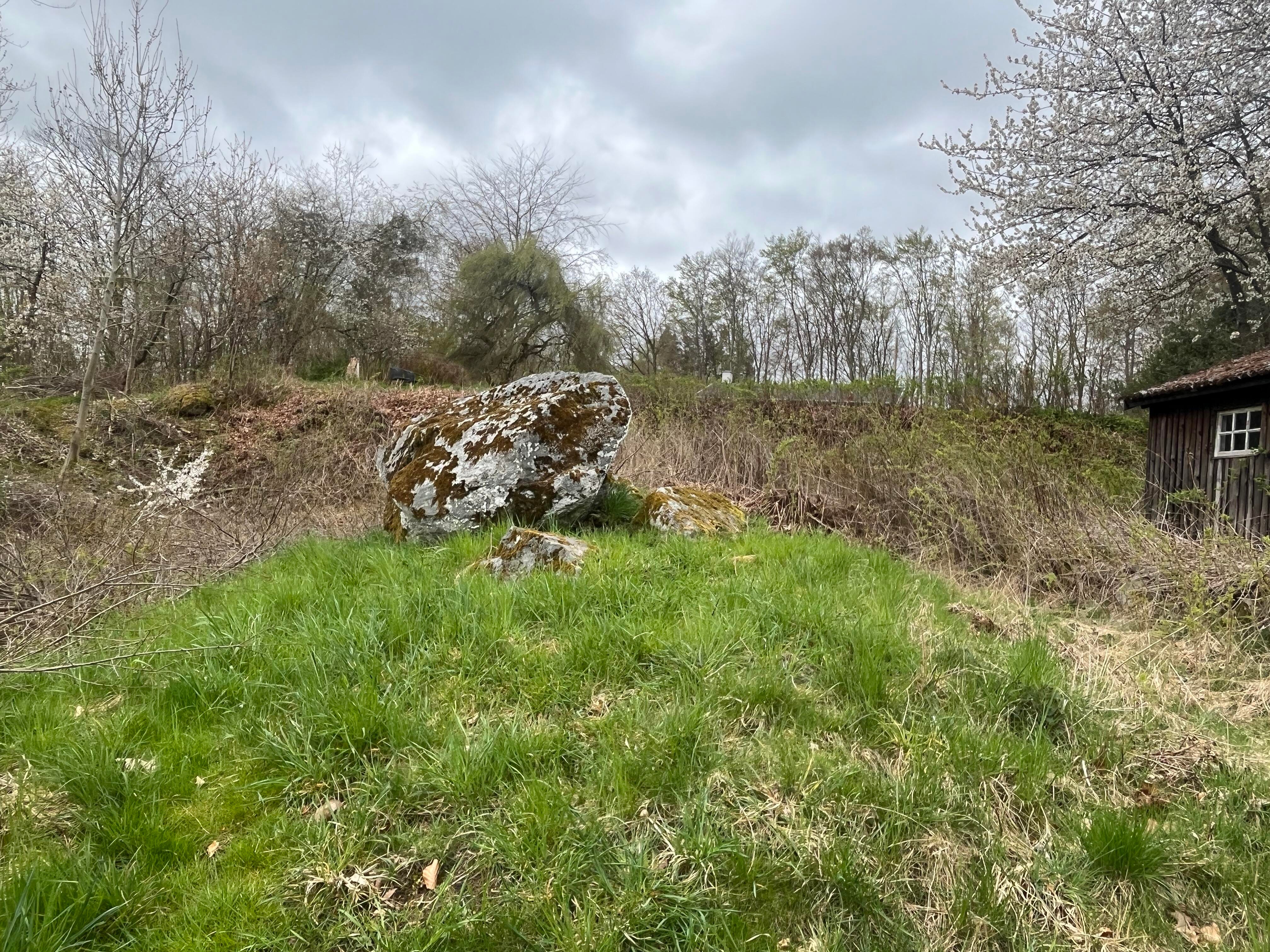
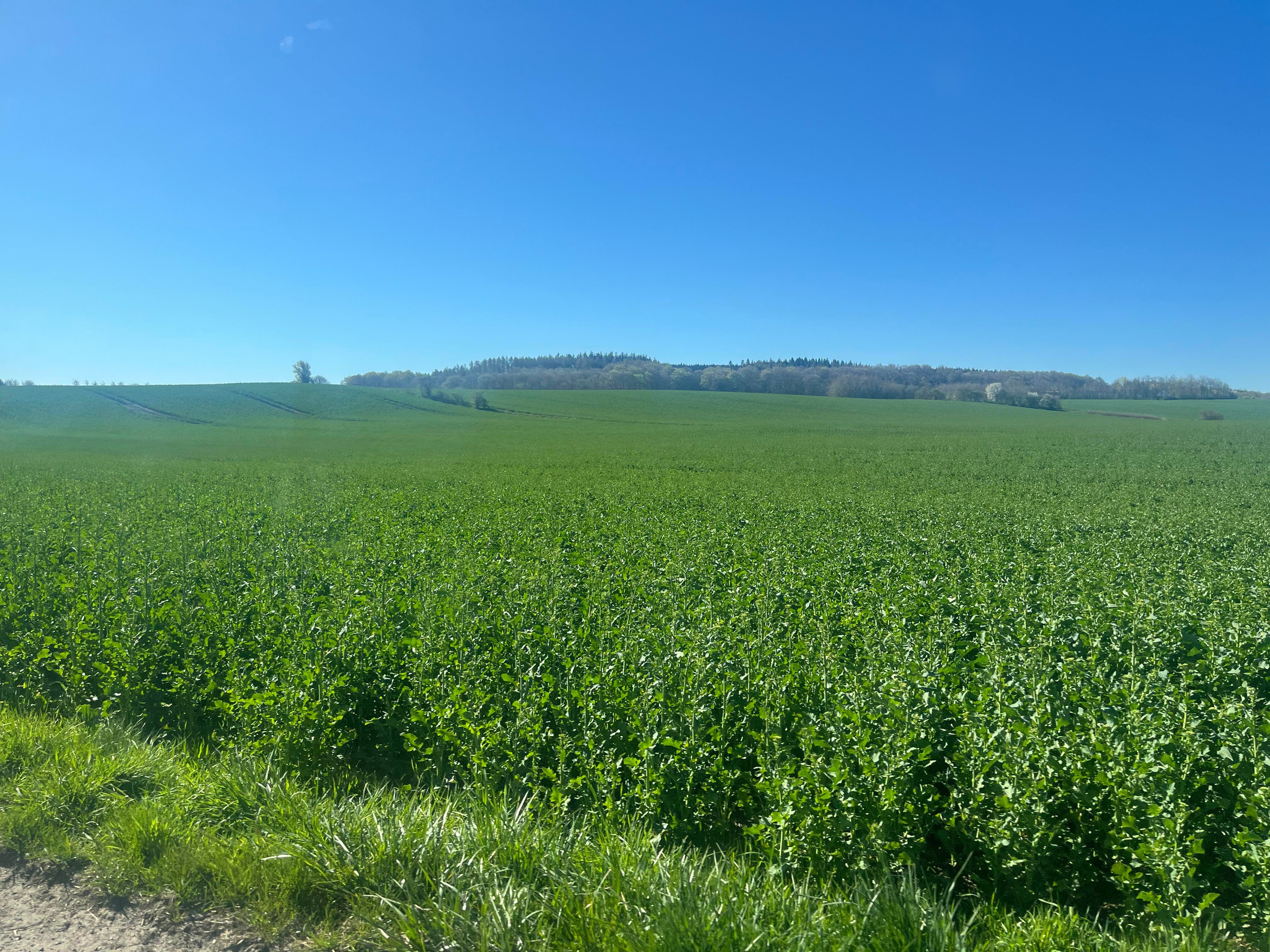
I continue toward the dolmen and eventually find it. I can see where the shoreline used to be, and how the dolmen once stood on it, but still high enough in the landscape that people in small boats could have used it for navigation.
A little farther down toward the fjord there’s a small harbor. A dozen or so Mellerup boats, the kind the town is famous for, are anchored there. What’s special about them is that they only sit three centimeters beneath the water’s surface, so they can take off and dock practically anywhere. In waters like these, where there are no waves, they’re perfect for getting around. Back in the day, locals rowed them or used small sails, but today teenagers bolt massive engines onto them that tilt the boats forty-five degrees upward when they sail.
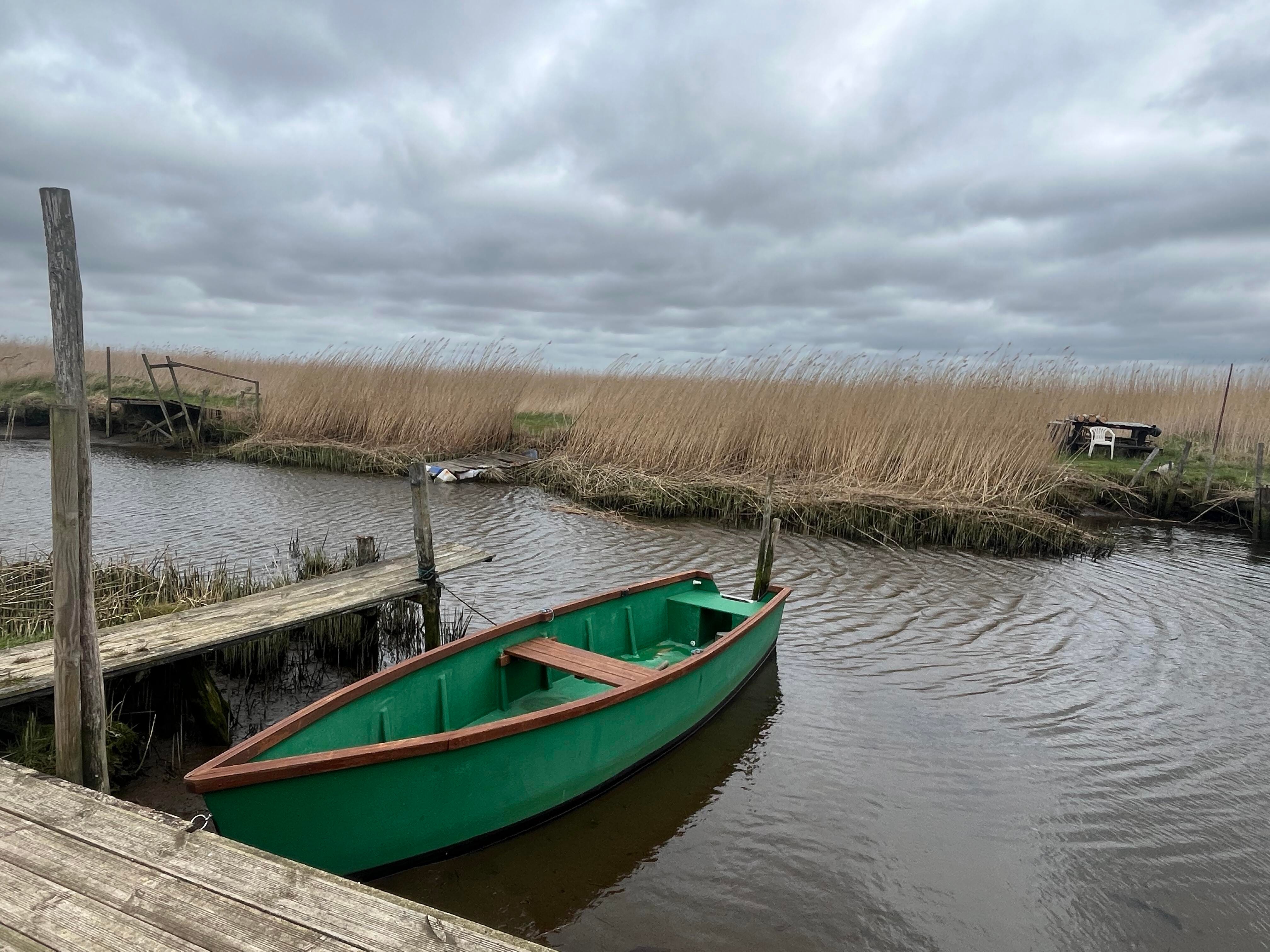
Then I turn around to see if I can spot the dolmen from the harbor, and I can’t. Trees and shrubbery block the view.
But a little ways off to my left there’s something the trees aren’t covering.
A house. Or what’s left of one.
At some point the owners must have wanted a better view of the fjord, so they cut down the trees around the property, and now it’s giving me a clear view of what I swear are still-smoldering ruins of a burned down cottage.
And then I remember.
The fire all those years ago.
This fire obviously can’t be connected to the incident 150 years ago, but it’s still a weird coincidence that there was just another fire in a town famous for unsolved arson cases.
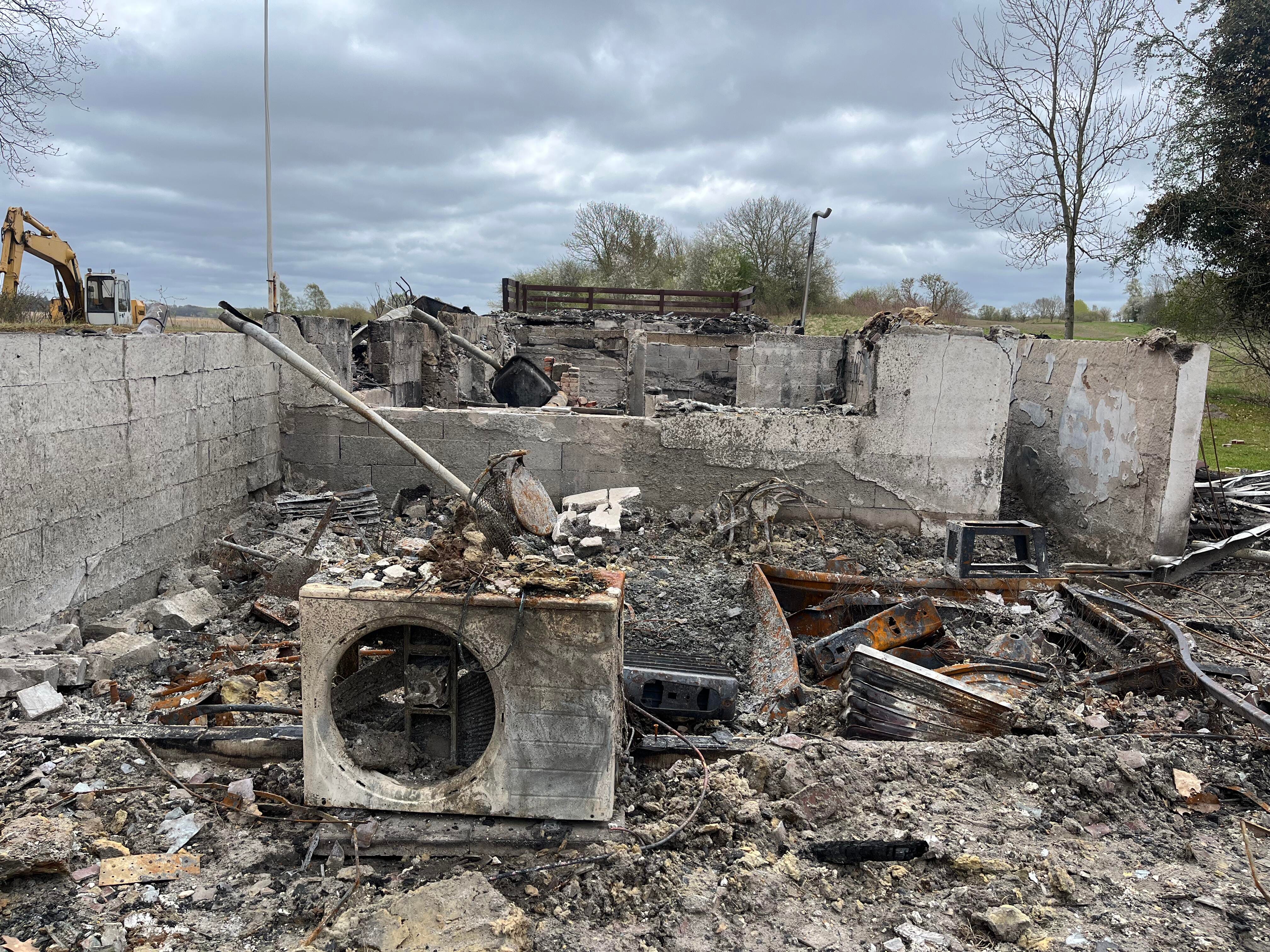
I approach the burned down cottage.
Something in my gut tells me this was arson, so I start looking for evidence that it wasn’t.
The boiler is intact. It didn’t explode or catch fire. The damage is external.
None of the space heaters around the property look like the cause of a fire either.
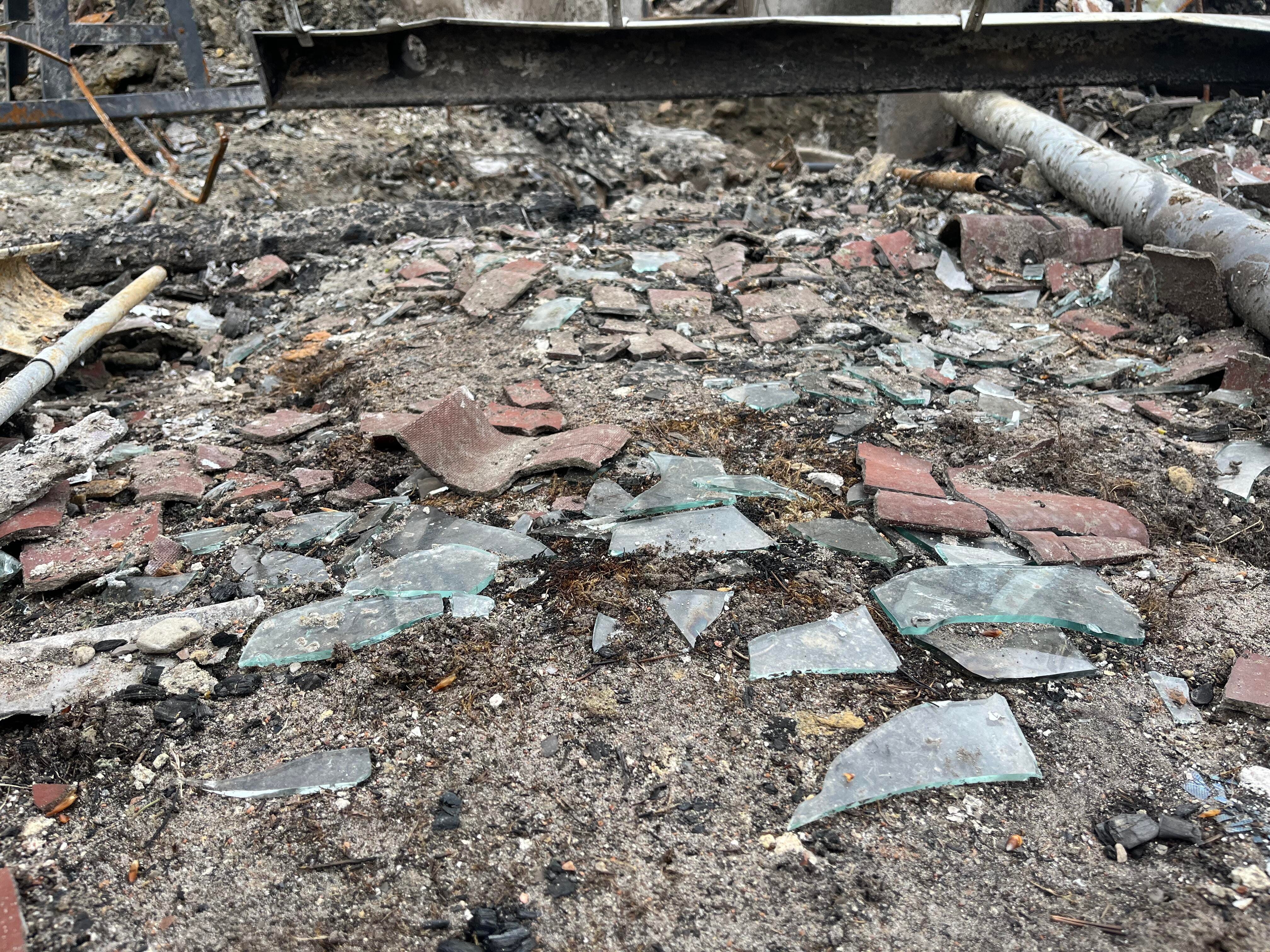
Then I notice the glass.
There are shards scattered across the deck and on the north and east sides of the property. That suggests the windows shattered outward due to the fire raging inside.
But there are no shards on the south side.
Inside the ruins near the south wall, however, I find glass fragments of a completely different shape. Long, narrow shards.
The kind created when something is thrown through a window.
Not the kind created by heat blast.
This could theoretically have been firefighters breaking a window to gain entry.
Except I checked.
By the time firefighters arrived, the house was already fully engulfed.
That means the windows would already have blown out on their own, and firefighters would have focused on containing the blaze, not entering the structure.
This was arson.
And I think it’s only the latest case in a string of fires stretching back 150 years.
As impossible as that sounds.
I should probably explain where I am and how I got here.
A friend of the family, Brian, sent me a message saying he’d bought a sailboat for 150 euros and that he and a friend were going to get it ready and sail it back to the island where we live. But his friend backed out of the trip at the last minute, so he asked if I had time to go.
Of course I did.
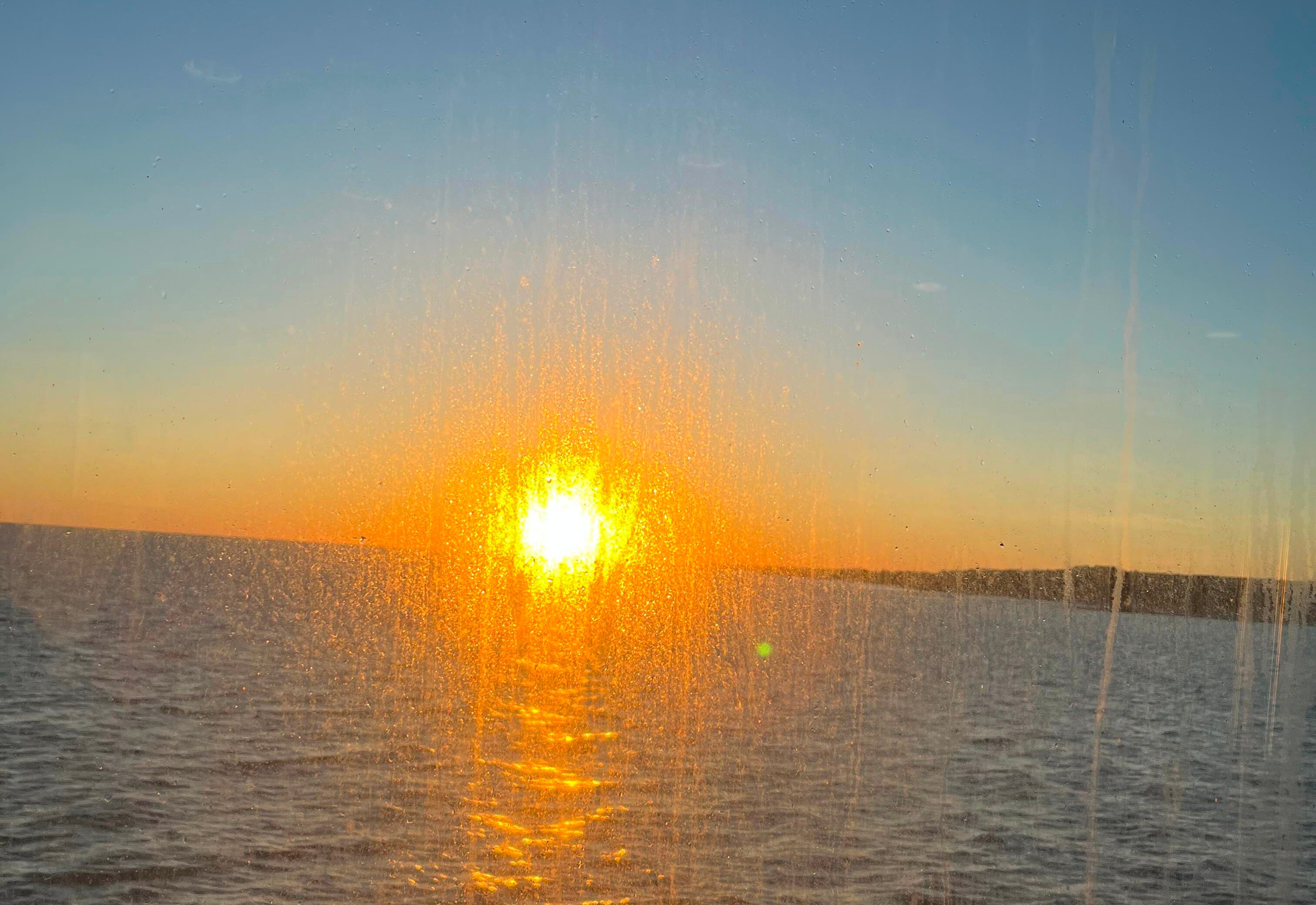
Five days later we’re sitting on the ferry on our way to the mainland. Brian tells me that his uncle Erland was originally supposed to come along, but ever since he had a heart attack, he’s become nervous about being at sea, so he pulled out of the trip.
Brian says he would have gone by himself, but because of his own heart episode not too long ago, he thought it would be best not to spend that many hours alone in a place where there is no help to get.
I can only agree.
Erland is supposed to pick us up on the mainland and drive us down to Mellerup, just across the border into Mid-Jutland.
Except Erland isn’t the one driving.
He’s there, but his friend Lars is behind the wheel.
See, Erland is a drunk. A serious drunk.
It’s 7:30 in the morning when we meet up with him, and he is absolutely plastered. He hasn’t emptied the trunk of his car and seems surprised that we brought luggage, apparently having forgotten why he’s giving us a ride in the first place.
So, we awkwardly cram backpacks, emergency suits, gas canisters, and ourselves into the back seat while Erland parks himself in the passenger seat and Lars drives.
There’s a bottle of orange juice between Erland’s feet that he keeps sipping from, and every time he opens it the entire car smells like vodka. The smell only disappears for five or ten minutes at a time whenever he rolls down the window to smoke another cigarette. He smoked at least ten during the one-hour drive that somehow took three hours because they decided it would be best to take a “shortcut” through the countryside.
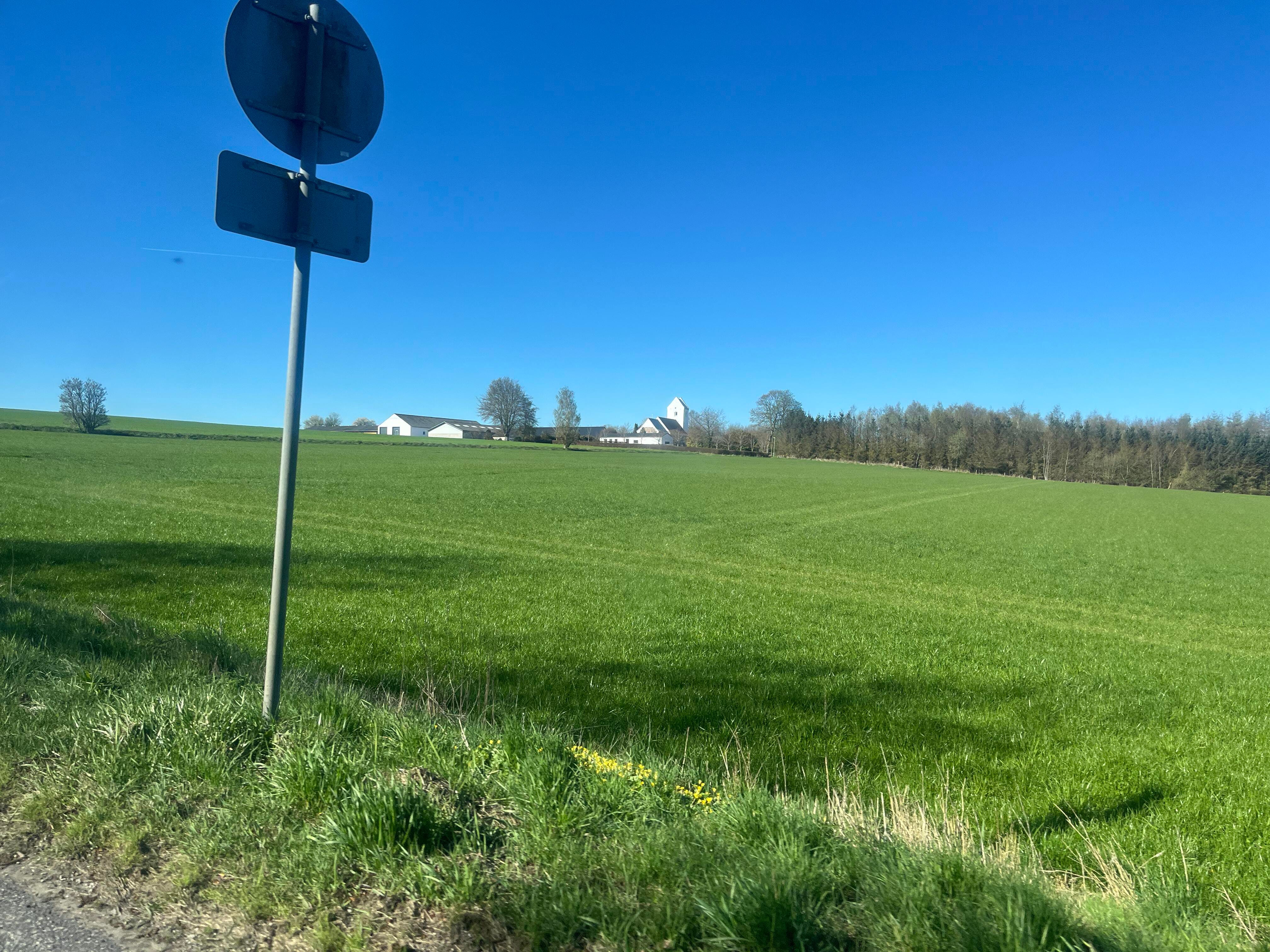
The drive itself was mostly unremarkable. It’s one of those stretches of country where everything looks the same and it’s hard to imagine why anyone would live there.
Lars did tell an interesting story as we passed by a castle called Lindenborg.
He said that when he was a child in the 1980s, he was fishing in the river nearby when he and some other people saw a snake in the water that was at least three meters long. The snake was never caught, and nobody ever reported a giant snake missing, so the story became a local mystery.
What Lars didn’t know is that giant snakes have supposedly been seen in that area as early as the medieval era.
Lindenborg translates roughly to Snake Fortress in Old Norse, and lindorme are mythical creatures from the Viking Age that heroes slew to save princesses. Local newspapers have reported encounters like his since at least the 1700s, and the last sighting I could find happened sometime in the 2000s.
The man had no idea what Lindenborg meant, or that the area was known for stories like that, so I completely believe he saw something in the water that wasn’t supposed to be there.
I don’t think it was a runaway python.
But what did he see?
I don’t know.
Probably something rational.
Still, I’d like to go back there one day and investigate properly.
I mentally snap back and realize I’m still trapped in a car with these two colorful characters, and somehow, we’ve managed to get lost despite having both a driver and a navigator.
I guess the navigator typed in the wrong address between gulps of spicy orange juice.
My patience is being tested.
I know I’m out of touch, and it’s not just because I live abroad a lot of the time.
There’s a concept in Denmark called Outer Edge Denmark. It refers to areas of the country that are geographically isolated and economically deprived. Læsø where I’m from is about as geographically isolated as you can get. It’s in the middle of the sea, and when I was a kid we watched Swedish television because the broadcast tower in Gothenburg was closer than the one in Aalborg.
We like to think of ourselves as part of Outer Edge Denmark because we are literally the outer edge of Denmark.
But even though we have the highest unemployment rate in the country and among the lowest average salaries, and corruption that would make an eastern European bureaucrat blush, people around here somehow feel less poor. Not just economically, but socially.
I spent a good chunk of my childhood growing up poor, but I never ate pasta with ketchup for dinner, and I never really felt poor. People where I’m from are resourceful. Everyone I know can cook at least one great meal from scratch, and we’re deeply involved in our communities. Our population is so small that you grow up around people from every walk of life, and those people become lifelong friends.
So, when you meet people who are from the outer edge of Denmark socially, it’s a culture shock.
You’re suddenly confronted with an alternate version of yourself. A version shaped by a different environment.
These people had the same opportunities I had, and in some cases even better ones, because they weren’t separated from the mainland by the sea, and yet they seem far more lost.
Closer to the ugly stereotype of poverty.
It’s difficult to explain, but they feel like people who have experienced less love. Like they’re disconnected from their communities. Like they inherited a kind of negativity from their surroundings.
Where I’m from, that generational negativity doesn’t exist.
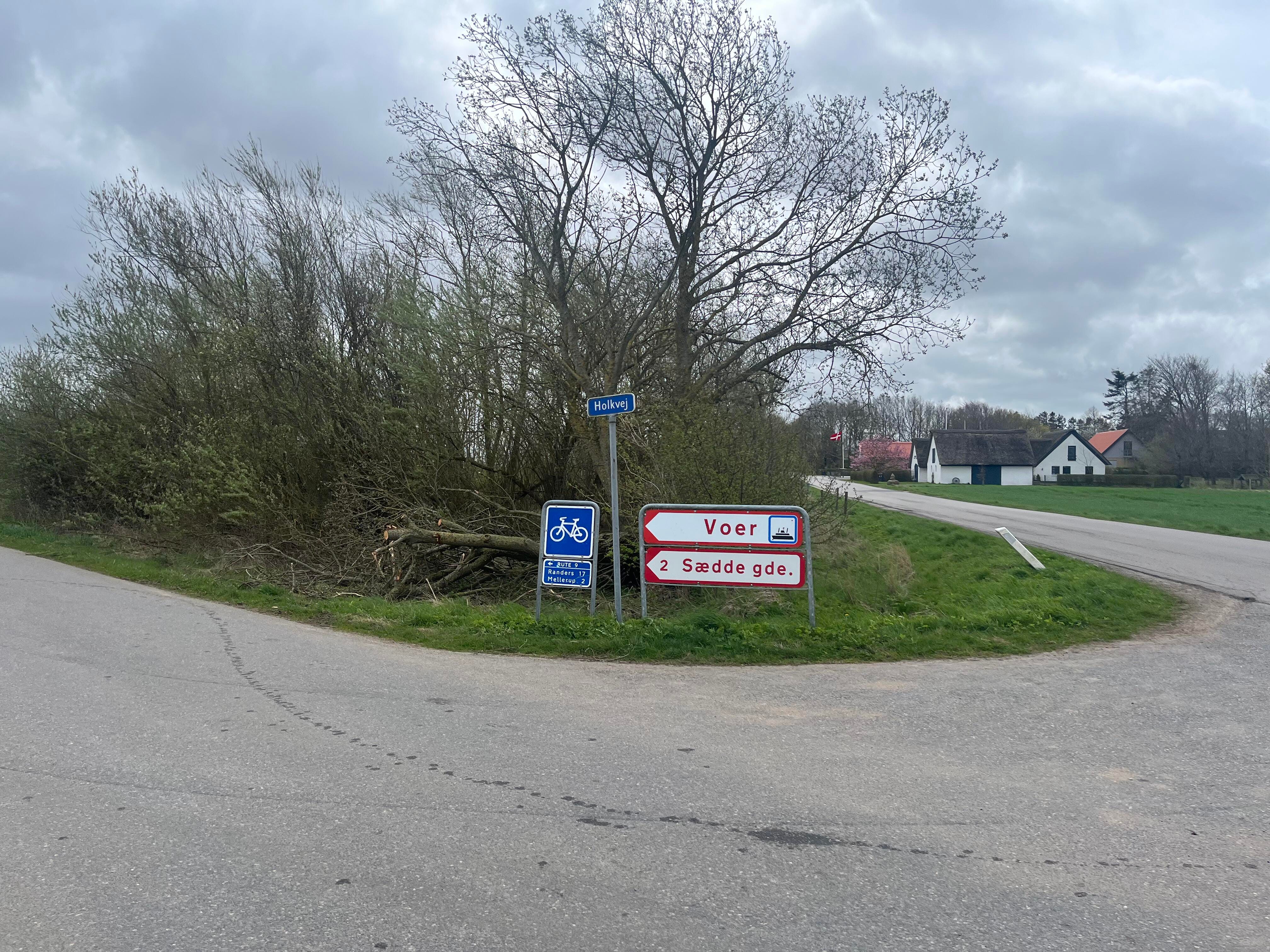
While I’m zoning out and half-listening to another conversation about how terrible the government is, we finally arrive.
If we’d taken the motorway, we would have been here by nine.
It’s already eleven.
Then the second culture shock hits.
I’m used to small towns. The island capital where I live has a population of 400 people. But it’s still a real town. We have municipal services, a large grocery store, four restaurants, a movie theater, and a handful of shops.
Mellerup has almost nothing.
Two churches. Two schools. A ferry dock. A boathouse.
That’s it.
Compared to this place, my hometown feels like a metropolis.
But we’re not going to be here long.
Right?
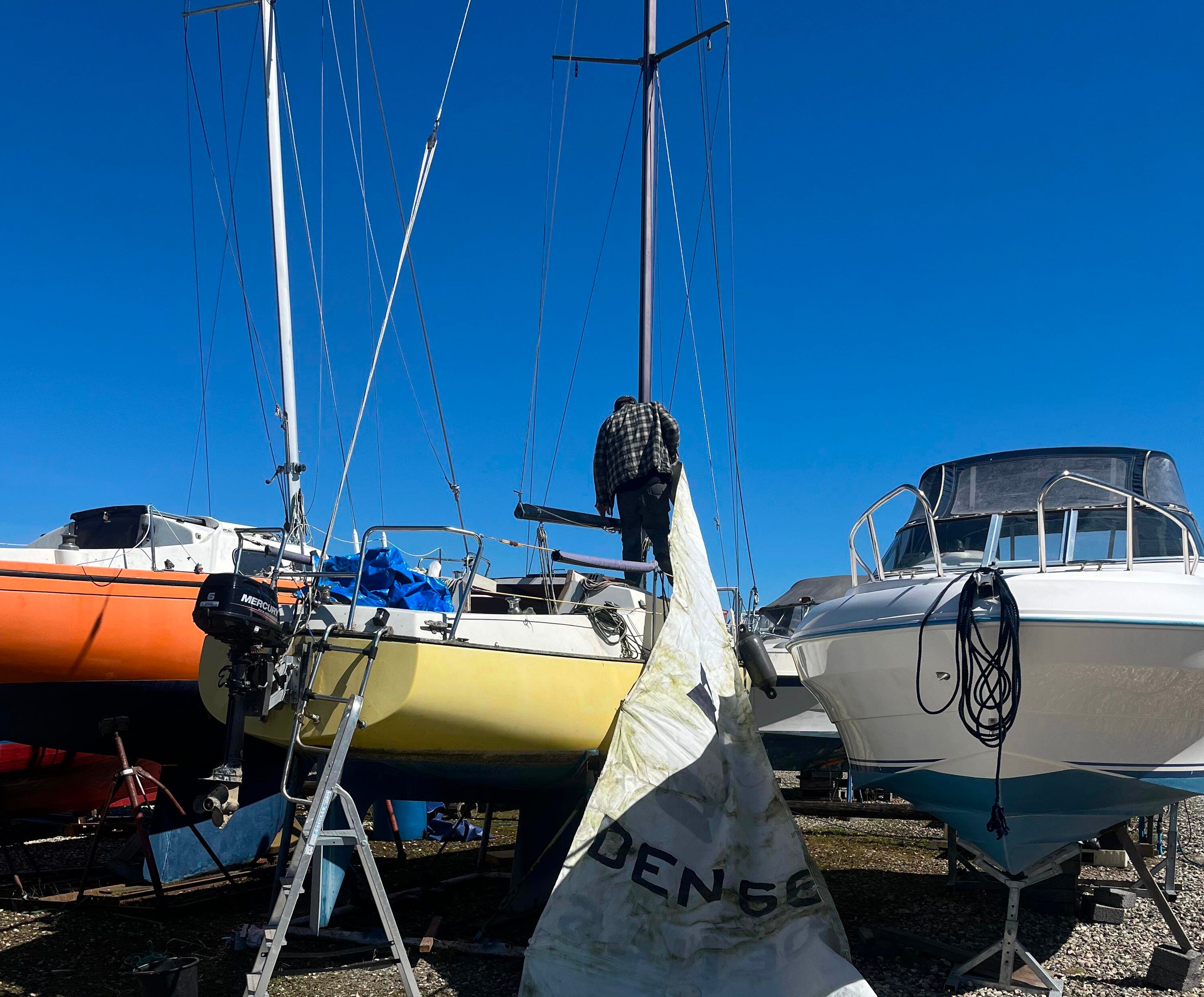
We arrive at Mellerup Harbor, and the sellers show up soon after.
Something immediately feels off.
They told us there was a pump onboard. There isn’t.
They neglected to mention that all the electronics are fried, meaning we can’t sail at night because we have no depth sensor and no lights.
They insist the boat was on the water last year, but it clearly wasn’t. The lines are green with algae and practically fused to the hull. The straps meant to secure them rotted away years ago.
This boat hasn’t been out this decade by the looks of it, and later some locals confirm as much.
Still, it’s an incredible deal for the price, and the sellers help us mount the motor and seem like decent enough guys otherwise. So, we ignore the inconsistencies, thank them, and they leave.
Lars and Erland leave too.
Now it’s just us.
People from the local boat club start showing up one by one, and they’re all unbelievably friendly. They tell us we’re free to use their facilities, and that generosity ends up saving the trip.
I’d assumed we’d arrive, rig the sails, launch the boat, and leave immediately.
But the crane isn’t coming until tomorrow.
We’re just here early to make sure everything works.
We get the sails up quickly, inspect the hull, and go through the boat. It’s old and worn down, but it’s seaworthy. We can absolutely sail it home.
We just have to be careful.
No storms, because we don’t have a pump.
No night sailing, because we don’t have lights.
And no relying on electronics, because there aren’t any.
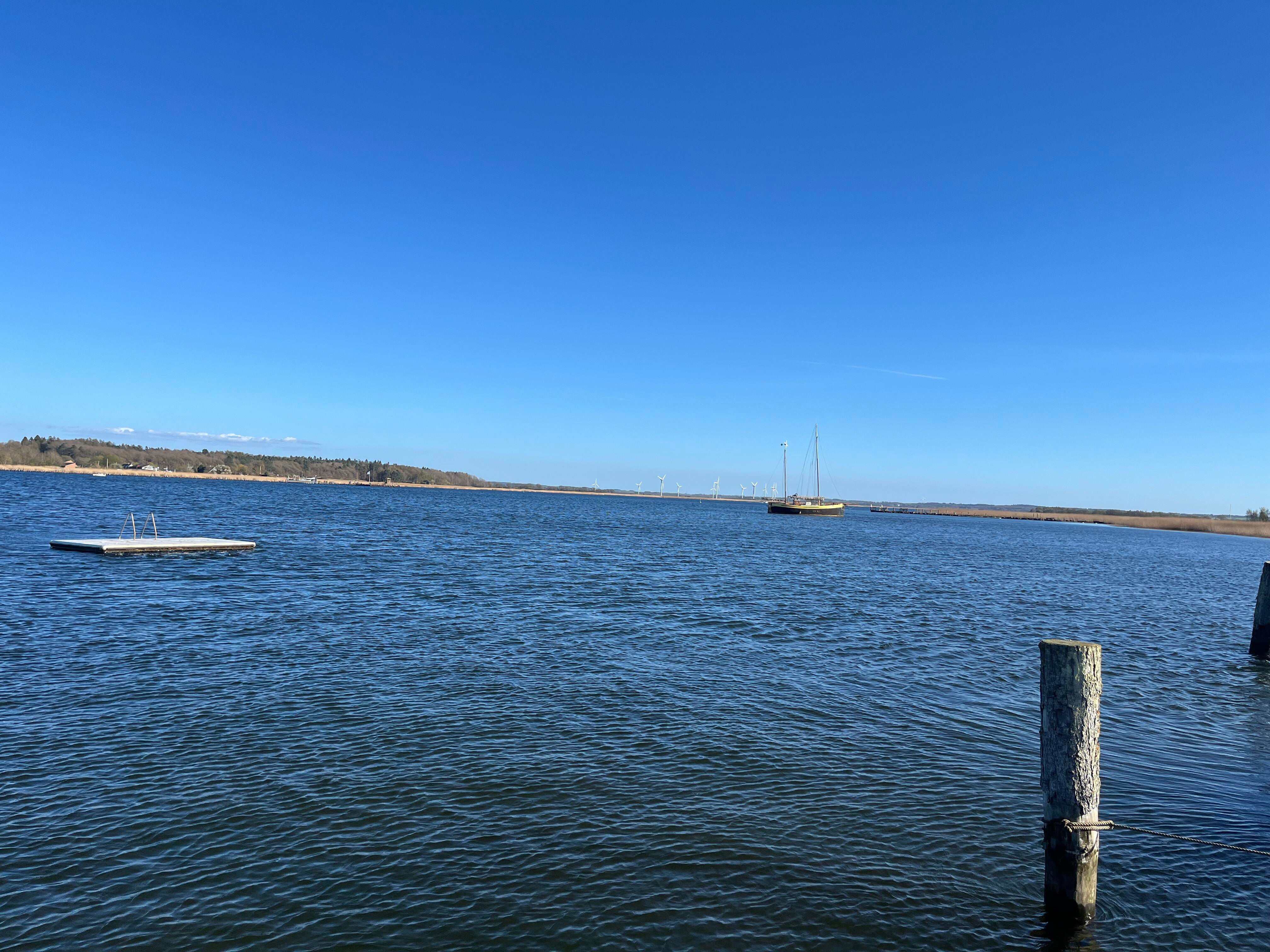
Then I notice darkness in the horizon.
It looks like there is a storm brewing out there, and I swear I can see it moving towards us.
We’re not going home tomorrow, are we?
We finish up and head over to the boat club to talk with the locals.
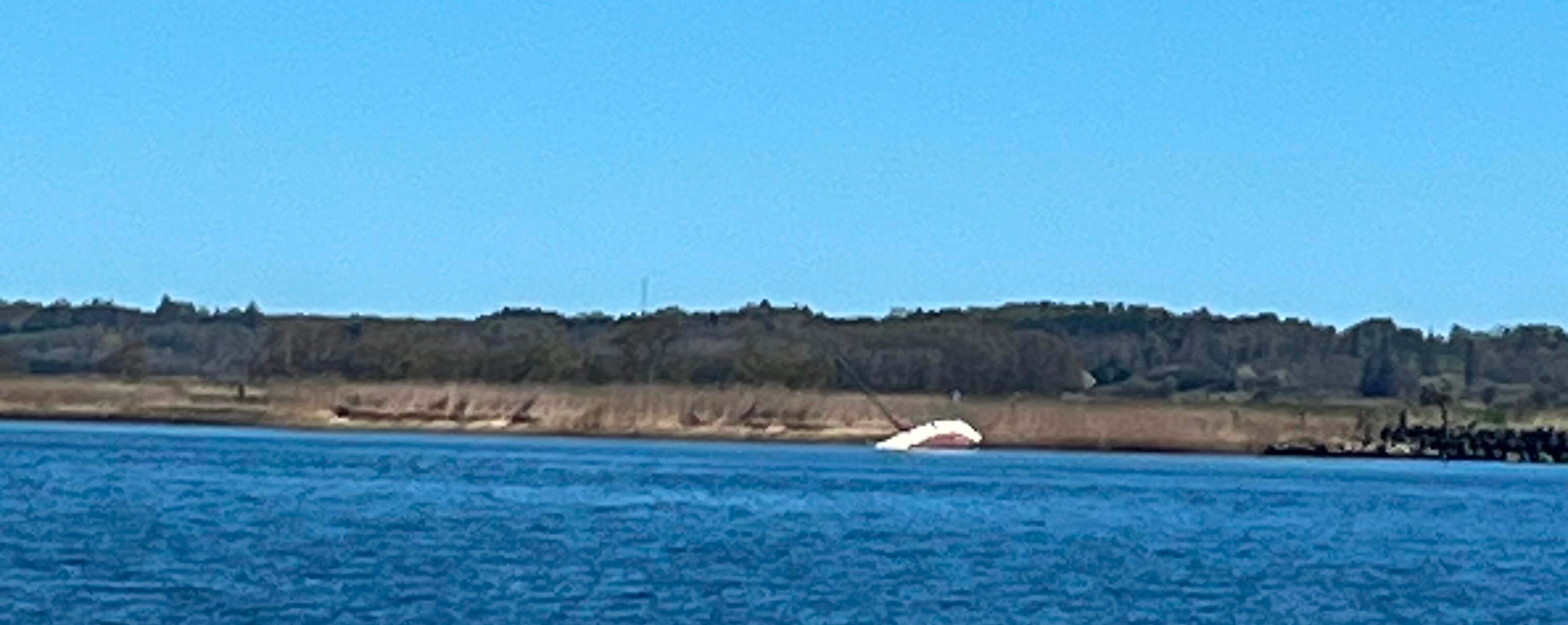
Across the fjord I spot an overturned sailboat and ask about it.
They tell me the owner anchored it offshore because he didn’t want to pay harbor fees. Then a storm hit, the anchor snapped, and the boat smashed into the shoreline and flipped over.
It’s taken on so much mud and water that it can’t be moved, and because it’s not obstructing freight traffic into Randers, the municipality simply left it there.
Now it’s part of the landscape.
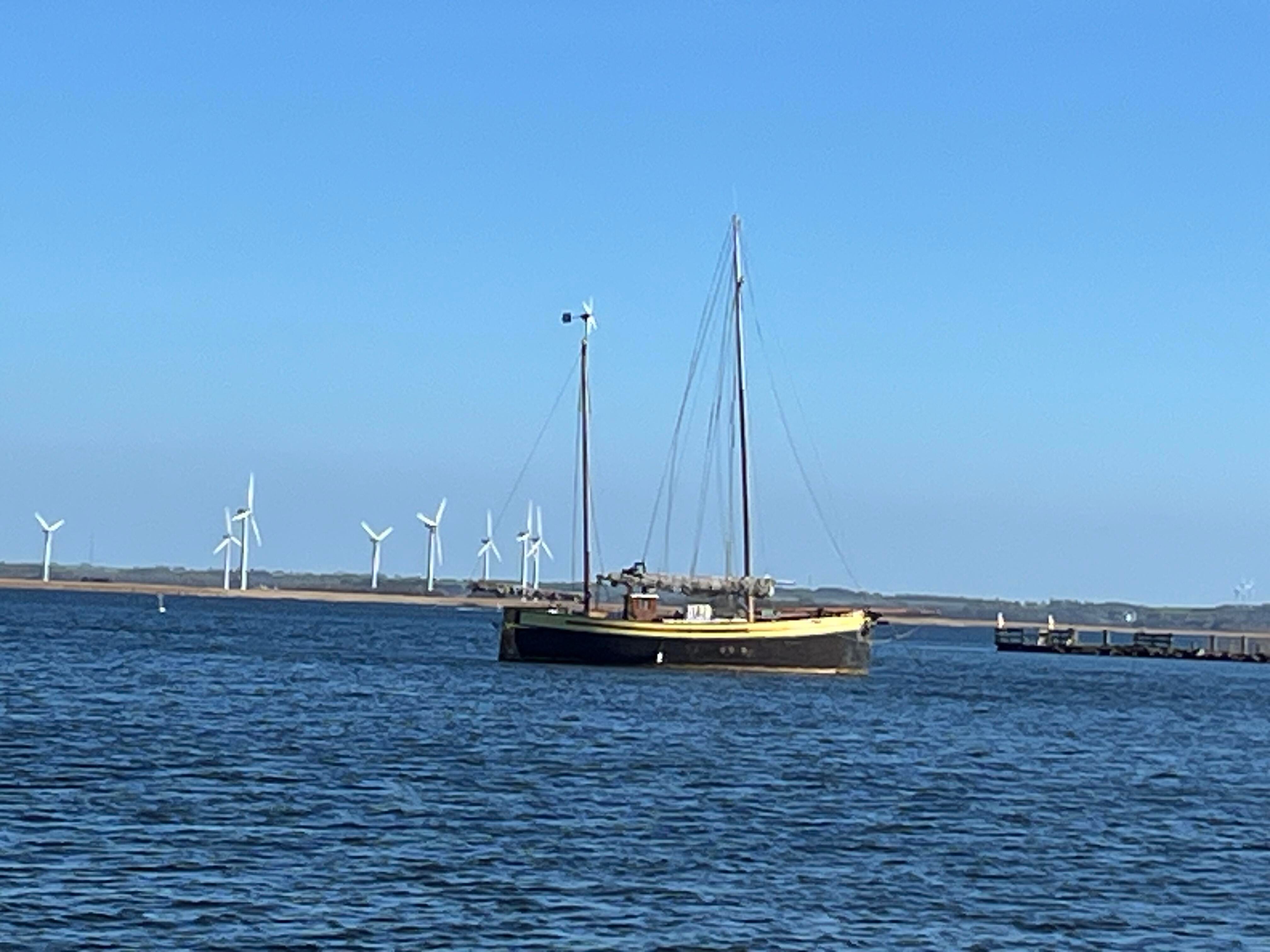
Then I notice another boat.
A wooden ship. It didn’t catch me eye because it’s a wooden ship, though that’s unusual enough, but because it isn’t moving.
The mast doesn’t sway at all.
Then I realize why.
It’s sitting on the seabed.
One of the club members explains that it belongs to a man who’s been banned from every harbor in the region for refusing to pay docking fees. The ship has taken on water, and there’s a pump inside powered by a tiny windmill mounted to the mast.
As we’re discussing it, we watch the owner row out, walk around onboard for a few minutes, then row back to shore.
That ship is never leaving the fjord again.
Within a year it’ll split apart and sink for good.
Brian tells me that Erland used to own a ship just like it.
It met the same fate.
I’d actually heard that story before.
Years ago, when I lived near Aalborg, there was a patch of blackberry bushes and my brother and I used to go there to gather berries to make homemade liquor. It was behind a marina, and one day I got chatting with a man who showed me a wreck sitting at the bottom of the harbor and told me the story of some idiot who let it sink.
The idiot was Erland.
The storm is even closer now.
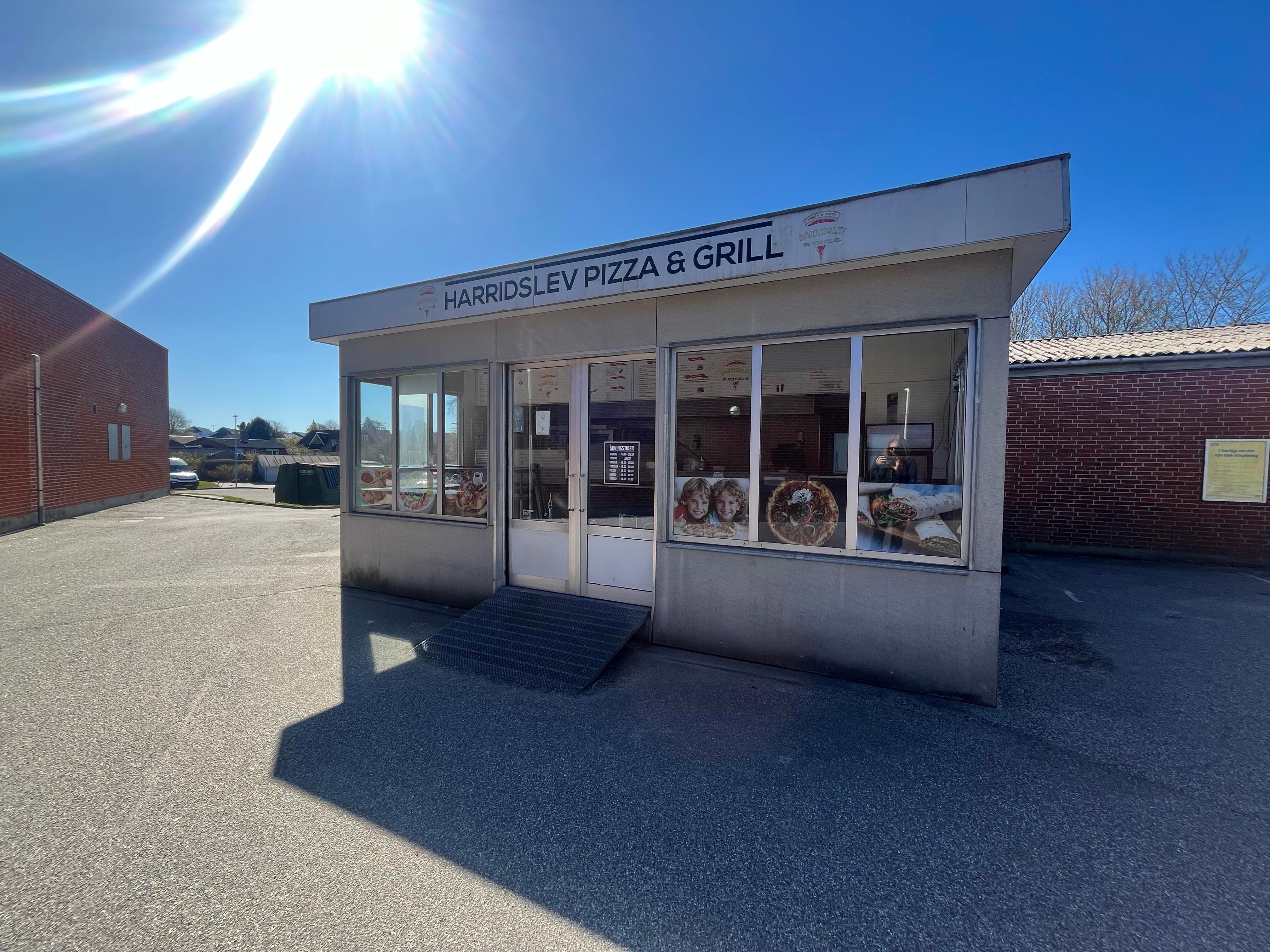
Dinner time.
We order kebabs from the next town over, and I get a good laugh listening to Brian and the Middle Eastern owner struggle to understand each other’s accents over the phone.
It’s good kebab in exactly the way cheap small-town kebab should be.
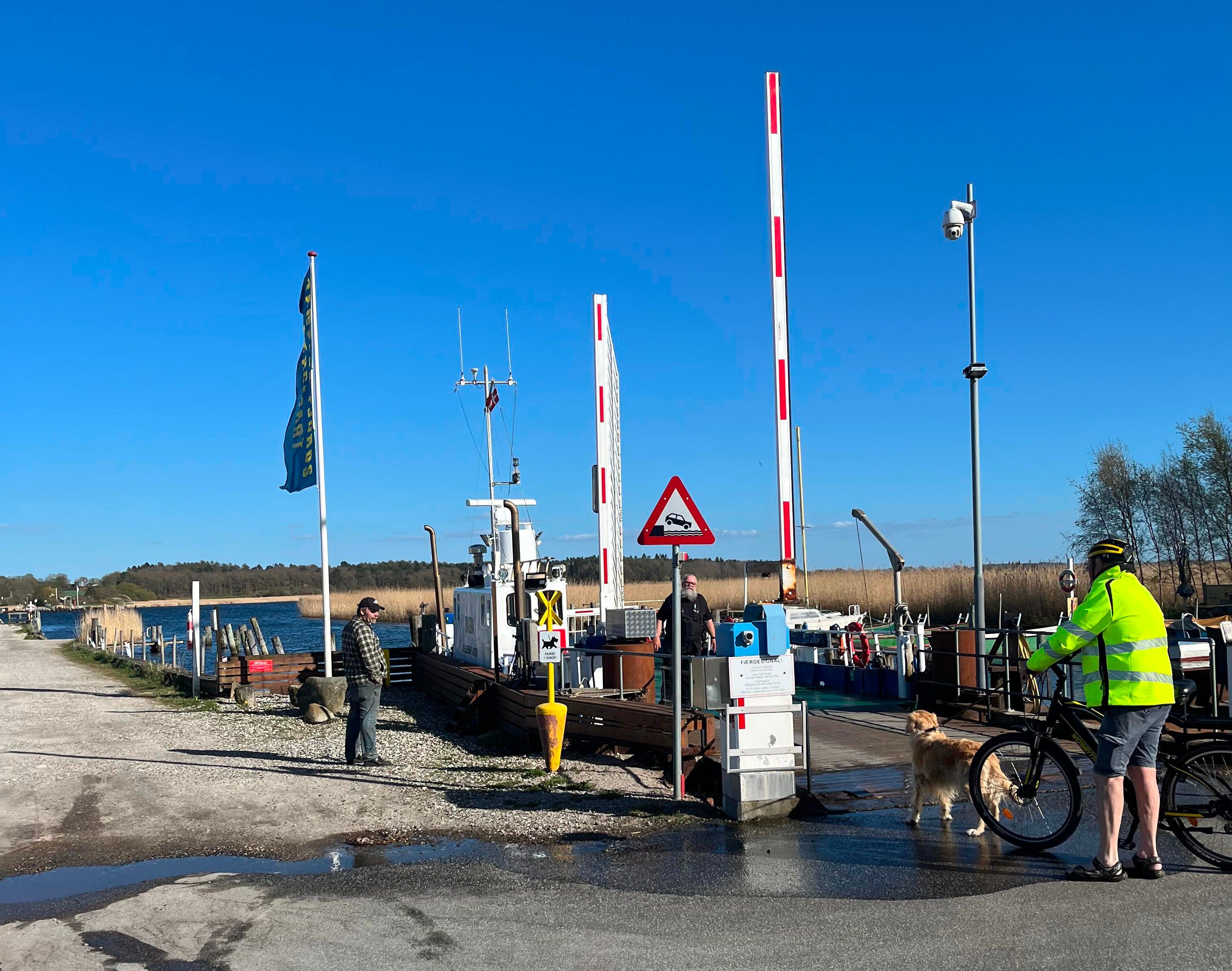
Afterward we walk down to the town’s closest thing to an attraction: Denmark’s shortest ferry route.
The crossing takes five minutes.
The ferry can carry maybe three cars depending on size.
As we approach, the ferry docks, and since it’s the final crossing of the day, the captain invites us aboard to take a look around. He tells us about the route’s history and how the operation survives financially.
Apparently, it’s Denmark’s oldest ferry route, transporting people across the fjord for over 400 years.
We head back to the harbor afterward. Brian goes to bed early while I stay up in the clubhouse researching the town.
The boat club members have generously agreed to let us be the first boat craned into the water tomorrow. It still looks unlikely we’ll actually leave because of the weather, but they want us ready in case the storm clears.
I hope it does.
Still, I continue researching the town, so I’ll at least have something to do if we end up stranded another day.
By the time I finally go to sleep, the storm is directly overhead.
The noise is deafening. Ropes slam against masts all across the harbor, creating this endless metallic clanging in the darkness.
But I’m exhausted.
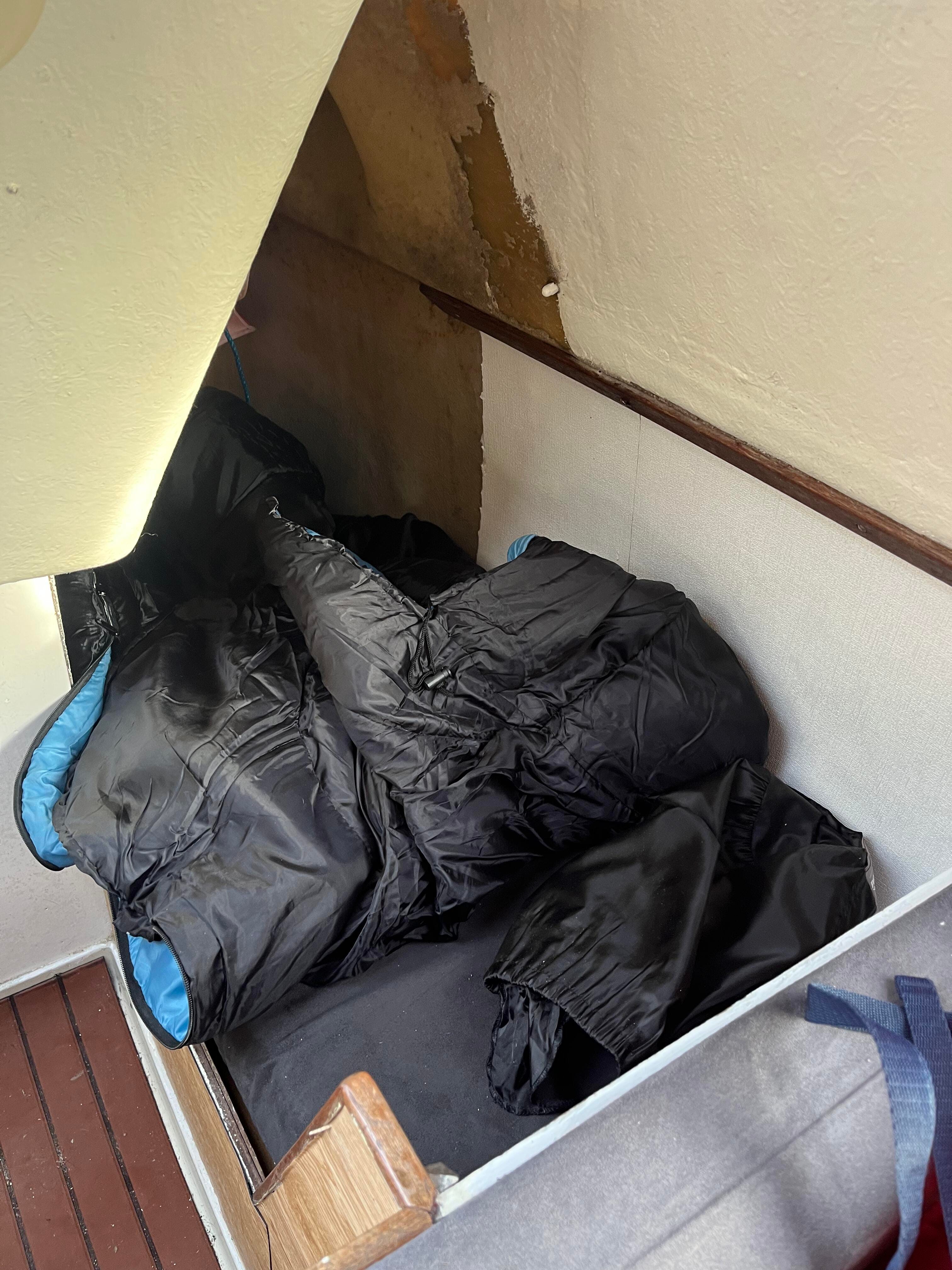
I insisted Brian take the larger cabin partly because he’s older than me, but mostly because I sleep better in confined spaces. I crawl into the tiny bunk beneath the deck and pass out almost immediately.
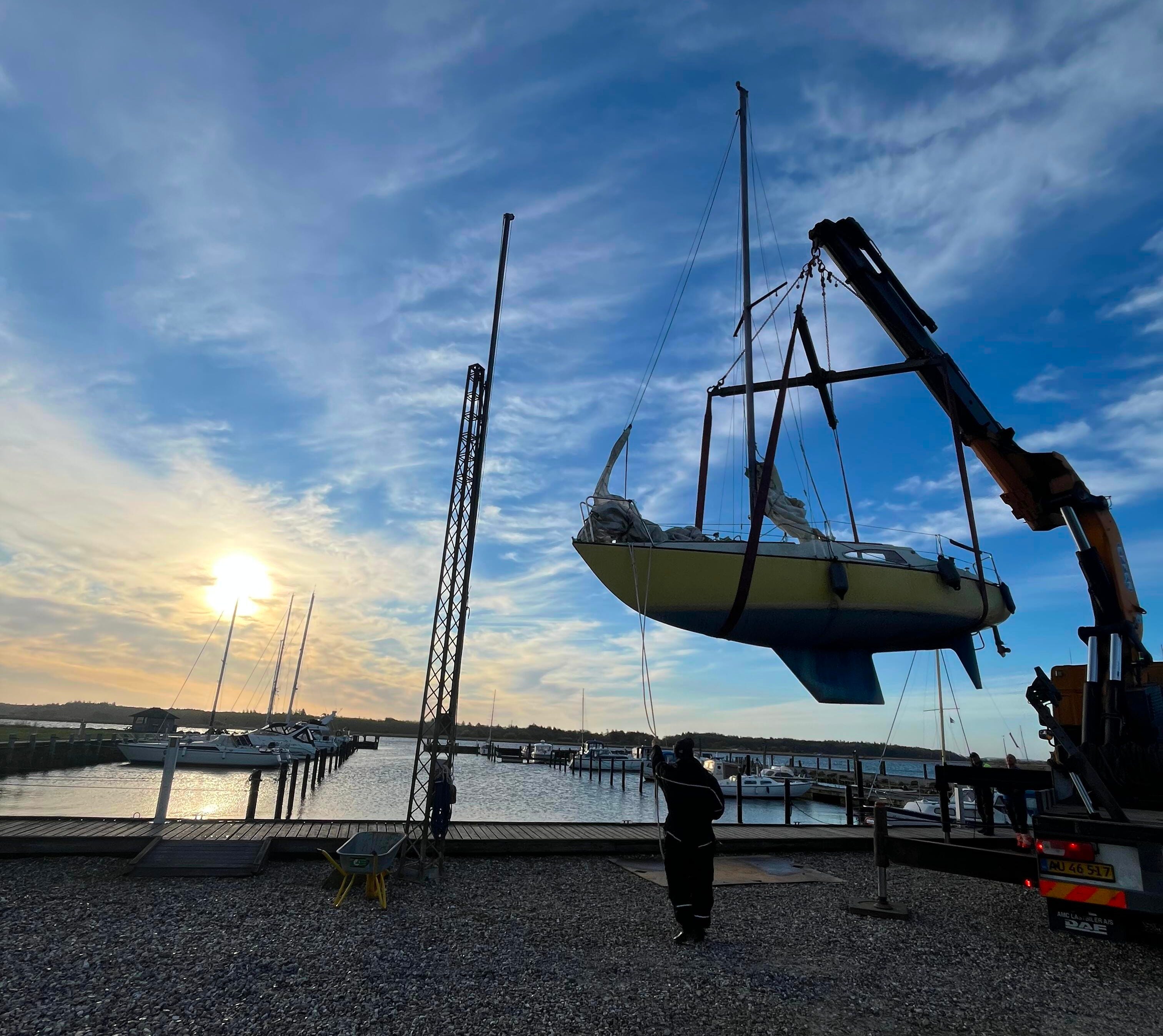
By first light the crane has already arrived.
We lower the boat into the water and prepare it for departure.
Then we wait.
We help launch the other boats and afterward the club members invite us inside for breakfast.
I try to engage in small talk, but waiting around like this drives me insane.
Eventually I tell Brian I’m going for a walk, and I head out into the hills toward the Neolithic dolmen.
Which brings us back to where this story started.
As I’m walking around the ruins of the burned down cottage looking for any evidence that can disprove arson, I think about the big fire 150 years ago, and I know in my gut that it’s connected to this recent fire.
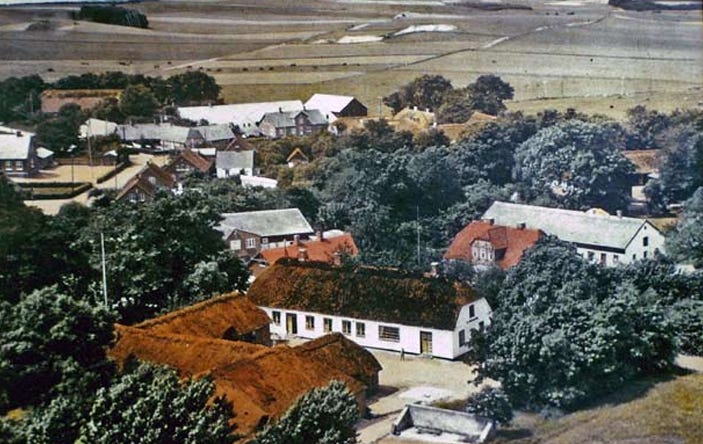
Midnight. Thursday, September 14th, 1899.
Farmer Christian Søndergård is jolted awake. He knows something is off but can’t figure out what. Then he looks out his window and sees a faint glow coming from the barn of his neighbor, wagon driver Jens Nielsen.
He jumps out of bed, wakes his family, and still in their nightclothes they run over to sound the alarm.
But by then the fire has already taken hold of the property.
Jens Nielsen escapes through a window with his wife and three children and manages to free his livestock before the flames spread further.
The fire spreads to the nearby farms. Christian Søndergård, the farmer who had run over to Jens Nielsen to warn him, his farm is engulfed in flames by the time they let the livestock out, and the neighbor on the other side P. Rasmussen, his farm caught fire at the same time, and because the farm had recently been occupied by a hoarder, they weren’t able to save any of their belongings because they couldn’t get to them in the mess and the chaos of the situation.
Then a small house nearby owned by a teacher catches fire, and he unfortunately didn’t have fire insurance, so he suffered financially as well mentally from the ordeal.
The neighboring house closest to him also burns down, and then a large farm next to that. Every building on the north side of Main Street catches fire before the flames leap across the road itself.
By now the local fire department has arrived, but the town pond has dried up because a nearby waterway was redirected years earlier.
There isn’t enough water to save thee town.
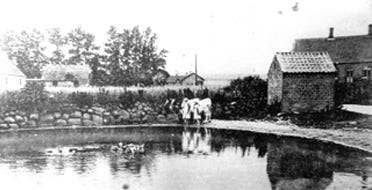
They try to contain the fire, so it doesn’t reach the town’s school, but the wind picks up and the school burns down.
Erhard Jensen’s farm connects the north side to the south side of the town, so fire fighters focus their efforts there, and while the farm does catch fire multiple times throughout the night, it never manages to take hold of the farm, and the south side of the town is safe.
By dawn, a 3rd of the town had burned down, and the entire town center was gone. It was one of the most expensive insurance claims cases in the 19th century, and while some chickens perished and most of the towns’ grain supply was destroyed, no human life was lost.
But the townsfolk weren’t relieved. This was the 4th fire in 4 years, and it wouldn’t the last. The town would burn 10 more times over the next decade and a half.
The magistrate investigated, but the results were never made public. The townsfolk were certain that it was arson, but who to blame, they did not know.
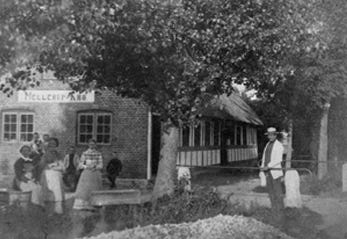
I contacted the local archive to ask whether the fires were ever solved.
The closest authorities ever came was in 1917, when two boys confessed to accidentally starting a fire while playing with matches.
So, what does any of that have to do with a burned house in 2026?
While searching through the archive, I couldn’t do a keyword search the local newspaper’s archive hasn’t been properly digitized yet, so I couldn’t produce a list of articles about fires after the 1899 incident. But in most of the articles I read about the town in the decades that followed, there was this sense that the fires were still happening, but were rarely acknowledged and never directly talked about, almost like the townsfolk wanted to keep them a secret.
They’re referenced in an article about an old weird woman who lived in the woods in the early 1900s, and they’re mentioned again during the Nazi occupation, and then once more in the 1960s when locals began collecting stories about the town.
There is no doubt that the fires kept happening throughout the 20th century, and once local newspapers became digitized on the 1st of January 2001, they could no longer be kept quiet.
12th June 2001
A fire erupts at a children’s home in the village of Mellerup. The ten children living there, along with the night watchman, make it out safely.
The fire is still burning by the time the incident is reported in the news, so no investigation has been conducted yet.
13th August 2003
A 15-year-old boy and a 12-year-old girl, both living at a children’s home in Mellerup, get into an argument that escalates into shoving. The boy follows the girl to her room and punches her.
Later that night he wakes up after midnight because his ear hurts. He gets dressed and, armed with a deodorant can and a lighter, climbs out of his window. After wandering around for a while, he unscrews the fuel cap on the school bus and attempts to set fire to the tank, but without much success.
Afterward, he goes to the girl’s window, sprays it with deodorant, and sets it on fire. He returns to his own room, and later goes to the bathroom where he encounters the night watchman extinguishing the flames. The girl is rescued from her room and suffers no injuries.
The boy is sentenced to live at a secure institution until his mental state can be evaluated.
29th January 2013 – 09:53
Randers Fire Department is called out to a fire at a children’s home. By the time firefighters arrive, the fire has already been extinguished by employees.
7th October 2015
Mellerup power plant is shut down after hay bales in a storage facility catch fire and damage electronic infrastructure. The cause of the fire remains unknown.
14th August 2016
On a Sunday afternoon, the power plant in Mellerup catches fire again, this time more severely.
Forty tons of hay bales catch fire, and it takes firefighters more than five hours to get the blaze under control.
Authorities suspect a mechanical failure.
6th January 2018 – 18:15
Firefighters are called out to Støvringgårdvej in Mellerup after reports of excessive smoke coming from a property.
Police and firefighters arrive at the scene and discover that a pile of wooden bricks has caught fire. Firefighters quickly bring the blaze under control, but have to drill a hole through the floor to ensure there are no embers beneath the floorboards. The owner of the house isn’t home, so firefighters smash a window to gain entry.
It is a neighbor who notices the smoke and calls emergency services after first attempting to investigate the source himself.
Fire department spokesperson Per Allan Nielsen says the fire may have self-ignited because the wooden bricks were moist.
18th March 2020 – 18:09
Police and firefighters are called to an abandoned house on Støvringgårdvej in Mellerup.
Firefighters extinguish the blaze quickly and no one is injured. Police suspect arson.
24th July 2021
East Jutland Police request witnesses to come forward after a property on Murhusbakken between Harridslev and Mellerup burns down. Arson is suspected.
27th March 2022 – 15:29
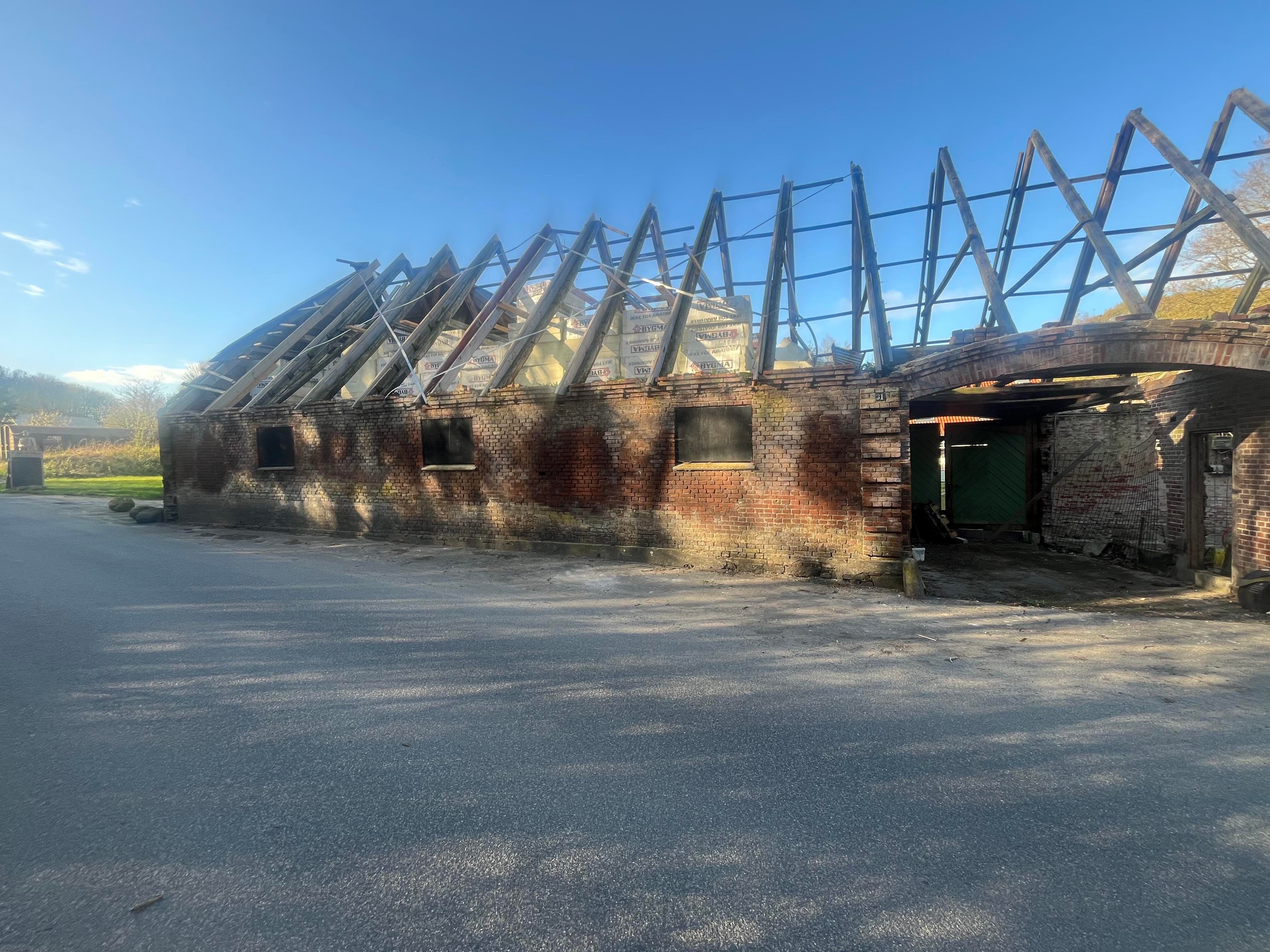
A fire erupts at a farm in Mellerup. By the time firefighters arrive, the thatched roof is already engulfed in flames.
29th May 2023
Near Mellerup, a barn full of hay bales catches fire. Firefighters from two stations are called in to get the blaze under control.
4th February 2026
A vacation home on Svinget Road between Uggelhuse and Mellerup burns to the ground. It is an old wooden house, so the fire spreads quickly. By the time firefighters arrive, the house is already fully engulfed in flames, according to operations chief Lasse Magnussen.
Firefighters extinguish the fire and leave the scene within an hour. No one is hurt.
And then there is the latest one.
The one I had a look at myself.
12th April 2026 – 22:30
A vacation home on Skalmstrupvej near Mellerup catches fire. Firefighters are called out and manage to contain the blaze, but the house burns down completely.
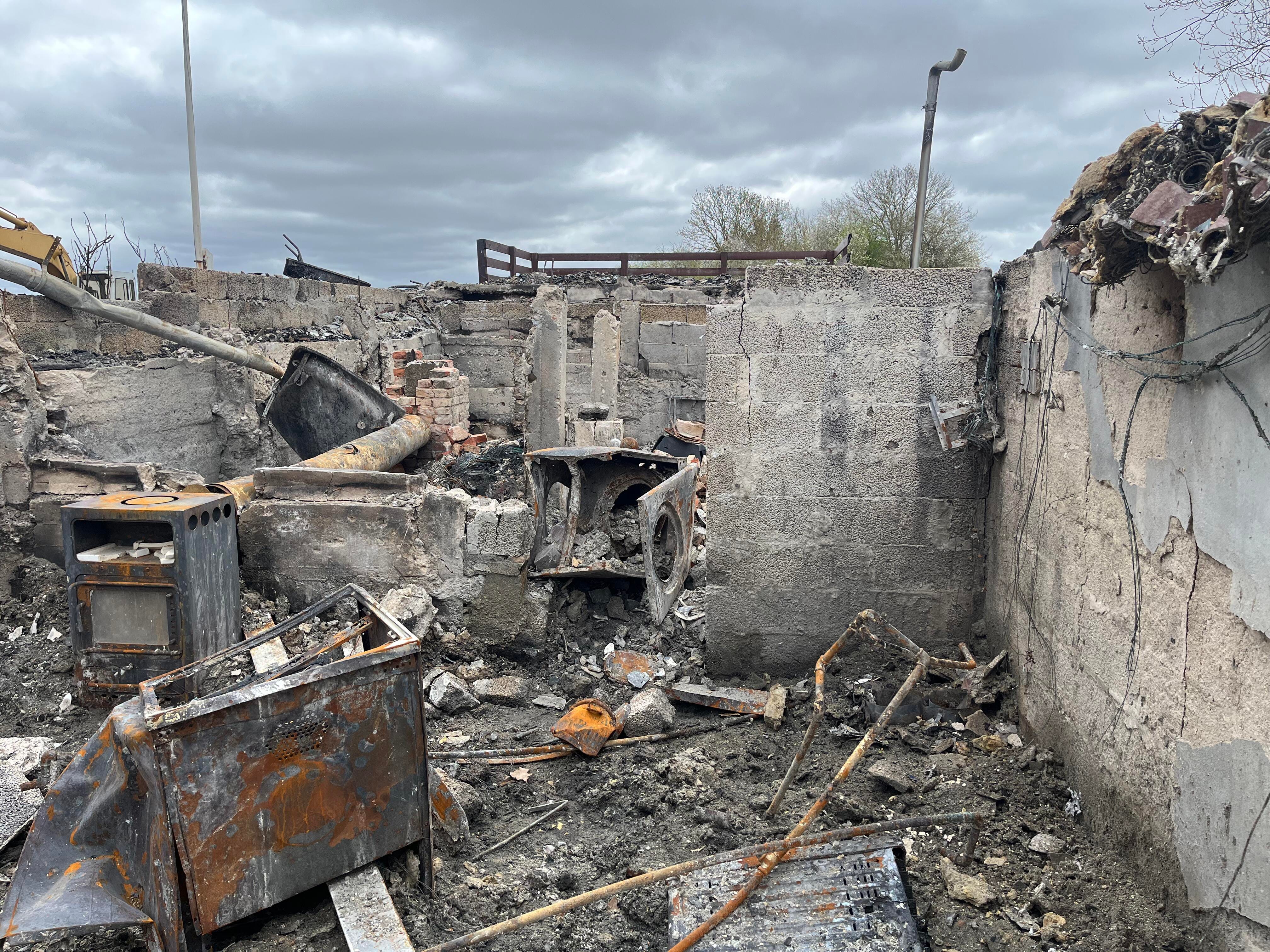
I take one last look at the burned-down house, then turn around and walk down the driveway leading back to the dirt road into town.
As I walk down the hill, trying and failing to shield myself from the sandstorm, I think about the arson cases.
The incidents obviously can’t be connected. An immortal arsonist terrorizing a town for the better part of two centuries would make for a sensational headline, but something tells me that isn’t what we’re dealing with here.
Still, there is something strange about this place and the fires.
If you look at almost any other place in the country, or in any country really, you’ll notice the arson rate per capita is much lower. Denmark sees somewhere between 500 and 1,500 arson cases a year. About 100 happen in the nearby regional capital of Aarhus, and around 20 in the nearby city of Randers. Those numbers are higher than Mellerup’s average of one fire every three years, but those cities have populations of 300,000 and 60,000 respectively, meaning their per capita arson rates are dramatically lower.
What separates the Mellerup fires from most other arson cases is that they aren’t sprees. Arsonists usually set a large number of fires within a short period of time and in the same area. There have been years where 100% of Randers’ arson cases were the work of a single person, like back in 2024.
The Mellerup fires are usually isolated incidents. If a fire is set in the same area more than once, it’s often months, if not years, later.
So I don’t think the town is somehow breeding arsonists, because if it were, there would be far more fires.
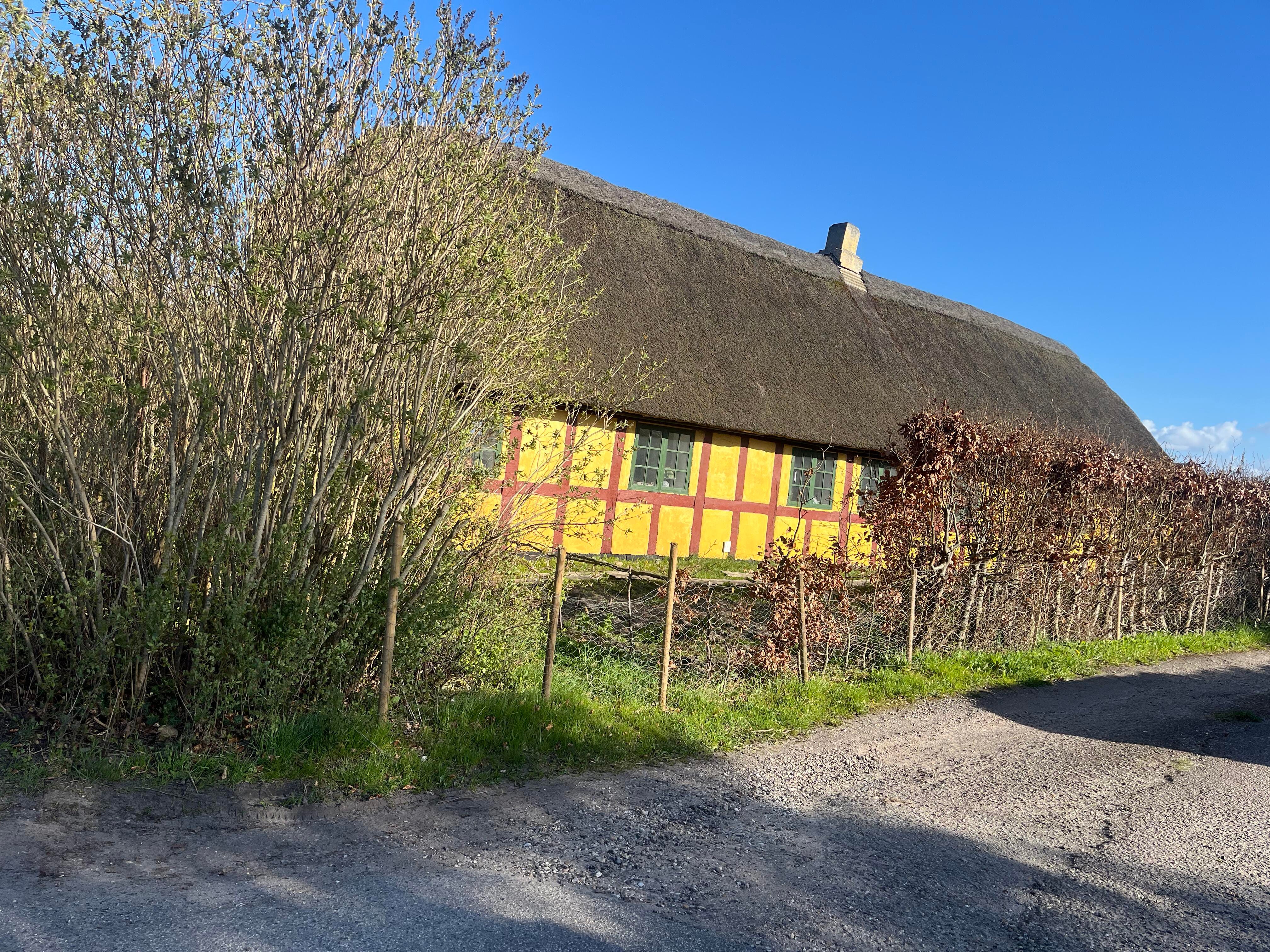
I snap out of my thoughts for a moment and realize I’m back in town. I’ve looked at the town from a distance plenty of times, but I haven’t properly walked through it. The storm seems to be clearing up, so we’re definitely leaving by first light tomorrow. If I want to get a proper look at the place, it’s now or never, and since there is absolutely nothing to see around here, it shouldn’t take long.
I walk past the old houses that survived the fires in the 1800s, and past the newer houses built on top of the ones that burned down. I pass what is genuinely one of the ugliest and saddest little churches I have ever seen in my life, and I wonder why the town has such a sad, ugly church. Then, a couple hundred meters further down the road, I find out why.
There is a free church here, established about a hundred years ago and dedicated to the teachings of Grundtvig.
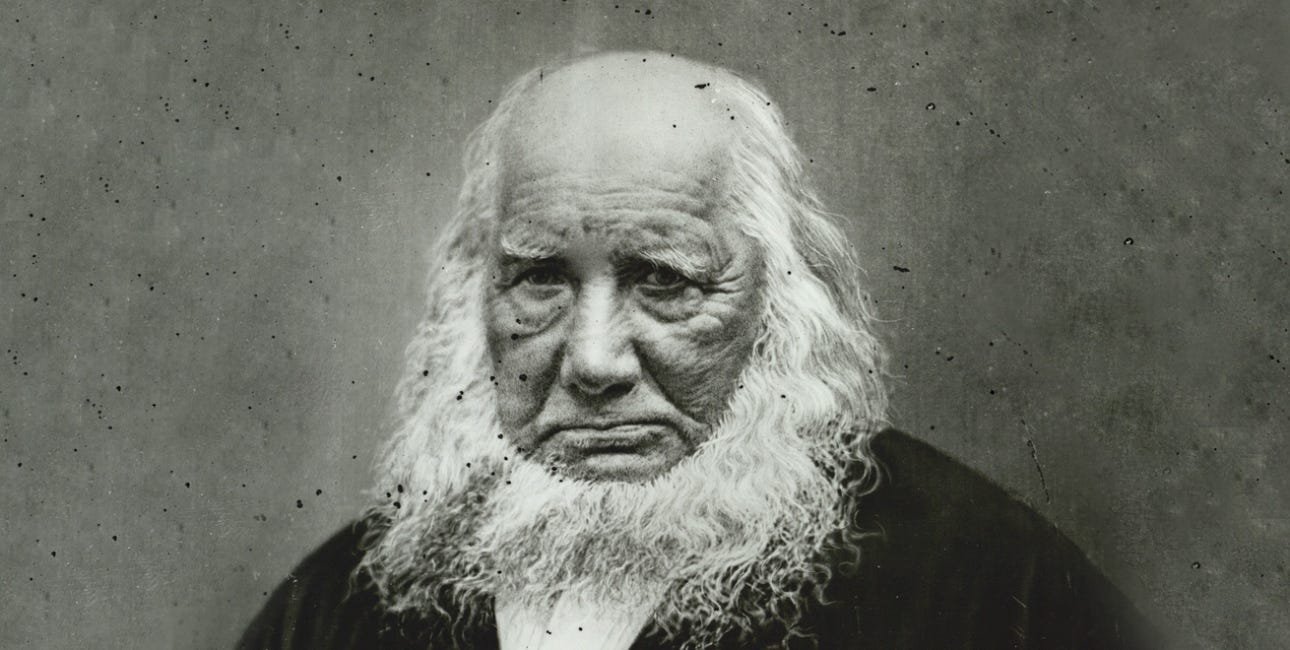
He was a priest who accidentally killed religion in Denmark.
He wanted to reform the church and make it less corrupt, so he took all the good parts of Christianity; the community, the songs, the charity, the shared identity, and built a people’s movement around them. In doing so, he democratized the one thing that had kept the church powerful: its ability to gatekeep belonging.
Without that monopoly, church attendance collapsed. Within decades, congregations dwindled to less than a fraction of a fraction of what they once were, and today fewer than 20,000 people in this country sit in a church pew on Sundays.
That number is bullshit, by the way.
The church stopped properly counting attendance when it dropped to around 20,000, and that was a long time ago. A lot of old people have died since then.
In a few places, apparently including this one, so-called free congregations sprang up. Some felt the national church was no longer spreading the word of God properly. Some formed for more questionable reasons. And some, like this one, wanted to combine Grundtvig’s teachings with Christianity.
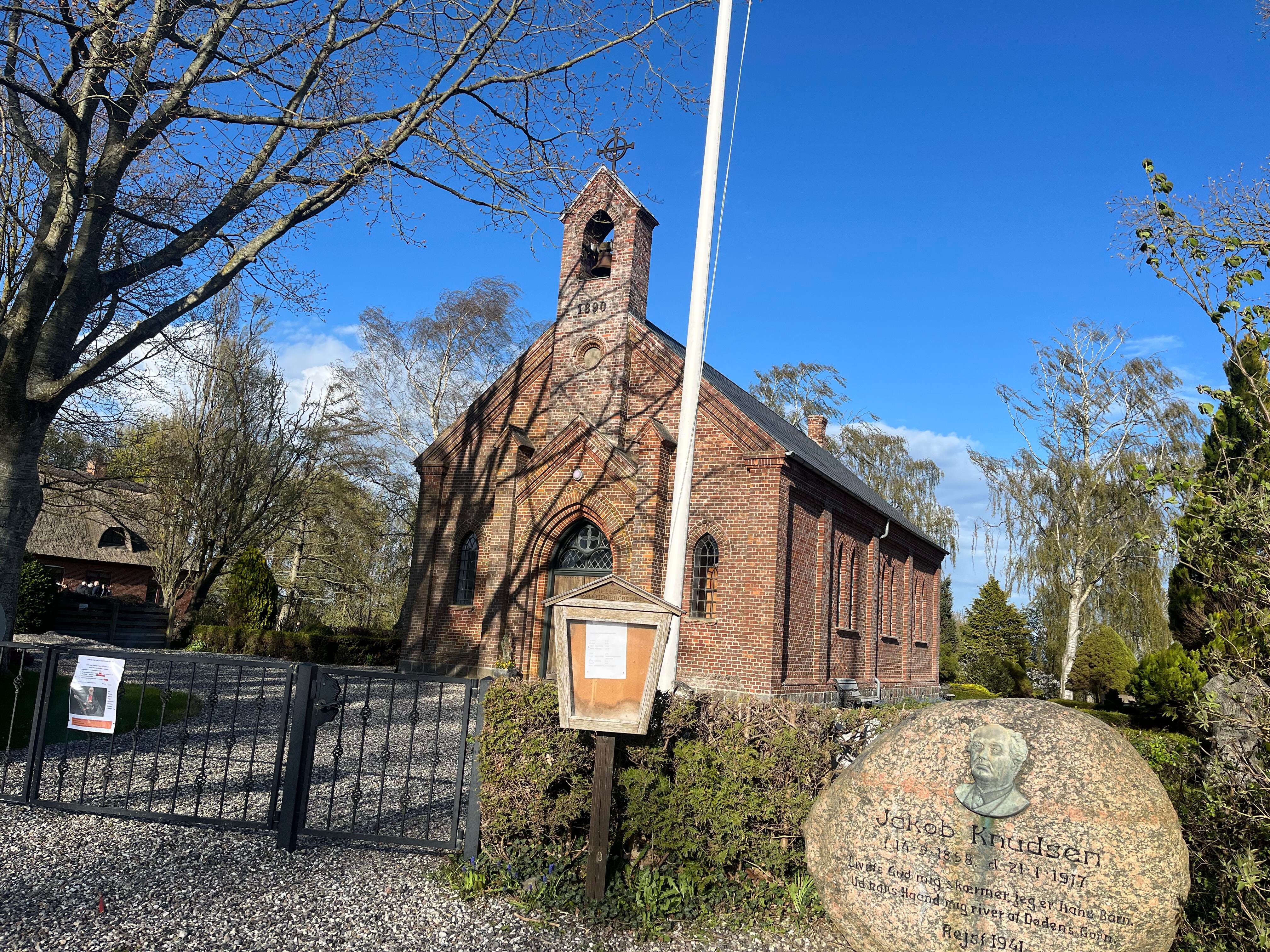
They call themselves The Elected Congregation, and unlike regular churches, where the congregation elects a council that then approves a priest, they elect the priest directly.
They actually seem to be doing good work. Their church is a nice little Gothic building that’s well maintained, and according to their website they host a lot of community events and seem particularly fond of holding concerts in the church.
While I’m standing there taking pictures, I notice members of the congregation staring at me from the corner of my eye. I’m used to it by now, but it never stops being weird when a gang of Jesus fans in matching outfits watches me from a distance.
I’m guessing they’ve just finished some kind of event over at the rectory, and I understand why a long-haired man with a large beard appearing out of nowhere might seem funny at a site dedicated to a guy who looked exactly like that.
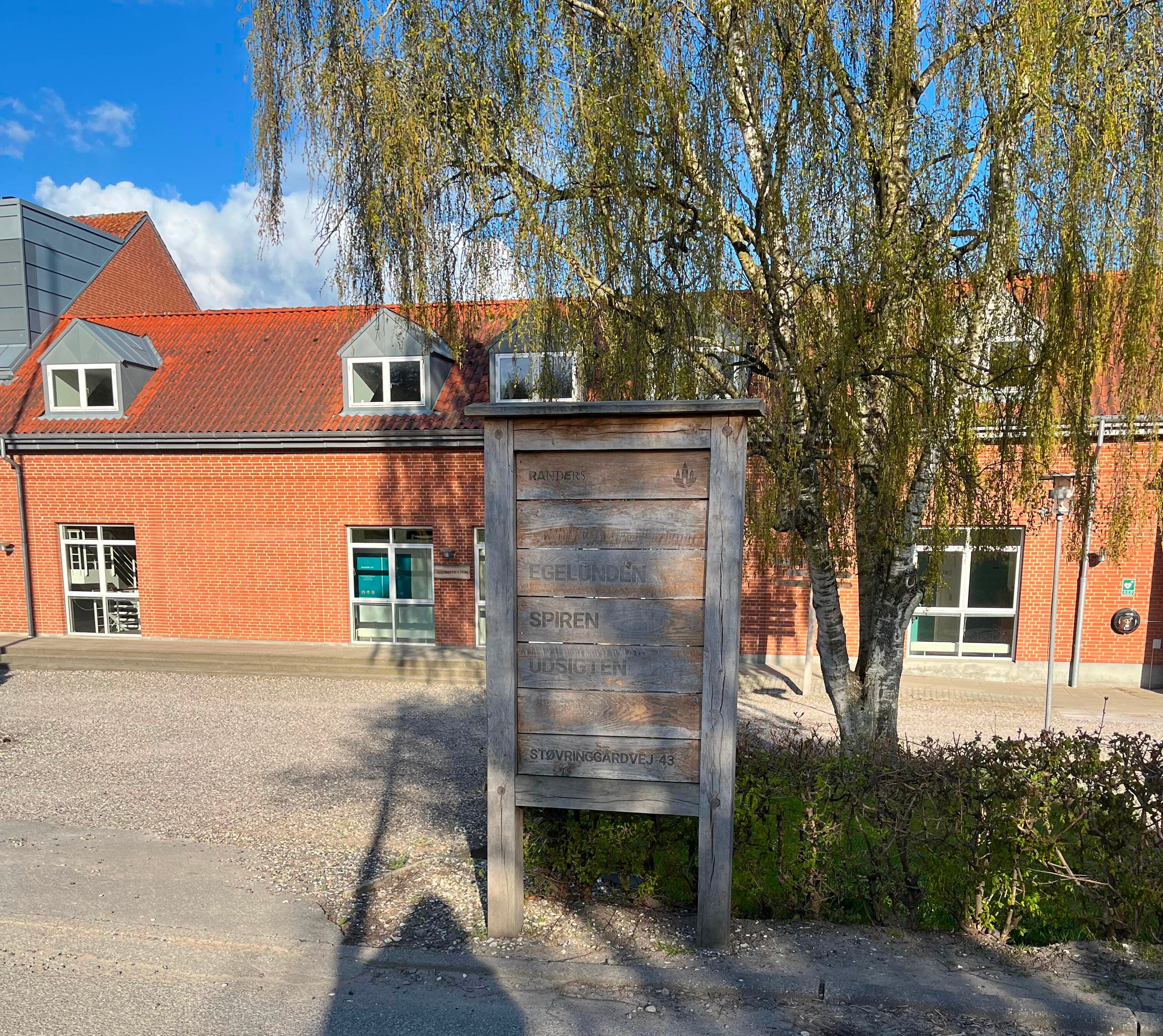
I start heading back toward the harbor, and as I walk down what was once a bustling main street, I begin thinking about the fires again.
Maybe the explanation is something as mundane as the fires inspiring bored kids to set more fires. Maybe the fires in Mellerup are a social contagion.
One fire was set in 1896, and it was probably the most exciting thing that had ever happened in town. So some kids set another in 1897, and another in 1898, and so on and so on.
The reason the fires sometimes seem to stop for a decade or two could simply be that one generation of children realizes how serious arson actually is, and then years later a new generation hears stories about the fires from their parents and becomes fascinated by them.
That would also explain why most of the arson cases, at least in modern times, occur in abandoned houses, near landmarks outside town, in abandoned factories on weekends, and in forests. Those are all places children tend to gather, places hidden from the eyes of adults.
Mellerup is full of quiet little spots for kids to hang around in, and the town has suffered significant depopulation over the last thirty years, leaving behind plenty of vacant properties.
And if there’s one thing the town doesn’t lack, it’s children.
It might not have a grocery store, a bar, a hotel, or even a hairdresser. But it does have a private school, a boarding school, a special-needs school, and a home for children who require 24/7 supervision.
And it has boredom.
Boredom is how I accidentally started a fire myself when I was ten years old, after saving leftover fireworks from New Year’s Eve and lighting them in a dry summer field.
The only three fires set inside the town itself were all connected to the home for children requiring supervision, and every other fire was within biking distance of it, usually on days when the children were under lighter supervision.
That’s probably the answer, a self igniting urban legend, pun intended.

I make it back to the harbor. The locals have gone home for the day, and only Brian remains in the boathouse. He’s even more restless than I am, and we order one final durum before he once again heads to bed early while I once again stay up late in the boathouse.
Around midnight I head back to the boat and get a couple hours of sleep.
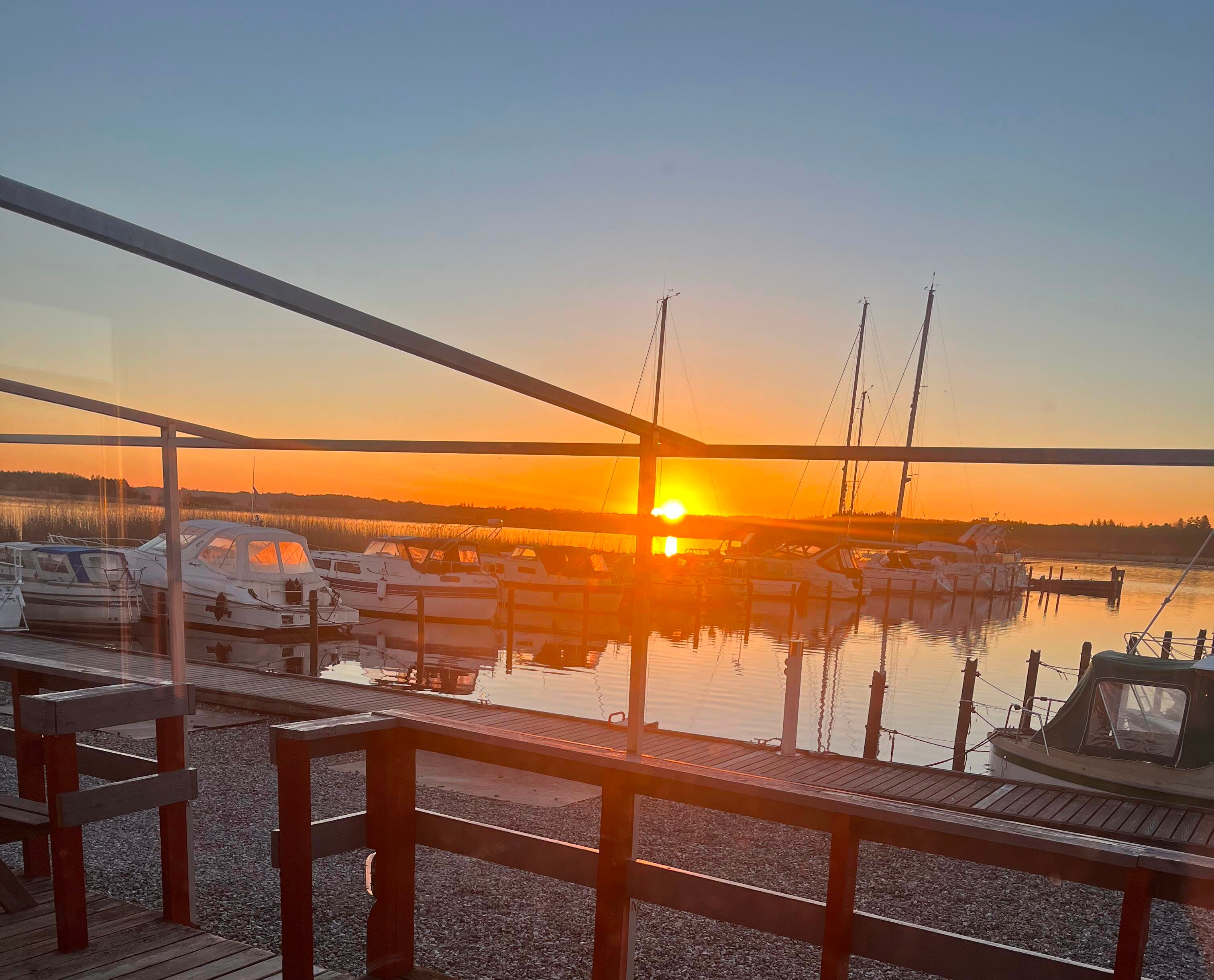
I wake suddenly because of a strange sensation.
It’s below freezing.
I must have shifted against the hull in my sleep, and what woke me was the frost literally hitting the ship.
I reposition myself in my tiny cubbyhole and let the gentle rocking of the waves lull me back to sleep.
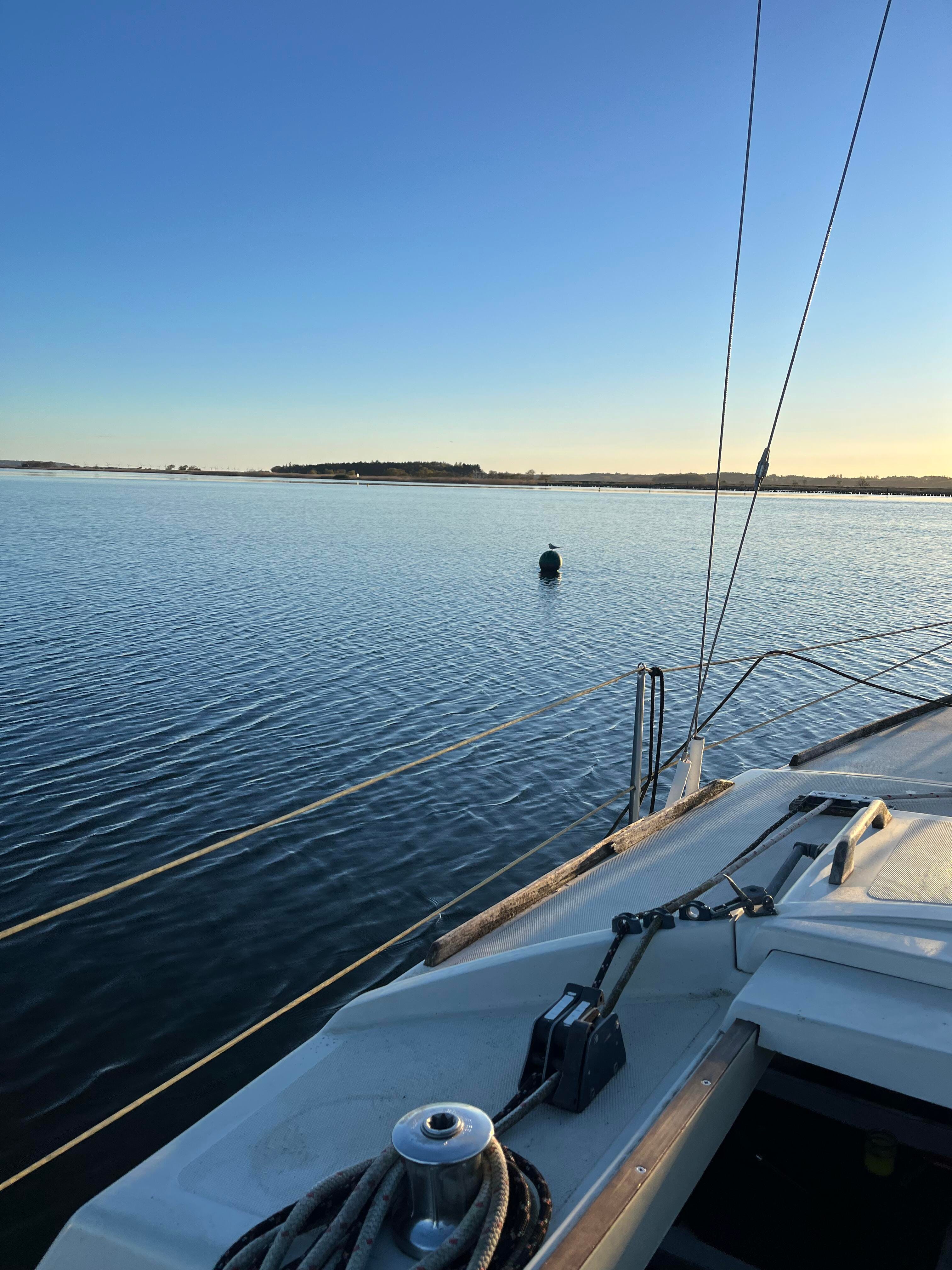
A couple of hours later Brian wakes me and tells me to come have some coffee. I do, and then I have another cup, because you can never have just one coffee in the morning.
We head back to the boat and cast off just as dawn breaks.
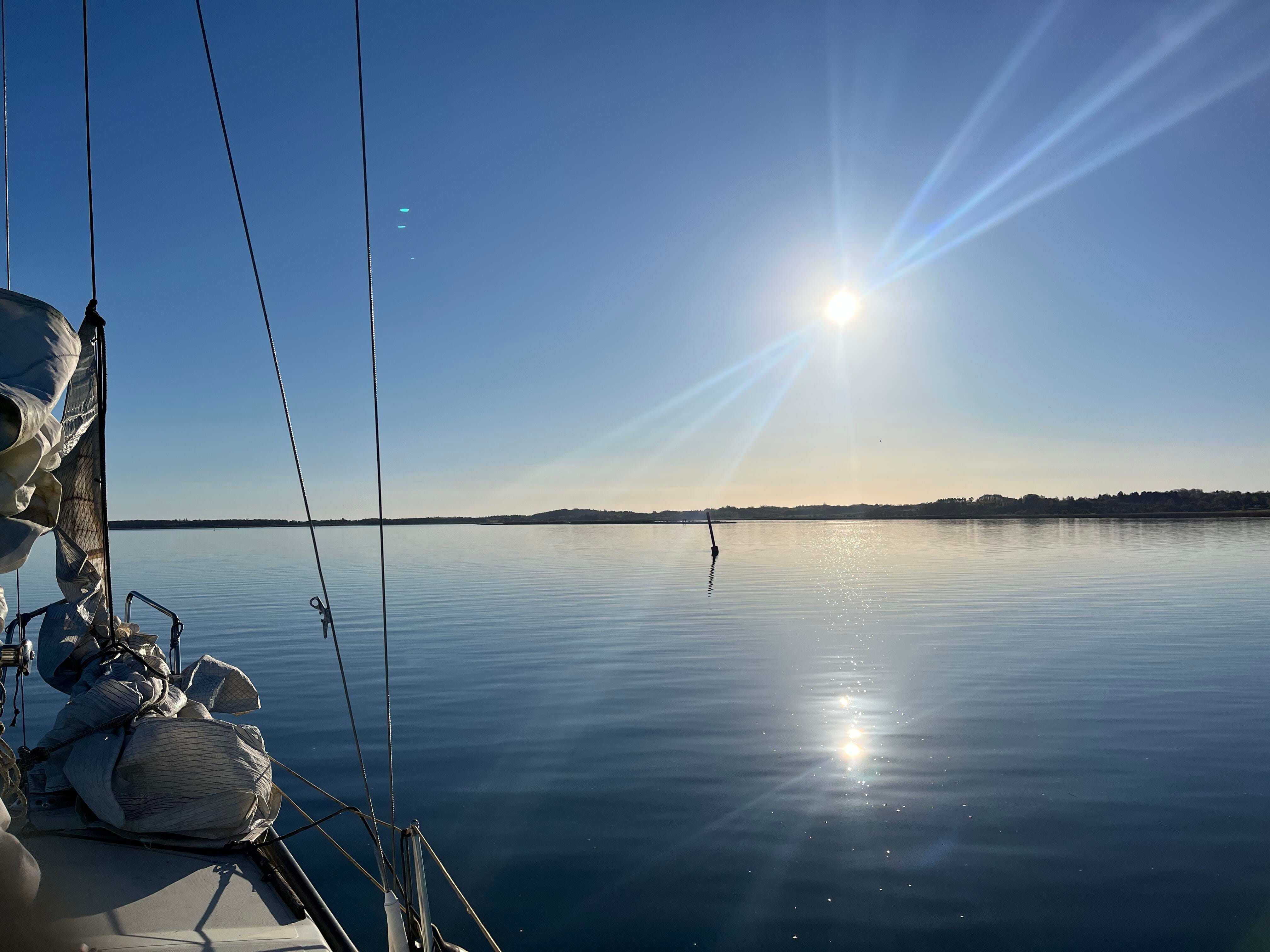
The fjord is narrow and shallow, so we have to sail carefully between the buoys or we’ll run aground. An hour later we reach the mouth of the fjord, enter the open sea, and set course for home.
In twelve hours, we’ll be docking at Vesterø Harbor, and I can’t wait to be back home.
I turn around for one final look at the town I will probably never see again, the town where all those friendly people live that I will never forget.
And just before it disappears behind a hill, I notice a thin column of smoke rising somewhere inland.
Another fire, maybe.
Or maybe someone is just burning leaves.
In Mellerup it’s hard to tell the difference.
I feel like I learned so much about you and this tiny little town in one article! How fascinating and how strange.
PLEASE keep writing and also the photos and the historical pieces are a wow! 10/10!