
Sin-Eaters
A strange practice that turned into a universal cultural ritual

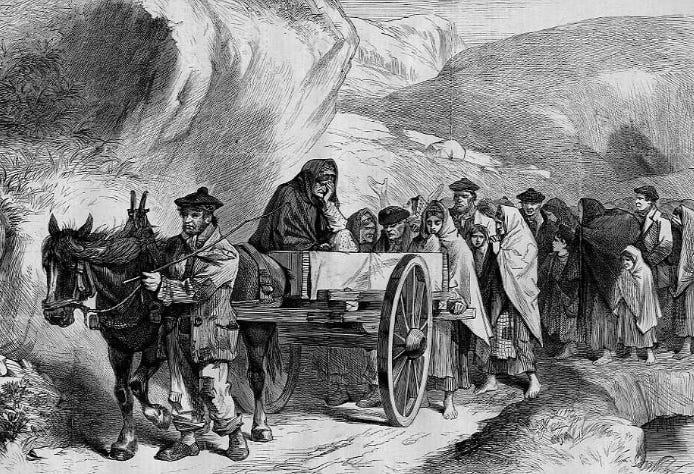
In Ross-on-Wye, in the county of Hereford, lived a tall, ugly, and gaunt man who always seemed so sad. Most people avoided him and avoided passing by his cottage if they could, but on certain days someone from a village in the county would come to fetch him because he had a special task to perform. When the body of a deceased person was carried from their home and onto the funeral cart, a loaf of bread would be passed over the body and given to the gaunt man, and he would eat it. Then a bowl of beer would be passed over the body, and he would drink it, and afterward he would be handed a sixpence.

With those three rites performed, the gaunt man had taken upon himself the unresolved guilt of the deceased, and they could enter the afterlife unburdened, for the man was a sin-eater.
This practice was supposedly common in Wales and the English counties across the border, but folklorists have had trouble finding sin-eaters mentioned in historical records.
The reason for that, I think, can be found in how a sin-eater was created. In 1906 an old woman told a story from her youth about how a woman in her village had become a sin-eater. She had overdosed on poppy tea and was so close to death that a priest was summoned to give her absolution. The rite was performed, but the woman didn’t die. Since she had been given absolution, she was now free of her own sins and could take on other people’s. She did this by consuming bread and salt that had been laid on the shrouds of the dead, and after the act she was given a sum of thirty pennies for her troubles.
Becoming a real sin-eater was a rare phenomenon, so if one wasn’t around, the town would make do by paying a poor person to perform the rite, or worse, tricking a homeless person into eating the sins by offering them bread and salt without disclosing that it had been resting on the shroud of a corpse. As a result, it became common knowledge among tramps and wanderers not to accept hospitality from houses where a death had recently occurred.
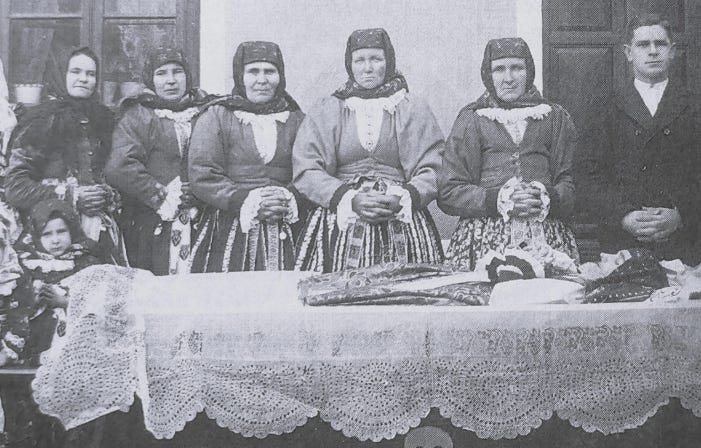
I think the shame of this practice made it hard to track down evidence of it, simply because i don’t think a lot of people willingly wrote down that they took part in it.
People of less morally objectionable character found another way. Instead of forcing one person to take on the sins of the deceased, the whole community would perform the rite of sin-eating. That way, no single person would take on the sins alone, and no one would enter the afterlife burdened by them. It became commonplace for mourners to consume bread and cake in the presence of a coffin and wash down the sins of the deceased with ale or wine.
A Herefordshire farmer in the nineteenth century is quoted as saying, “You must drink, sir, it’s like the sacrament. It’s to kill the sins of my sister.” And a farmer’s daughter in Derbyshire once said, “When you drink wine at a funeral, every drop you drink is a sin which the deceased has committed. You thereby take away the dead man’s sins and bear them yourself.”
While I don’t think we can truly take on the sins of other people, I do see how sharing a final meal with someone, even after they’re gone, can be meaningful. Much of human culture revolves around food, and many of our clearest memories happen around a dinner table. So it feels fitting that our last memory of a person might be the act of sharing food in their presence, taking a small piece of who they were, and carrying it with us for the rest of our lives.
Well I think that's more or less the idea of all the neo-Christian churches out there
Fascinating reading. I wonder if there is still a market for this?